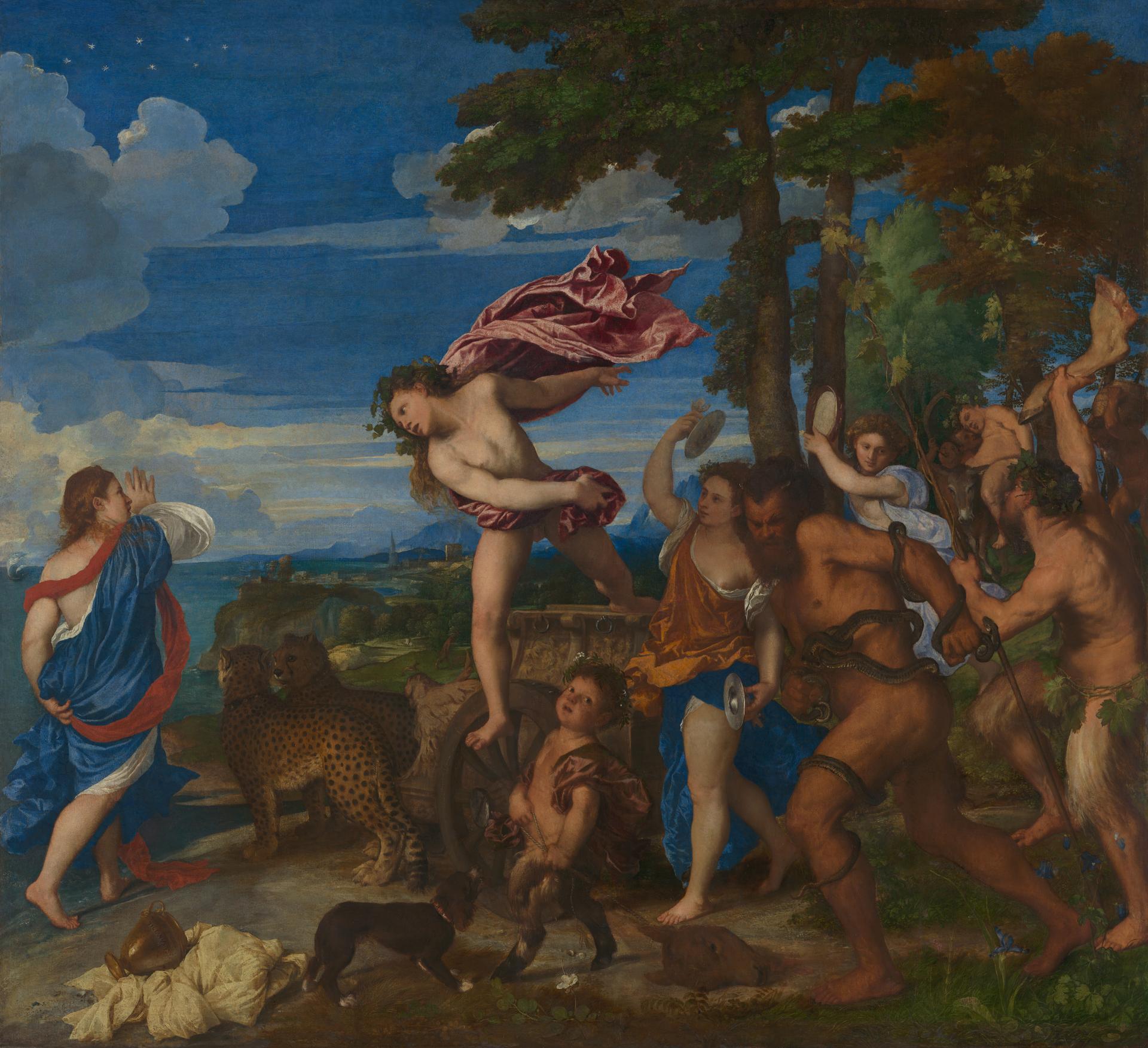
Bacchus and Ariadne
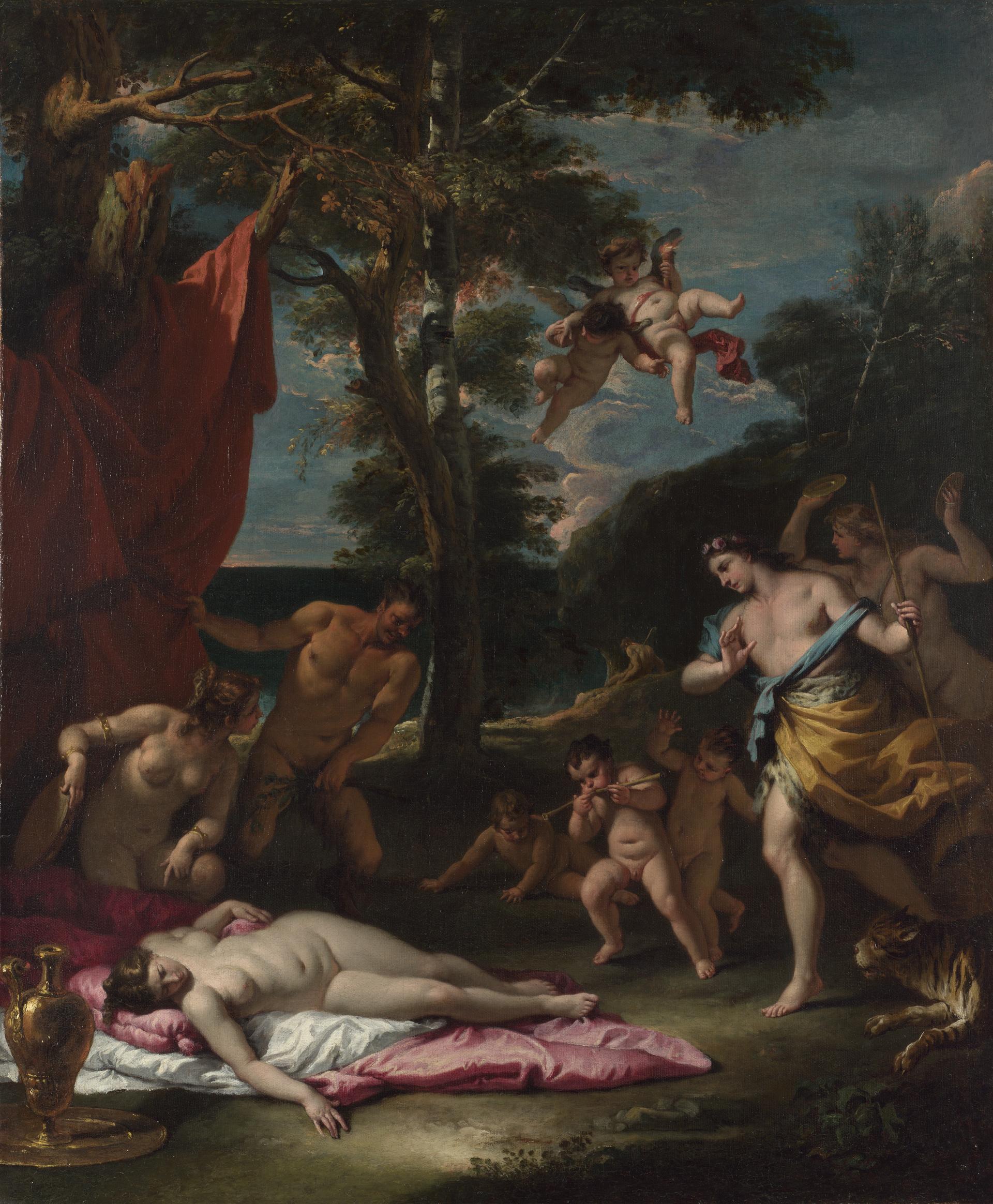
- Artist: Sebastiano Ricci
- Date: probably 1700-10
- Medium: oil on canvas
- Museum: The National Gallery
- Collection record: The National Gallery website
Listen to the free audio guide
In the museum now? Point your phone at the next artwork and hear its guide.
About this artwork
This is the "Bacchus and Ariadne" by Sebastiano Ricci, painted in the Venetian style of the early 18th century. The story depicted here is a classic tale from Greek mythology: Bacchus, the god of wine, discovers Ariadne, daughter of King Minos of Crete, abandoned on the island of Naxos after being jilted by her lover Theseus.
In this painting, we see Bacchus rushing towards Ariadne, who lies sleeping on a sumptuous bed. The scene is filled with movement and energy, as Bacchus's followers dance and play music in celebration of their lord's love for Ariadne. A cheetah bounds beside him, adding to the sense of excitement and dynamism.
Notice how the painting has an unusual vertical format, with a large landscape taking up almost half the canvas. This was not typical of Venetian art at this time, but Ricci was known for experimenting with new compositions and styles.
The rich color palette is also characteristic of Venetian painting from the 17th century, particularly in its influence from earlier artists like Titian. The use of warm tones and lush fabrics adds to the sense of opulence and luxury that pervades the scene.
One interesting detail to note is the two putti descending from above, carrying a flaming torch as a symbol of Bacchus and Ariadne's love. This gesture is meant to convey the sacred and divine nature of their union.
See it in person
Bacchus and Ariadne hangs in The National Gallery on Trafalgar Square, London — free to enter. Point your phone at any artwork there and audioguide.london plays a free audio guide in six languages — no app download needed.