Attic kylix
- Gallery: Room 15
- Maker: Pamphaios
- Culture: Attic
- Made in: Attica (Greece)
- Date: 510BC-500BC
- Object type: kylix
- Materials: pottery
- Museum number: 1841,0301.22
- Museum: The British Museum
- Collection record: British Museum website
- Image © The Trustees of the British Museum, shared under a CC BY-NC-SA 4.0 licence.
Listen to the free audio guide
In the museum now? Point your phone at the next object and hear its guide.
About this object
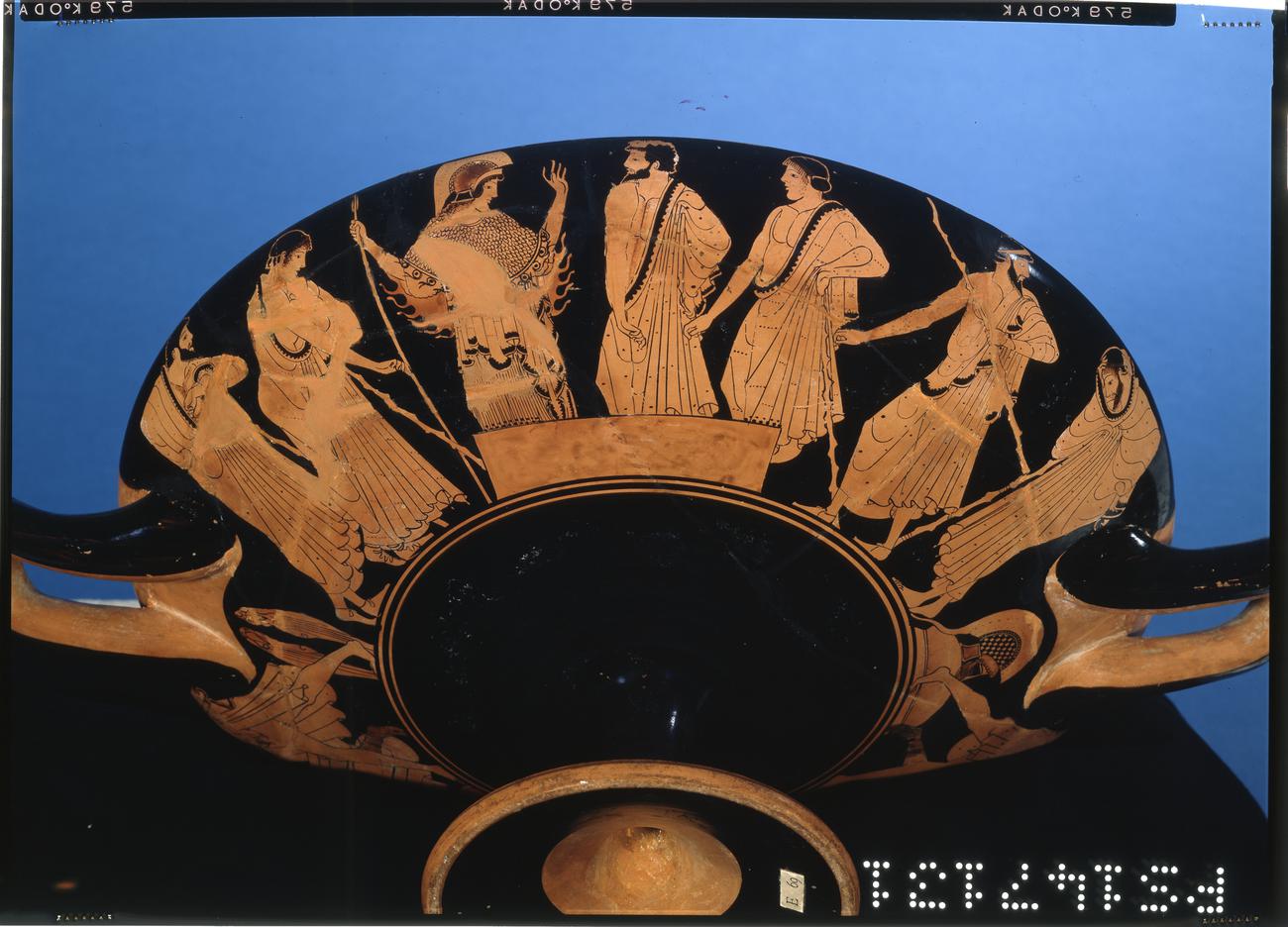
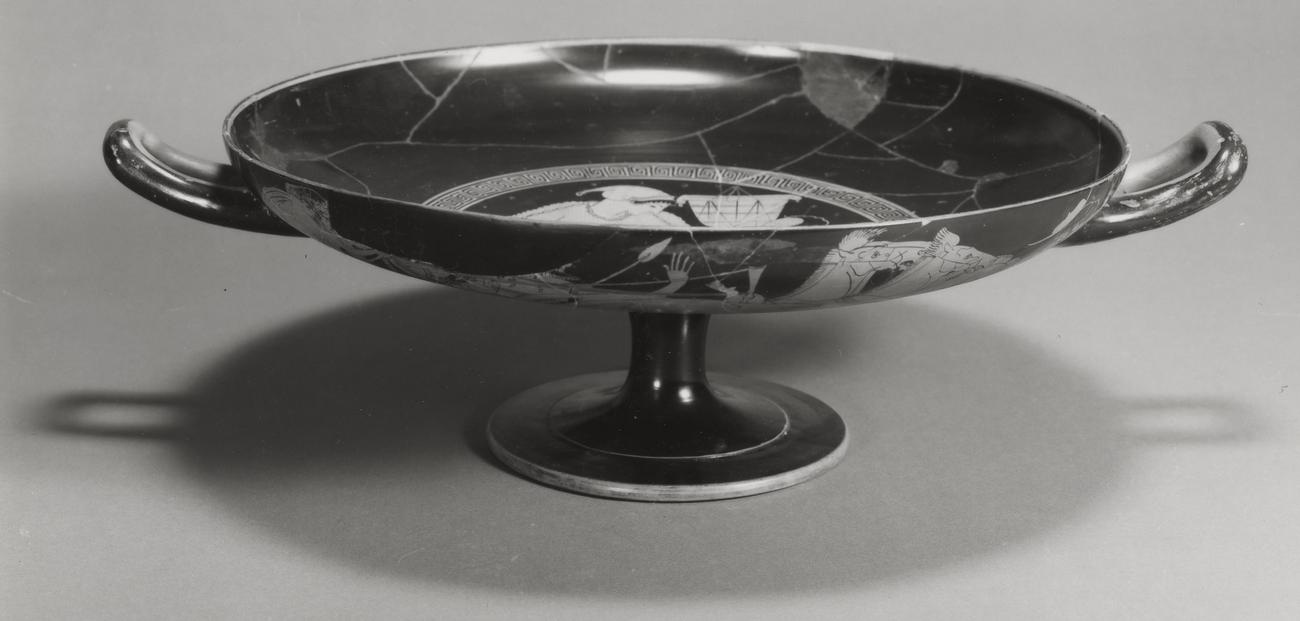
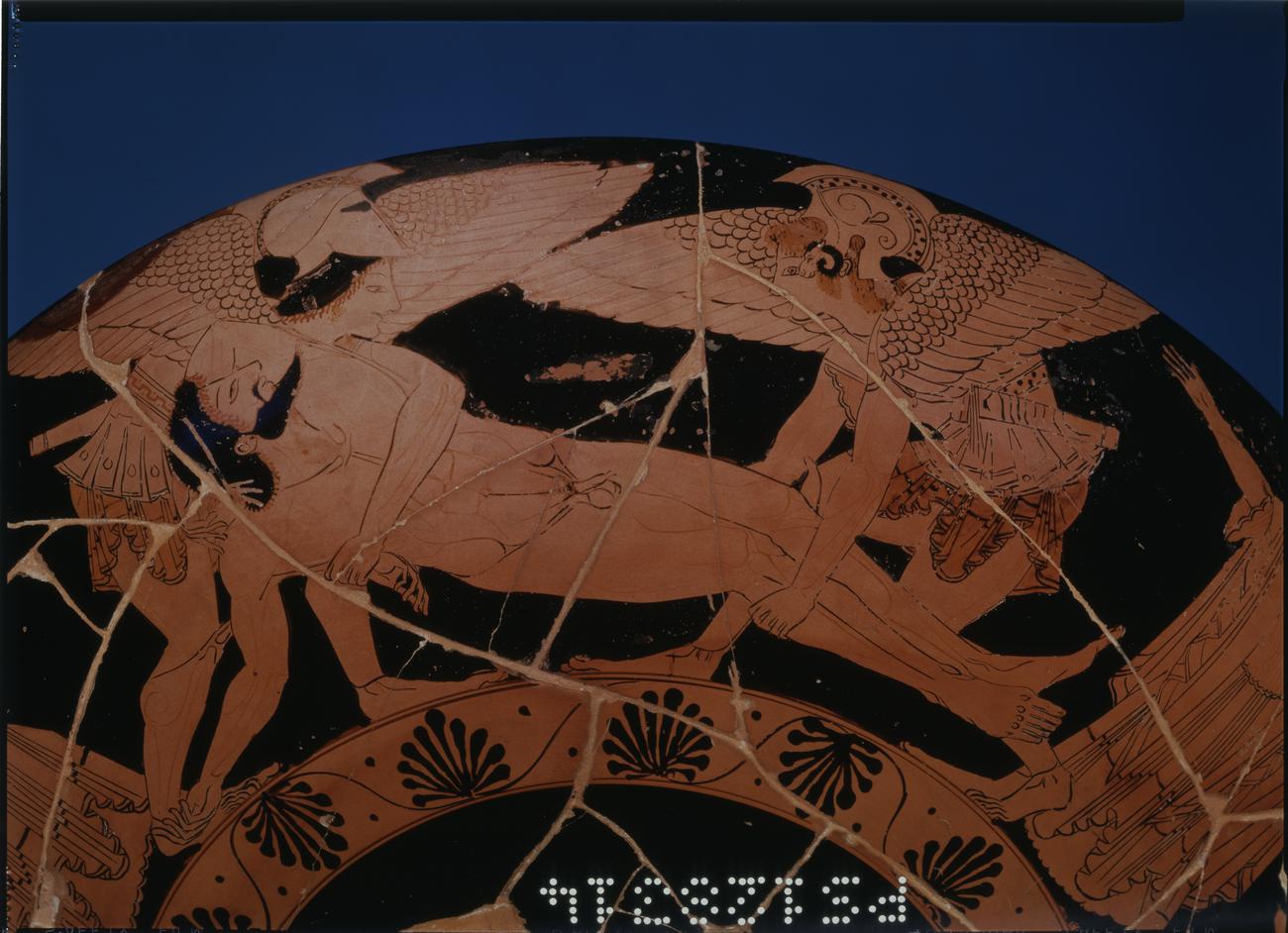
Before you is an Attic kylix, a red-figured drinking cup dating to around 510 to 500 BCE. It was crafted in Attica, Greece, and signed by the potter, whose name is Pamphaios. The artist is thought to belong to the workshop of the famous Nikosthenes Painter.
Look closely at the interior. There you’ll see Seilenos, a jolly, half-naked satyr, wreathed in vines, dancing with exaggerated movement. He's ithyphallic, a common archetype in early Greek art, and his exaggerated eye adds a touch of the fantastical.
Now, turn your attention to the vase's exterior. Here, you’ll find two dramatic scenes. One depicts the mythical figures Hypnos and Thanatos—Sleep and Death—lifting the wounded Sarpedon from the battlefield. Opposite this is a symmetrical composition of seven arming Amazons, each with intricate armor and weaponry. Their poses flow in rhythmic balance, forming a dynamic tableau of action and motion.
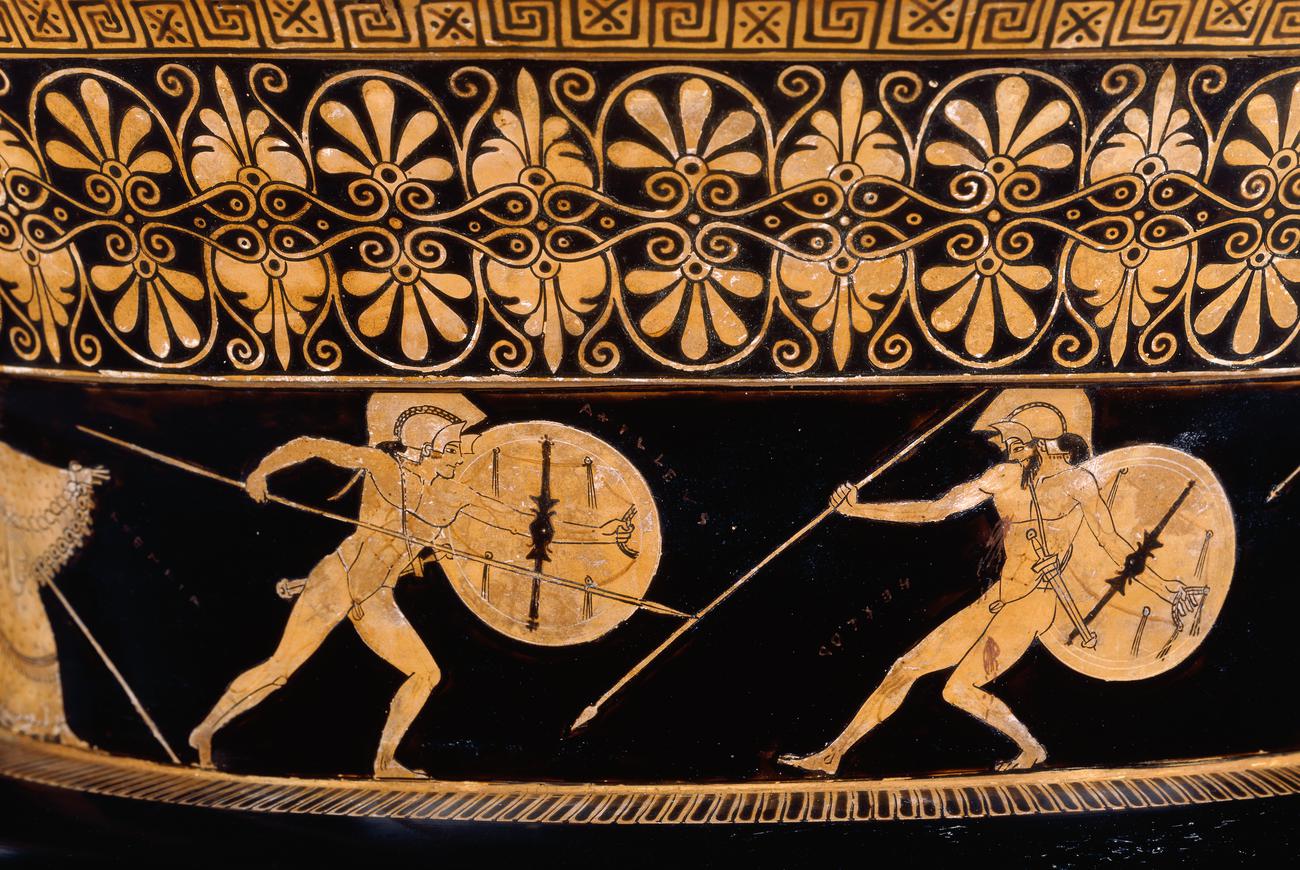
This vase is remarkable for its expressive figures and precise painting. The smooth red washes and delicate detailing show the high artistic standards of its time. A band of palmettes surrounds the base of the vase, adding a decorative, rhythmic finish.
See it in person
Attic kylix is on display in Room 15 at the British Museum on Great Russell Street, Bloomsbury, London — free to enter. Choose British Museum on audioguide.london and take a photo of it to hear this free audio guide in six languages — no app download needed.
New, in beta. British Museum support has just launched and is still improving: over 1,000 objects so far, with more added all the time.