At Handeck
- Artist: Alexandre Calame
- Date: about 1860
- Medium: oil on canvas
- Museum: The National Gallery
- Collection record: The National Gallery website
Listen to the free audio guide
About this artwork
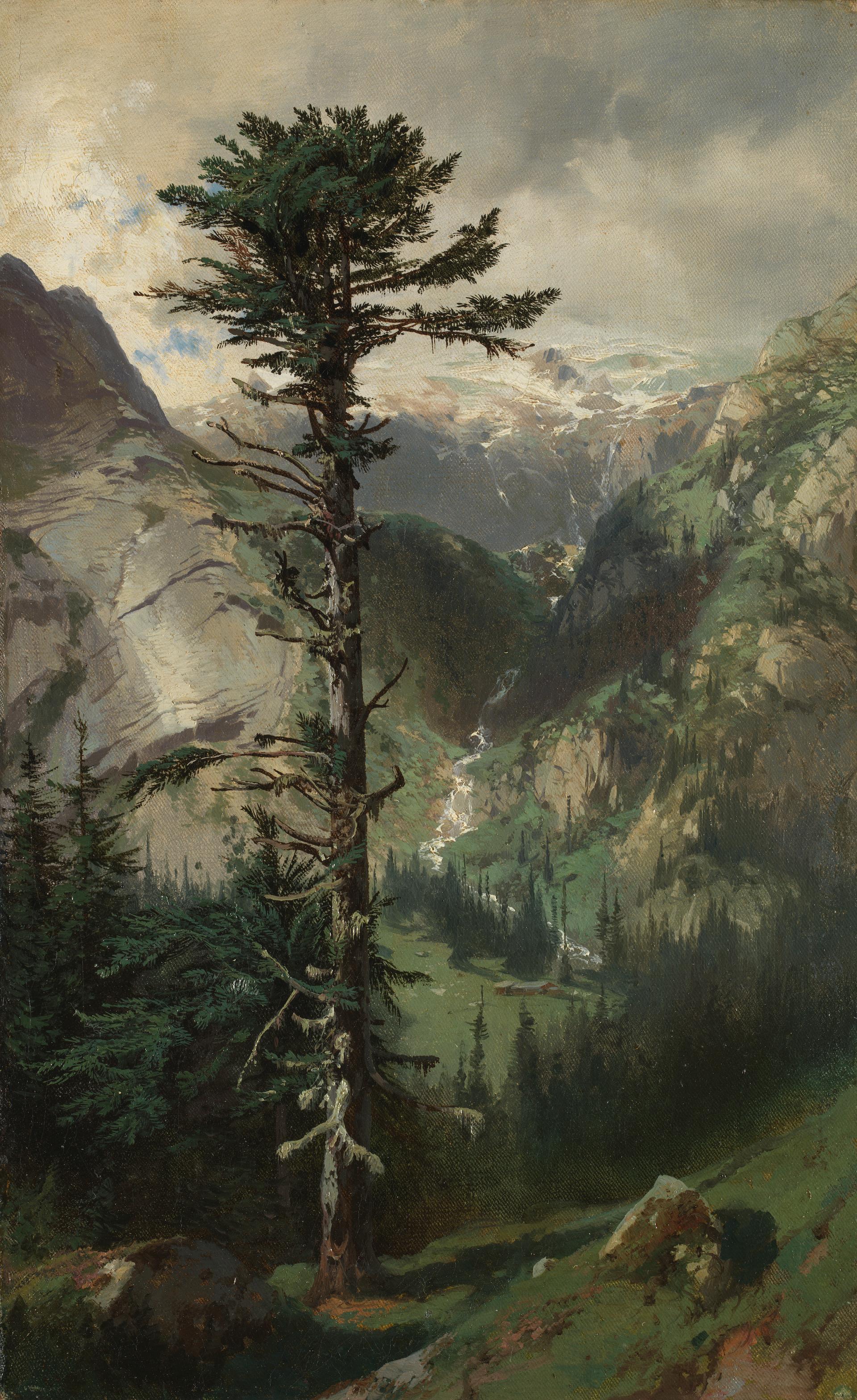
This is the "At Handeck" by Alexandre Calame, painted in the Swiss north. The painting depicts the valley of Handeck, a hamlet in the Bernese Alps, looking south towards its glaciers and valleys in the distance.
You can see the river Aare flowing through the valley below, breaking into waterfalls as it descends from the mountains. On the slopes of the valley bottom are small huts and fir trees, flanked by rocky cliffs on either side.
Notice how the painting creates an effect of immense space despite its relatively small size. The shift in scale is quite abrupt when our eyes move from the tree, which is close to us, to the distant mountains.
This solitary pine tree dominates the scene, rising from a steep mountain overlooking the valley. Many of its branches are damaged or broken away, but the uppermost ones with foliage remain intact. A storm appears to be gathering overhead, adding to the dramatic effect.
Trees held a significant symbolic meaning for Calame, often representing strength and endurance in the face of adversity. In this painting, despite being battered by the forces of nature, the pine tree might be seen as a symbol of those qualities. Its presence also hints at God's omnipresence, as Calame believed his landscapes were homages to the creator of beauty and truth.
This is an intriguing work that rewards close attention, with layers of meaning waiting to be uncovered.
See it in person
At Handeck hangs in The National Gallery on Trafalgar Square, London — free to enter. Point your phone at any artwork there and audioguide.london plays a free audio guide in six languages — no app download needed.