Anna and the Blind Tobit
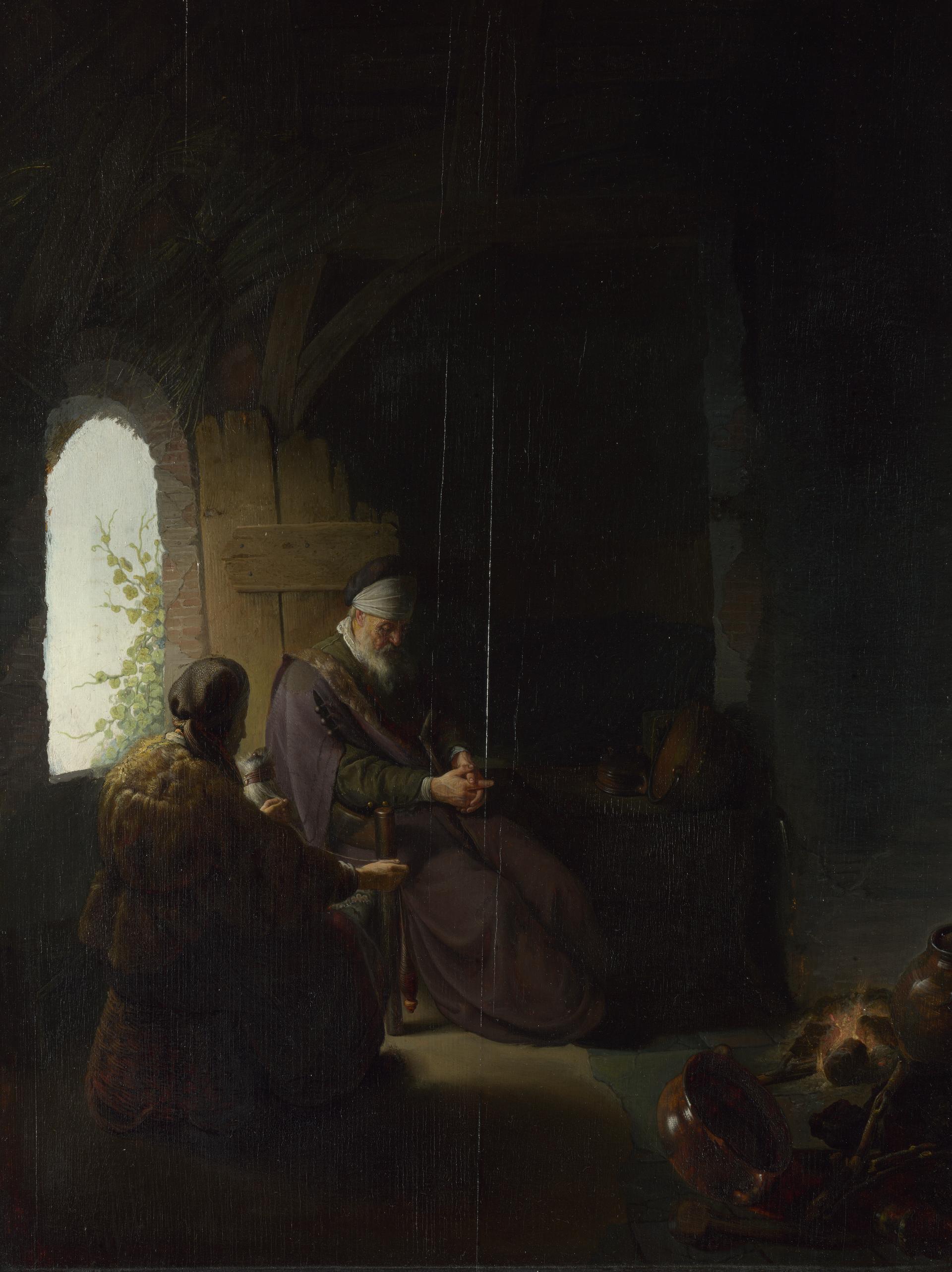
- Artist: Rembrandt
- Date: about 1630
- Medium: oil on wood
- Museum: The National Gallery
- Collection record: The National Gallery website
Listen to the free audio guide
About this artwork
This is "Anna and the Blind Tobit" painted by Rembrandt. The light falls onto an old man, Tobit, who sits facing into the room, his hands clasped, head lowered, face almost lost in shadow. He's near his wife Anna, who winds wool on a frame. An apocryphal story tells us that Tobit was a good and holy man, but God made him blind to test his faith.
The old couple awaits their son Tobias, who has gone to collect money owed to Tobit in order to relieve their poverty. Rembrandt's focus isn't on the miracle, but on celebrating age, patience, and faith of the old man and woman while they wait. He's interested in depicting old age, painting every etched line, every crooked bone as important.
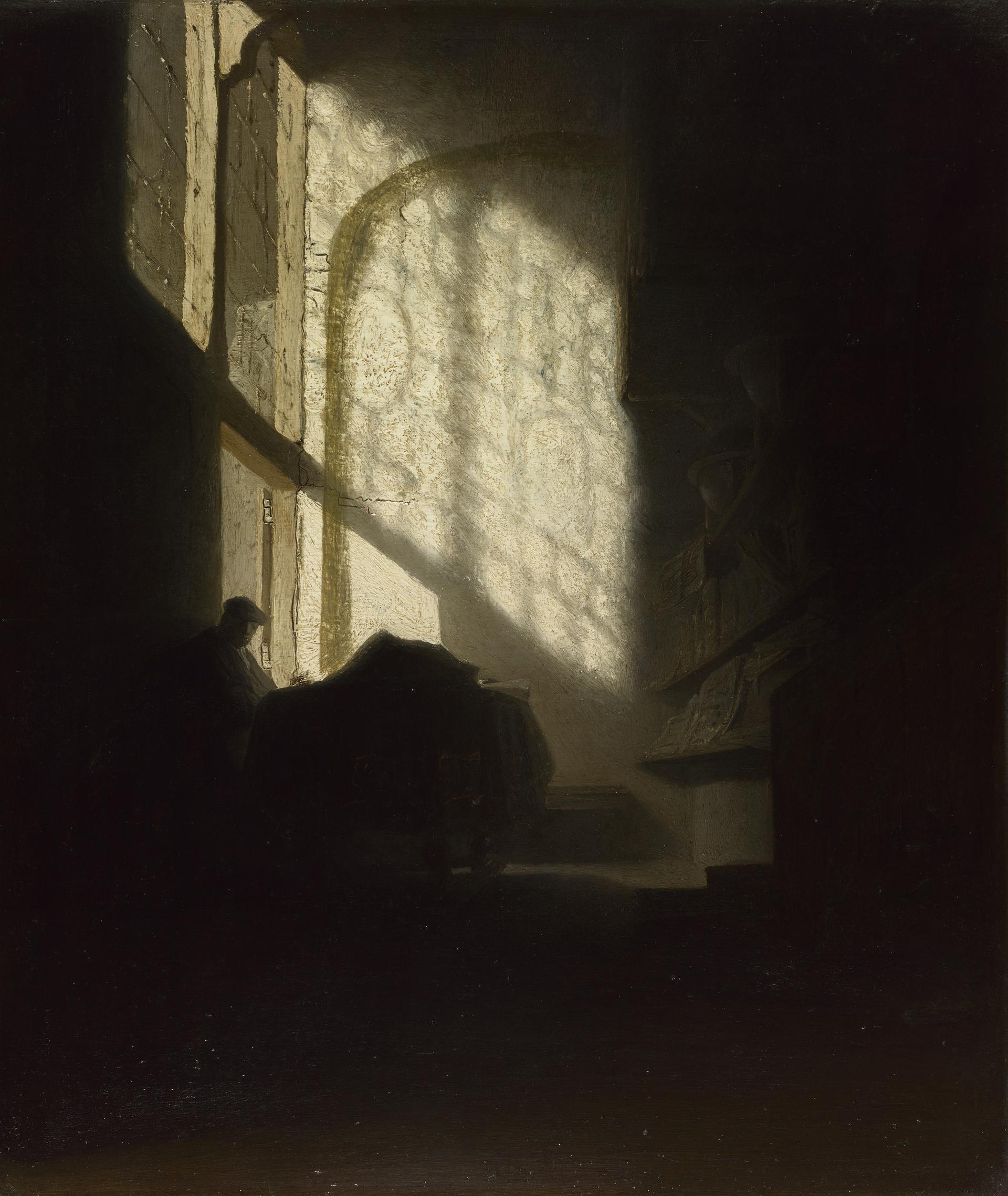
The painting is set in an old room with no glass in the window, a heavy wooden shutter, an open fire. The shadows are deep, but there's just a glint of light on an earthenware pot and on Tobit's face. He sits very still, hands clasped, head lowered as if deep in thought. His wife Anna is closer to us, turned away, looking down at her hands busy winding wool on a frame.
It's as if the whole room is waiting for their son Tobias to return with the money and the cure for Tobit's blindness. The ivy clinging to the window suggests endurance, patience – 'holding on'.
See it in person
Anna and the Blind Tobit hangs in The National Gallery on Trafalgar Square, London — free to enter. Point your phone at any artwork there and audioguide.london plays a free audio guide in six languages — no app download needed.