An Old Man in an Armchair
- Artist: Rembrandt
- Date: 1650s
- Medium: oil on canvas
- Museum: The National Gallery
- Collection record: The National Gallery website
Listen to the free audio guide
About this artwork
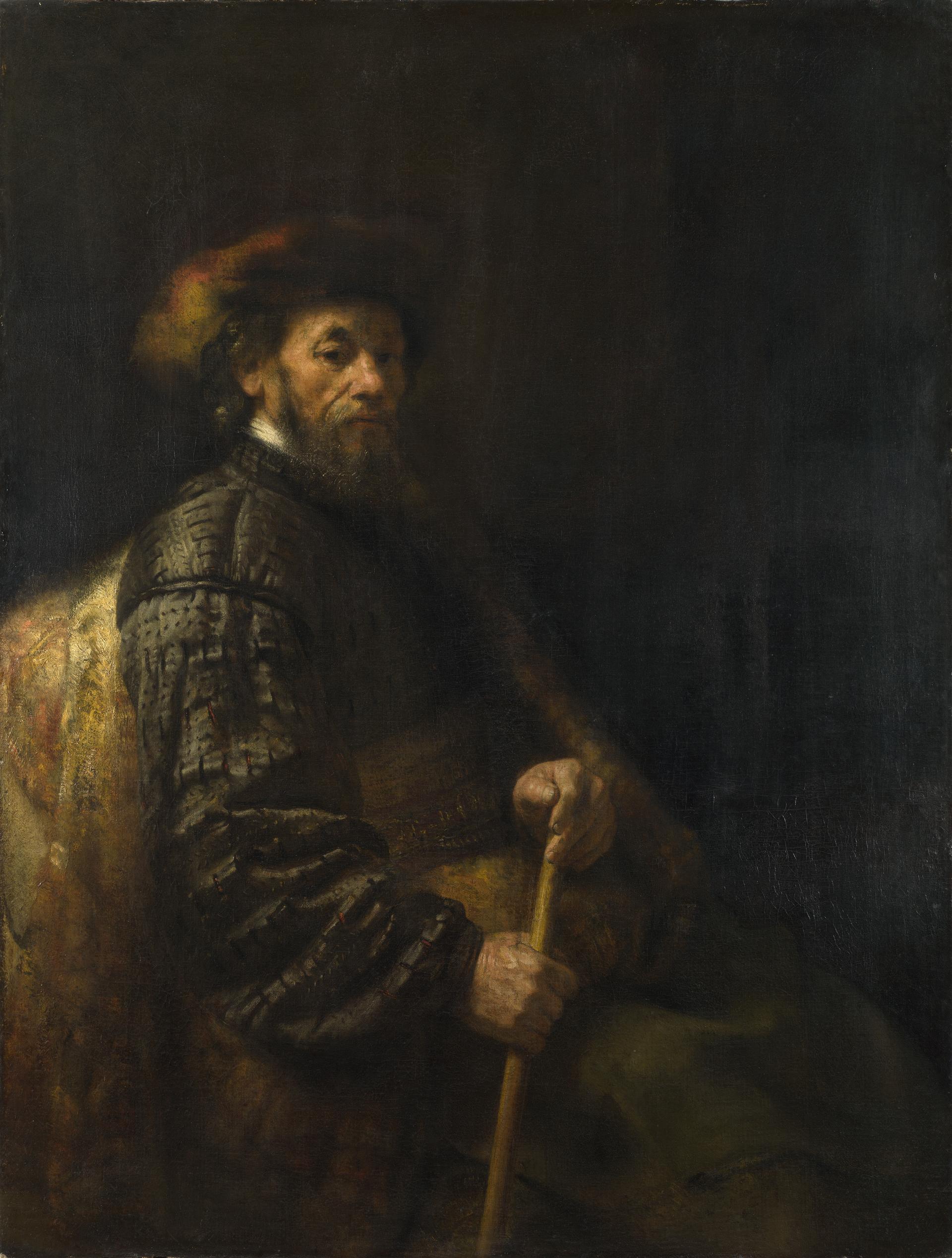
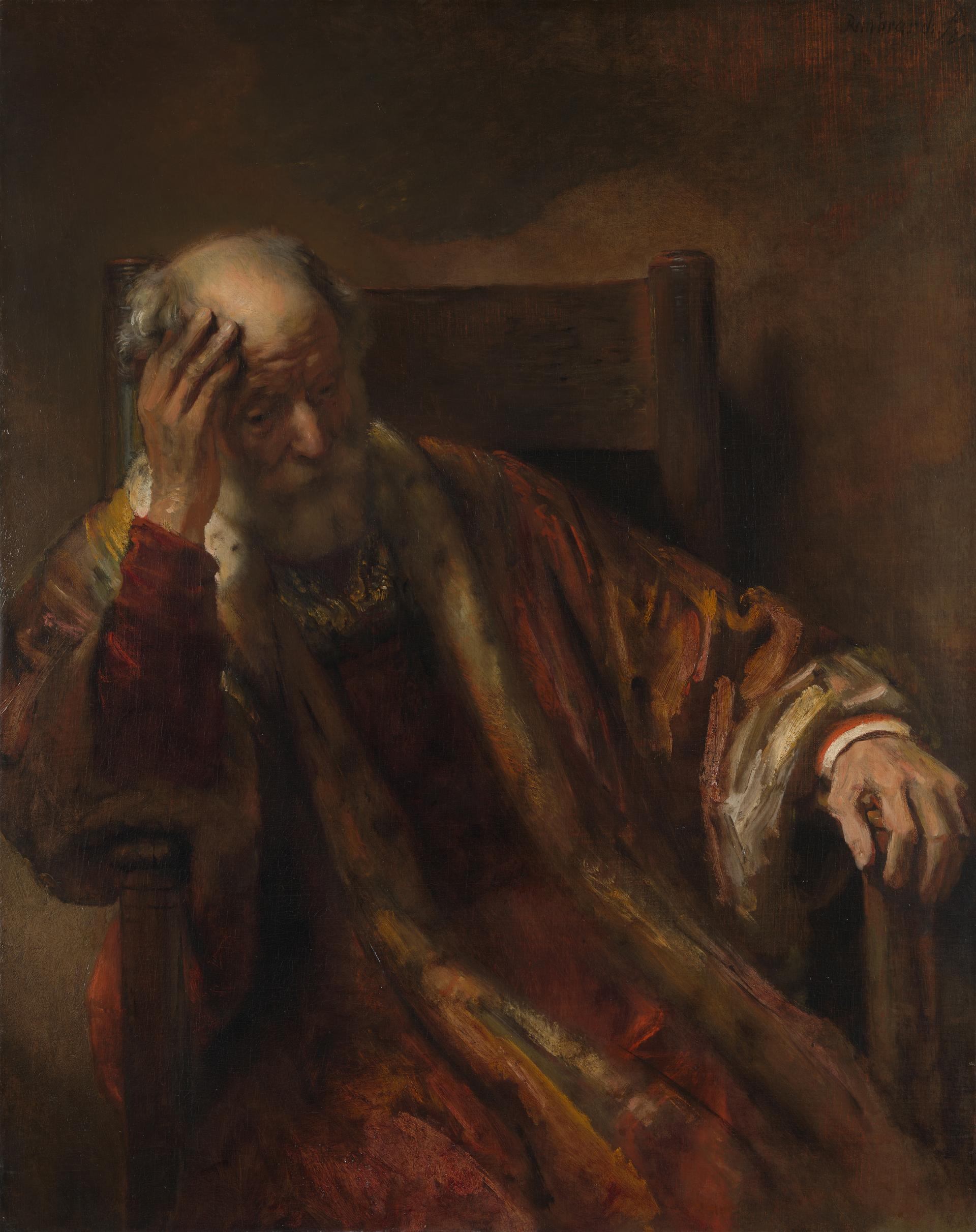
This is "An Old Man in an Armchair" by Rembrandt, painted in the 1650s. Notice how the elderly man is slumped sideways across a chair, one hand gripping the wooden arm and the other resting lightly on his temple. His eyes are cast down towards the floor, and the light which slants across his body from behind his left shoulder throws them into a deep shade.
Rembrandt has used a very suggestive style of painting here, with rough brushwork and bold use of shadowy light effects. This is not a formal portrait, but rather a study of a 'character type'. The artist has experimented with this style to capture the mood and atmosphere of his subject, using simple dabs and flecks of white paint to suggest highlights on the man's fingernail and dry skin.
The use of pigment in this painting was highly innovative for the time, and it reflects Rembrandt's development towards a rougher manner of painting that he would later employ. Some have questioned whether Rembrandt himself painted this work or if it is actually by one of his pupils or followers, but recent studies suggest that this is indeed an important early experimental step in Rembrandt's career.
See it in person
An Old Man in an Armchair hangs in The National Gallery on Trafalgar Square, London — free to enter. Point your phone at any artwork there and audioguide.london plays a free audio guide in six languages — no app download needed.