An Astronomer
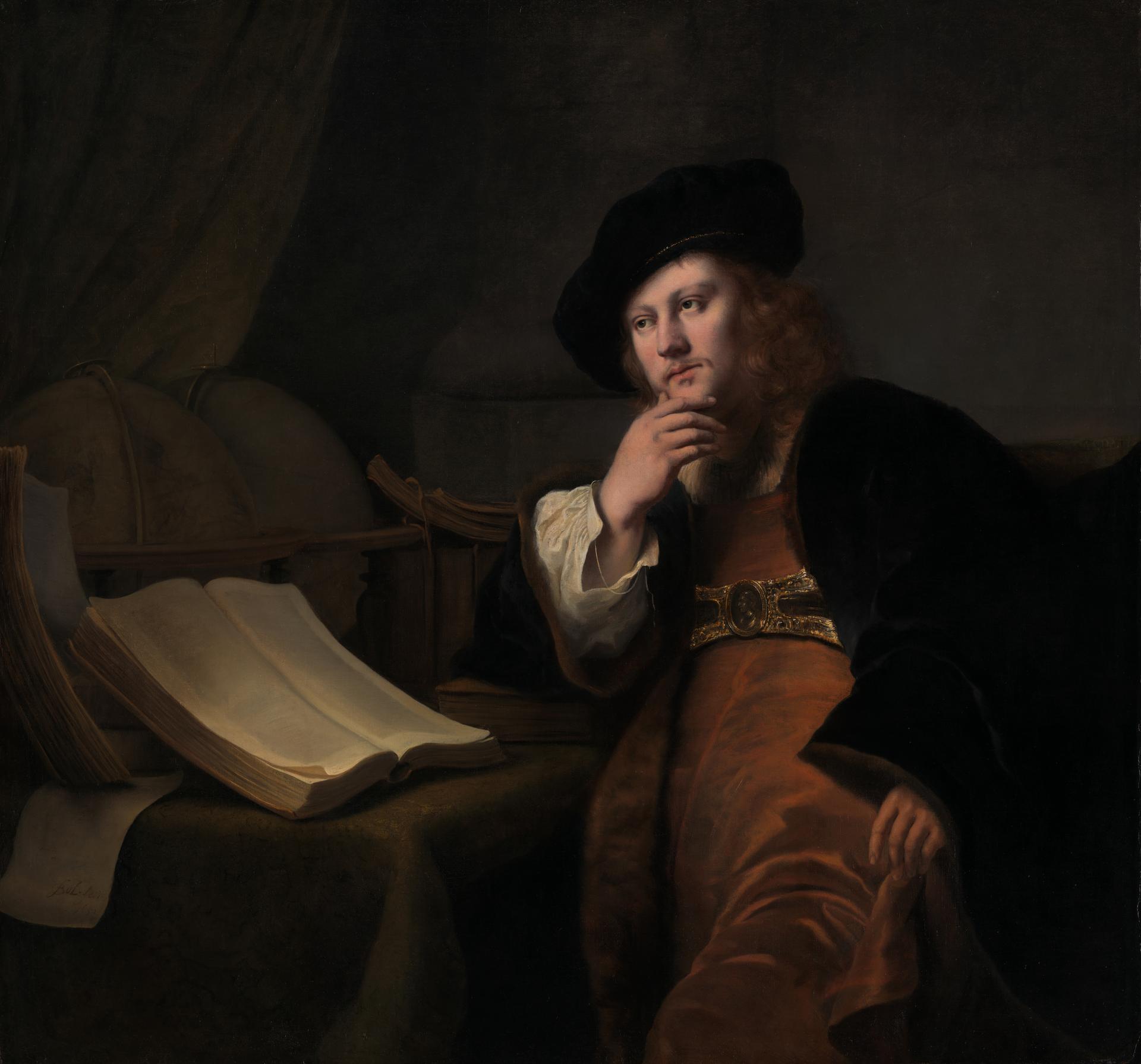
- Artist: Ferdinand Bol
- Date: 1652
- Medium: oil on canvas
- Museum: The National Gallery
- Collection record: The National Gallery website
Listen to the free audio guide
About this artwork
This is the An Astronomer by Ferdinand Bol, painted in 1652. On the left side we have books and globes, then considered key repositories of knowledge. And on the right is the world of thought and reflection represented by the sitter, who adopts the classic thinker's pose: hand on chin, eyes apparently unfocused, looking slightly upwards into the middle distance.
The original title of the painting isn't recorded, but it's known as An Astronomer because the nearer of the two globes shows a celestial map of the stars and their constellations. Some art historians have suggested that it may be a self-portrait, but the sitter doesn't resemble other images believed to be of Bol.
More likely, it's an idealised depiction of an astronomer as a scientist and thinker – there are plenty of other examples in Dutch art around this time. The pose of Bol's figure and his abstracted manner also suggest that the painting may belong to an artistic tradition of depicting melancholic philosophers.
The implication behind the convention was that a scholar's research would inevitably lead to an awareness of the futility of human endeavour in the face of death. This isn't necessarily reflective of Bol's own life at this time, though – 1652 was actually a year when his career was taking off. He'd developed a lighter, brighter palette and was making use of more elegant poses, earning him a reputation as a portraitist and history painter that outshone that of his former master, Rembrandt.
See it in person
An Astronomer hangs in The National Gallery on Trafalgar Square, London — free to enter. Point your phone at any artwork there and audioguide.london plays a free audio guide in six languages — no app download needed.