An Astrologer
- Artist: Cornelis Bega
- Date: 1663
- Medium: oil on wood
- Museum: The National Gallery
- Collection record: The National Gallery website
Listen to the free audio guide
About this artwork
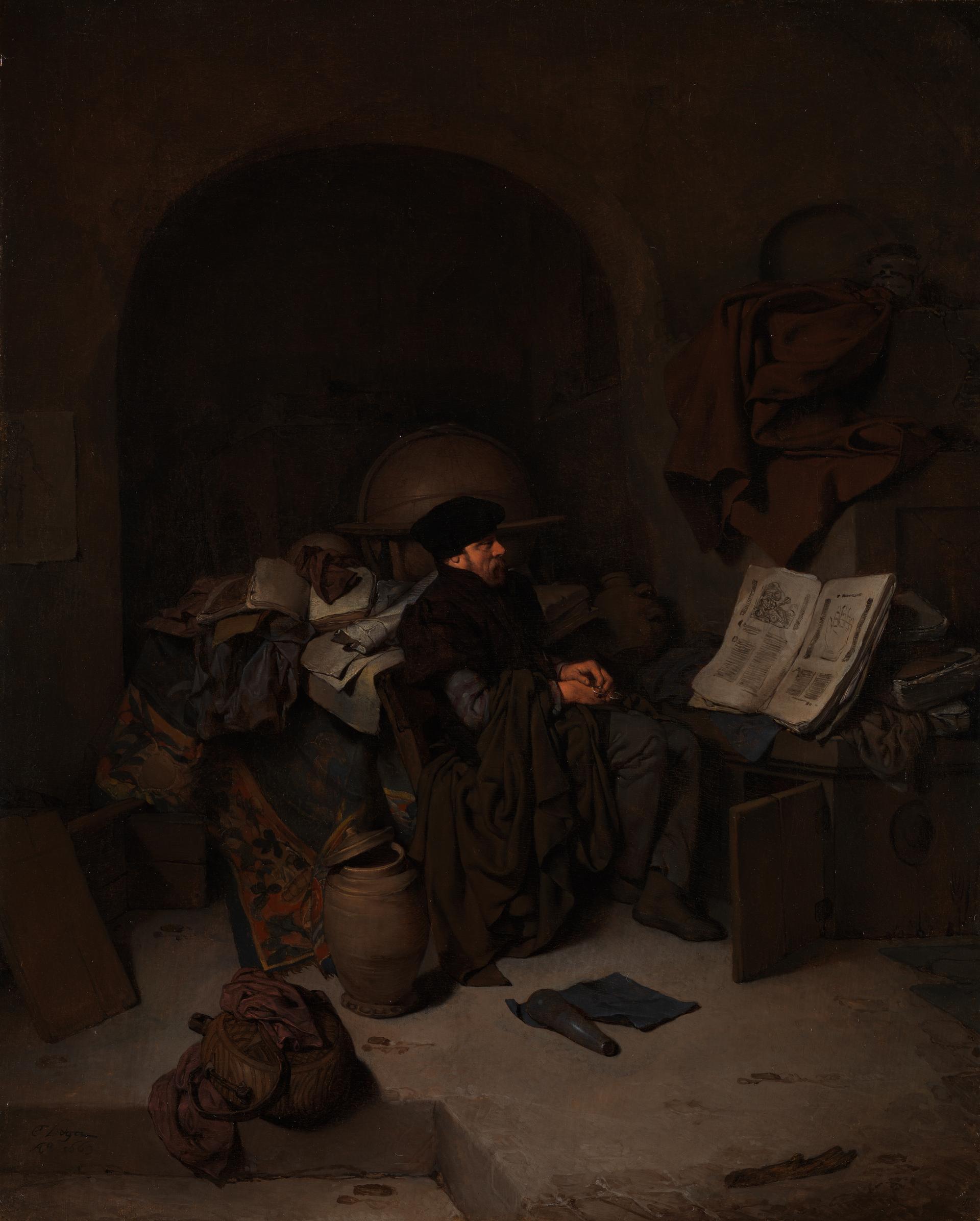
This is "An Astrologer" by Cornelis Bega. Painted in 1663, it's a small oil-on-wood portrait that invites us to consider the life and work of a 17th-century astrologer.
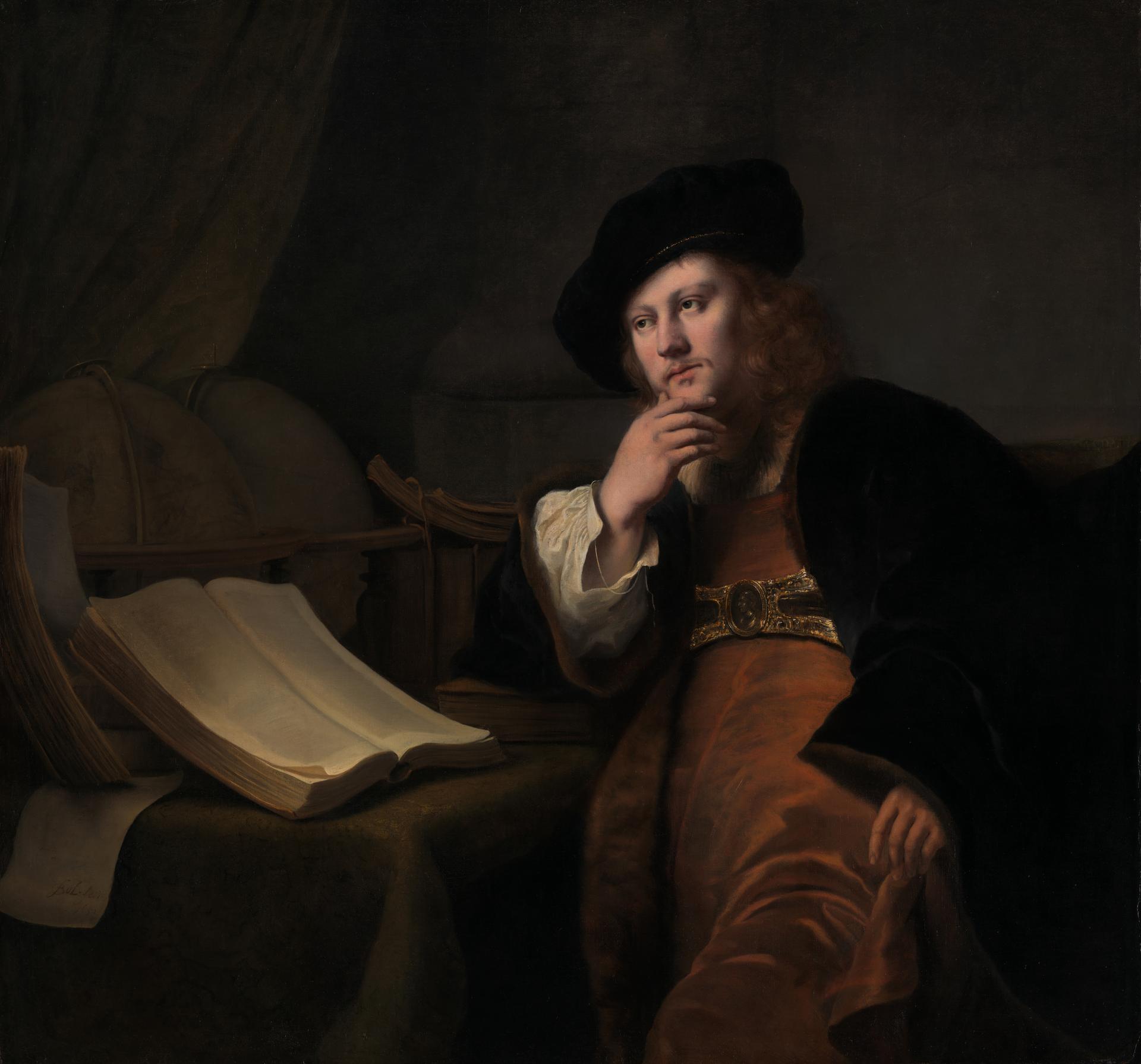
The subject sits at a desk, holding reading glasses in one hand and clasping his other hand over his lap. In front of him is an open book, its pages revealing a diagram of a human palm. This suggests that the astrologer was studying palmistry, which was seen as a way to interpret someone's character or predict their future.
But take a closer look at the man himself. His vacant expression and slumped shoulders convey a sense of hopelessness. The disorderly surroundings - books, papers, and fabric scattered everywhere - add to this feeling of neglect. It's almost as if he's given up on his endeavours, realising the futility of trying to predict the future.
The artist has added several details that hint at the astrologer's interests in various fields. A celestial globe sits behind him, while a flask on the floor suggests an interest in alchemy. On the wall, a sketch of a human skeleton adds to this sense of mortality and impermanence.
What's striking about this painting is how it challenges our expectations of what a 17th-century astrologer should look like. Instead of depicting him as a charlatan or quack doctor, Bega presents us with a handsome and scholarly man who seems to be struggling with the limits of his knowledge. The overall effect is one of melancholy, as if we're witnessing the final moments of someone who's lost faith in their own abilities.
See it in person
An Astrologer hangs in The National Gallery on Trafalgar Square, London — free to enter. Point your phone at any artwork there and audioguide.london plays a free audio guide in six languages — no app download needed.