An Allegory with Venus and Time
- Artist: Giovanni Battista Tiepolo
- Date: about 1754-8
- Medium: oil on canvas
- Museum: The National Gallery
- Collection record: The National Gallery website
Listen to the free audio guide
About this artwork
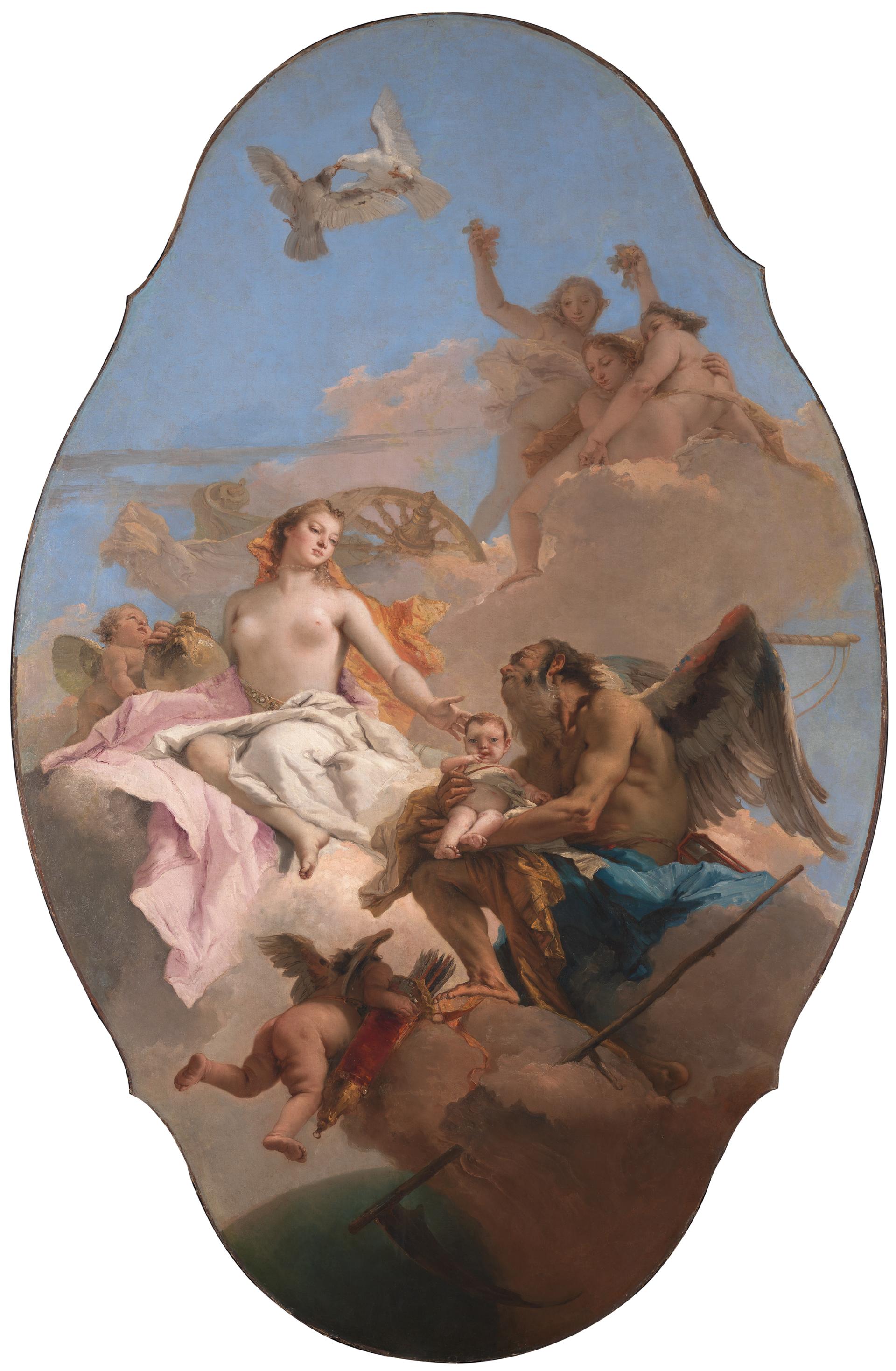
This is the "An Allegory with Venus and Time" painted by Giovanni Battista Tiepolo. The scale of the figures and the sense that they are above us hints at the intended destination: this work was made to be seen from below, and at a great distance.
The imagery suggests it was made to celebrate a new heir. Venus, the goddess of love and fertility, gestures lovingly towards an infant, who is held by a winged figure – a personification of Time, who has here laid aside his scythe. The act symbolises immortality, although the hourglass at his waist suggests the inevitable passing of time.
Tiepolo's characteristic loose handling of paint can be seen in Time's feathery wings, and his delicate colouring in Venus' pale flesh and striking pink drapery, in contrast with Time's brown skin and brilliant blue loincloth. The Three Graces bless the child by scattering flowers above in the clouds.
Note that the painting is thought to have been painted between 1753 and 1758, during Tiepolo's return from Würzburg. It was later moved to various locations before being bought for this collection in 1969.
See it in person
An Allegory with Venus and Time hangs in The National Gallery on Trafalgar Square, London — free to enter. Point your phone at any artwork there and audioguide.london plays a free audio guide in six languages — no app download needed.