An Allegory of the Marriage of the Elector Palatine
- Artist: Giovanni Antonio Pellegrini
- Date: 1713-14
- Medium: oil on canvas
- Museum: The National Gallery
- Collection record: The National Gallery website
Listen to the free audio guide
About this artwork
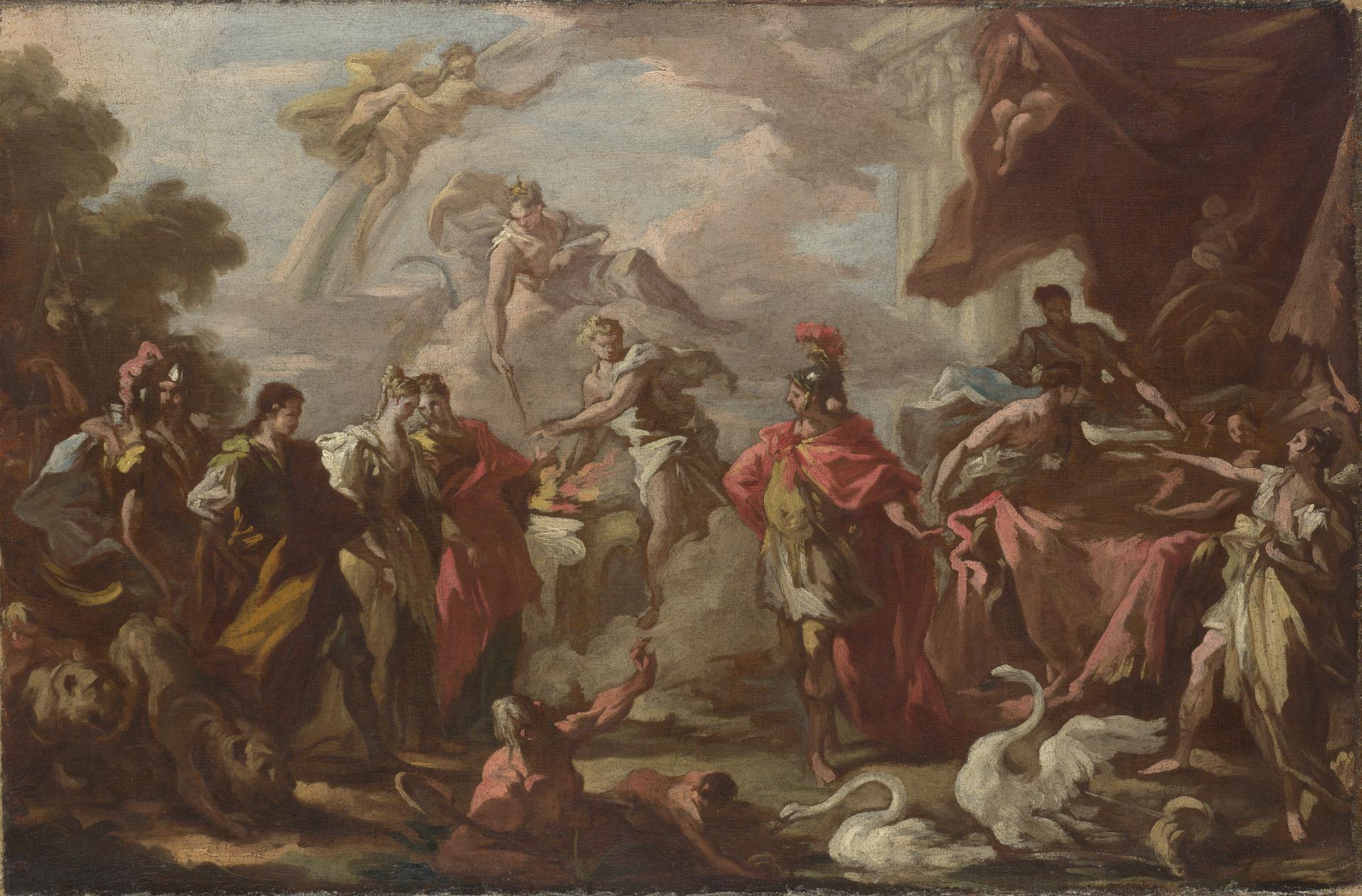
This is "An Allegory of the Marriage of the Elector Palatine" painted by Giovanni Antonio Pellegrini in 1713-14. This painting is an allegory, meaning it represents a complex idea or theme through symbols and figures.
It depicts the marriage between Johann Wilhelm, Elector Palatine, and Anna Maria Luisa de' Medici, daughter of Cosimo III de' Medici, Grand Duke of Tuscany, which took place in 1691. The groom is dressed in Roman costume with a plumed helmet and surrounded by mythological figures.
The goddess Juno blesses the marriage flame, tended by Hymen, god of marriage. The bride approaches from the left, her head lowered to suggest modesty and subservience. This was seen as wifely virtues during this time period.
Notice how Pellegrini used a muted colour palette with vivid reds and yellows to pick out figures and key details. The pink-tinged clouds and faded blue sky are characteristic of Venetian painting from the early eighteenth century.
This painting is part of a series of 14 pictures that celebrated Johann's life and reign, which were intended for Bensberg Palace near Düsseldorf. Pellegrini was known to travel extensively throughout his career, establishing himself as one of the most sought-after decorative painters in Europe during this time period.
See it in person
An Allegory of the Marriage of the Elector Palatine hangs in The National Gallery on Trafalgar Square, London — free to enter. Point your phone at any artwork there and audioguide.london plays a free audio guide in six languages — no app download needed.