Adieu Paris ('The Customs')
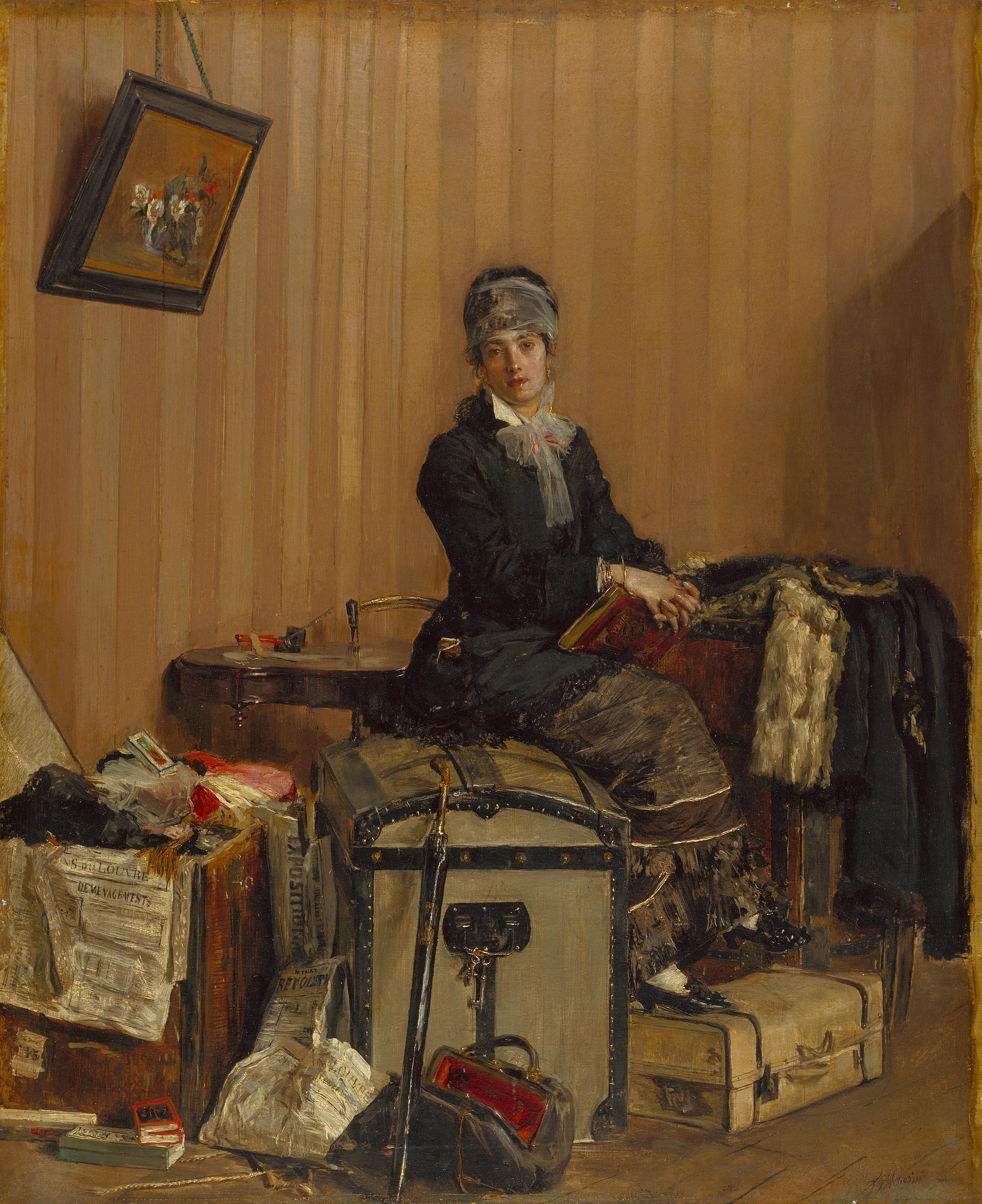
- Artist: Antonio Mancini
- Date: 1877
- Medium: oil on canvas
- Museum: The National Gallery
- Collection record: The National Gallery website
Listen to the free audio guide
About this artwork
This is the Adieu Paris ('The Customs') by Antonio Mancini. Painted in 1877, this work represents a significant change in direction for the artist. We see an elegant young woman surrounded by trunks and travel paraphernalia, preparing to leave Paris. But what's intriguing is that customs agents may soon arrive to inspect her belongings, adding a sense of urgency to the scene.
Mancini was drawn to Paris in the 1870s, where he was taken up by leading Impressionist artists like Manet and Sargent. He exhibited widely during this time but ultimately returned to Naples due to mental health issues. This painting was one of five delivered to Goupil & Cie, art dealers who specialized in contemporary Italian art.
Notice the meticulous Realist style, with every detail precisely rendered, from the headlines in the Paris newspapers used for packing to the elegant young woman's dress and accessories. The painting was meant to appeal to international clients, many of whom would visit Paris for the Universal Exhibition in 1878. Its title, Adieu Paris, plays on sadness at having to leave the City of Lights.
This work is unique in Mancini's oeuvre both in subject matter and style, reflecting his willingness to adapt to Parisian taste. It was later acquired by Hugh Lane, a collector who believed Mancini was among the most important living painters, and today it's shared between the National Gallery and the Hugh Lane Gallery in Dublin.
See it in person
Adieu Paris ('The Customs') hangs in The National Gallery on Trafalgar Square, London — free to enter. Point your phone at any artwork there and audioguide.london plays a free audio guide in six languages — no app download needed.