Abraham and Isaac
- Artist: Johann Heinrich Ferdinand Olivier
- Date: 1817
- Medium: oil on wood
- Museum: The National Gallery
- Collection record: The National Gallery website
Listen to the free audio guide
About this artwork
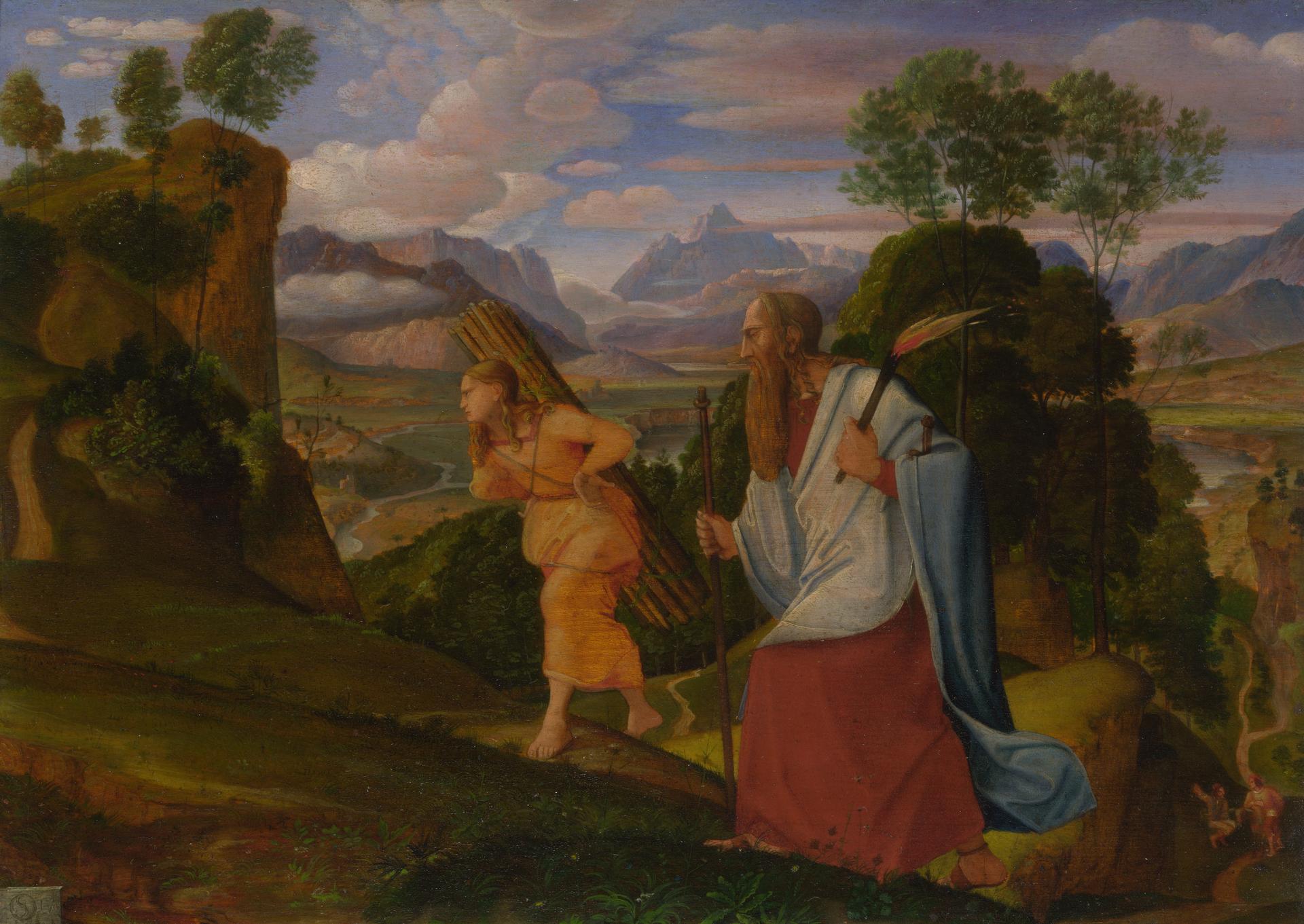
This is "Abraham and Isaac" painted by Johann Heinrich Ferdinand Olivier. The style of this painting is deliberately old-fashioned, with precise outlines and a slightly awkward scale to the figures. This is quite deliberate, actually - the artist was trying to evoke a sense of history and tradition.
The figures themselves are inspired by medieval woodcuts, but they're not just static silhouettes. There's real emotion here, particularly in Abraham's stride up the mountainside. He's got his eyes fixed on the path ahead, determined to carry out this difficult task.
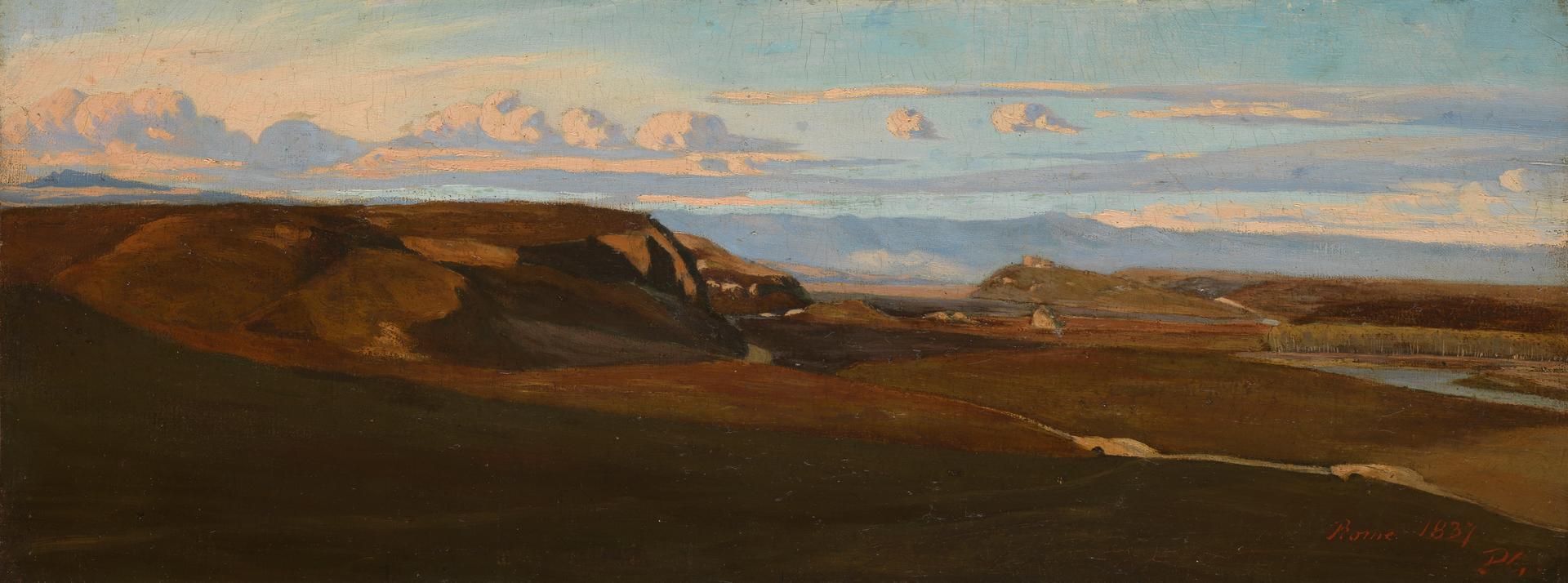
In the background, you'll notice a landscape that's loosely based on Olivier's own studies of the countryside around Salzburg. It's beautifully rendered, with slim feathery trees and pink-tinged clouds in the blue sky. But if you look closely, you might also catch some hints of Italian Renaissance influence here - perhaps even a nod to Giovanni Bellini.
What's really interesting about this painting is that it's part of a larger movement in the art world at the time. Olivier was part of an artistic brotherhood known as the Nazarenes, who were all about reviving traditional styles and themes in their work. For them, religious painting wasn't just about depicting sacred scenes - it was about evoking a sense of awe and wonder in the viewer.
This is a really powerful piece, not just because of its historical significance but also because of the emotions it conveys. It's a reminder that even in the most difficult moments, faith and obedience can be tested to their limits.
See it in person
Abraham and Isaac hangs in The National Gallery on Trafalgar Square, London — free to enter. Point your phone at any artwork there and audioguide.london plays a free audio guide in six languages — no app download needed.