Abel Widmer
- Artist: Eugène Delacroix
- Date: about 1824
- Medium: oil on canvas
- Museum: The National Gallery
- Collection record: The National Gallery website
Listen to the free audio guide
About this artwork
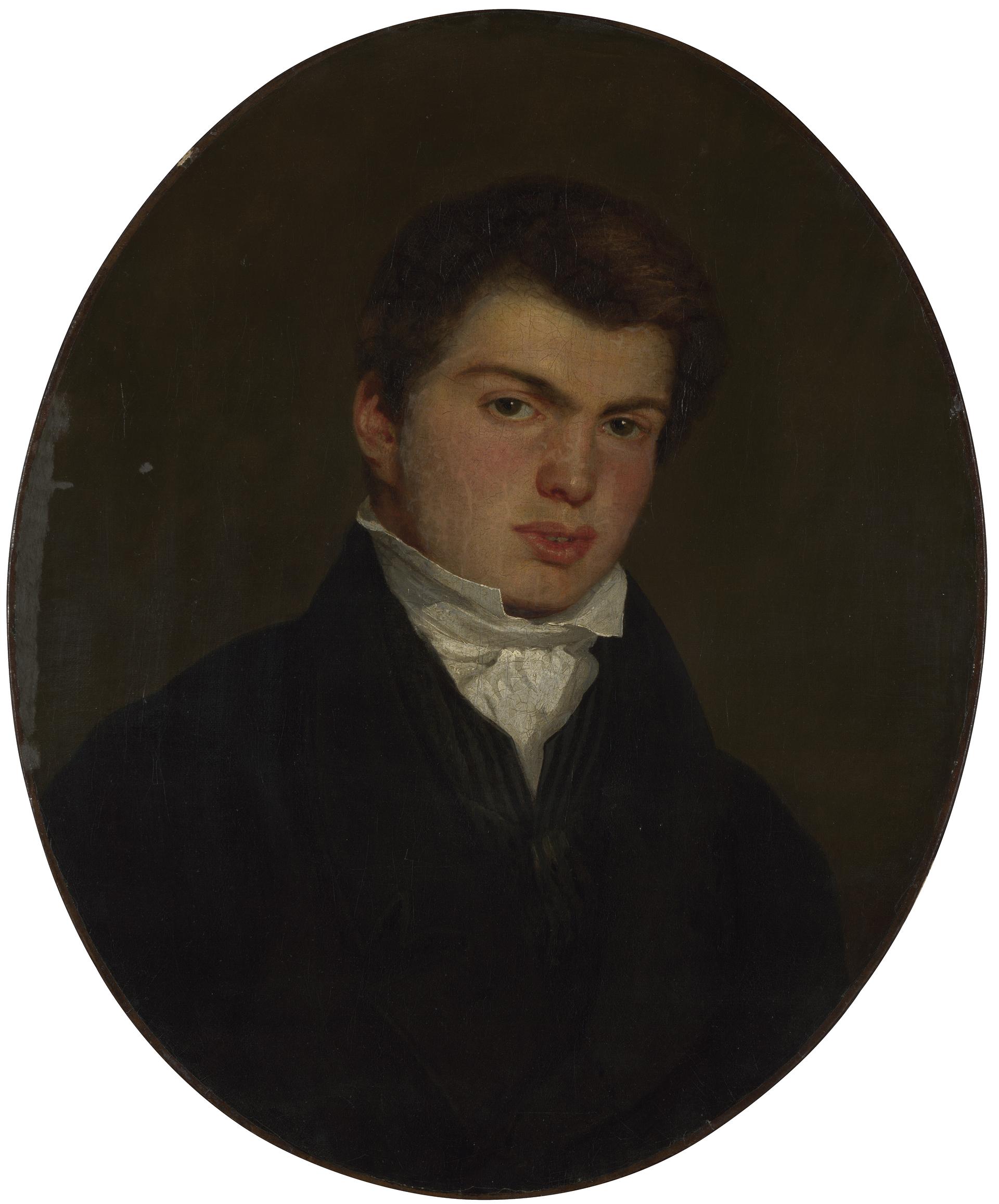
This is the Abel Widmer by Eugène Delacroix. Painted around 1824, it's most likely one of a series of ten portraits commissioned by Prosper-Parfait Goubaux for his school in Paris. Six of these portraits have survived to this day.
Delacroix was only in his mid-twenties when he painted this portrait, and we can see that he was still finding his style. He's looking at Old Masters like Velázquez for inspiration, which is evident in the way the subject's face is rendered with smooth glazes. The background is a dark olive-brown, providing a nice contrast to the warm pinks and creams of Widmer's face.
This portrait shows Abel Widmer on the verge of manhood, and it's a lively and engaging depiction. What's interesting is how Delacroix combines different techniques to create this effect - he's copying Velázquez's style, which emphasizes firm yet blended brushstrokes.
Widmer himself was a pupil at Goubaux's school in Paris. He won the second prize in elementary mathematics in 1824 and went on to study at the Ecole polytechnique before joining his uncle's spinning mill. Unfortunately, heart disease cut his life short at just 33 years old.
See it in person
Abel Widmer hangs in The National Gallery on Trafalgar Square, London — free to enter. Point your phone at any artwork there and audioguide.london plays a free audio guide in six languages — no app download needed.