A Young Woman
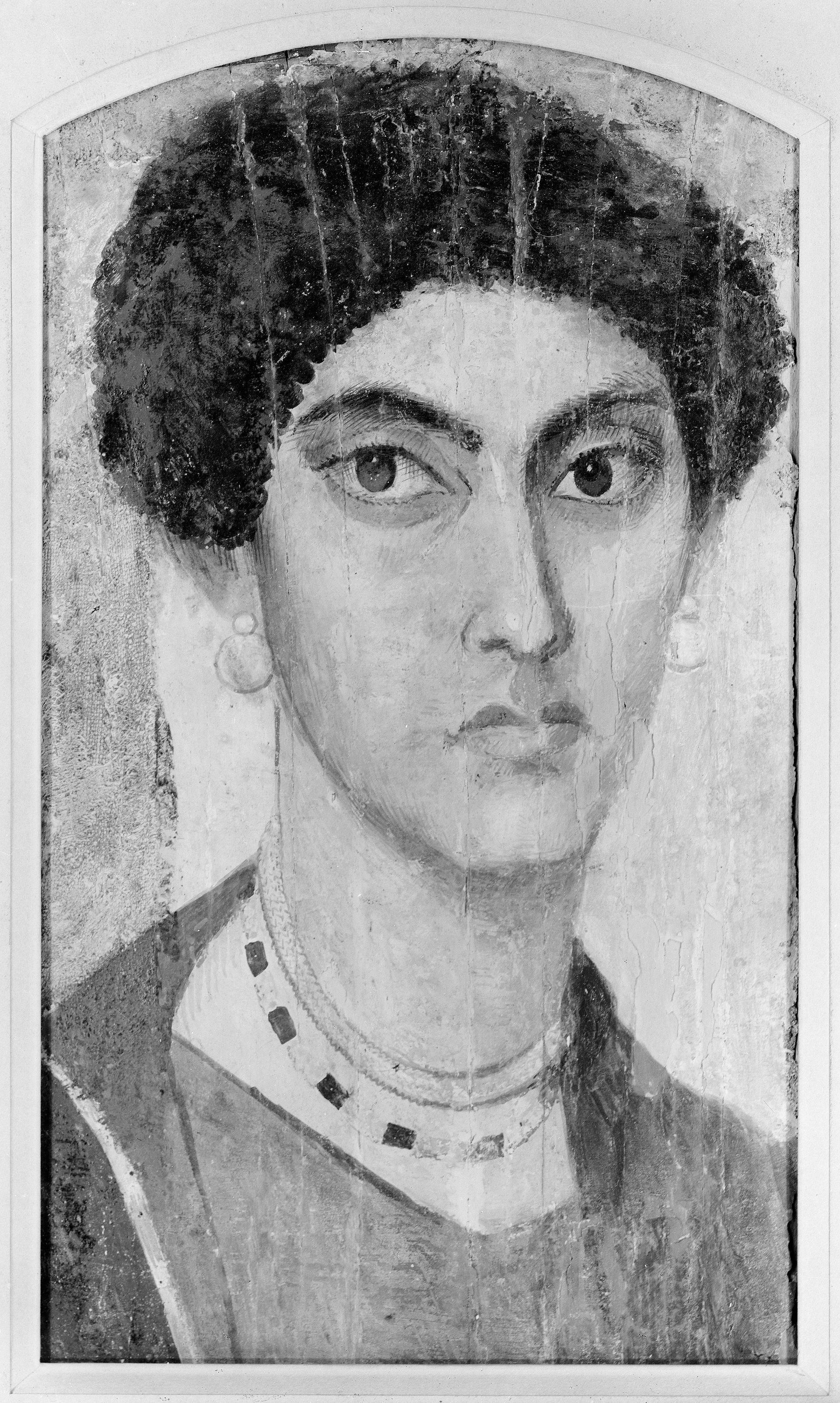
- Artist: Greco-Roman
- Date: probably 2nd to 3rd Century
- Medium: encaustic on wood
- Museum: The National Gallery
- Collection record: The National Gallery website
Listen to the free audio guide
About this artwork
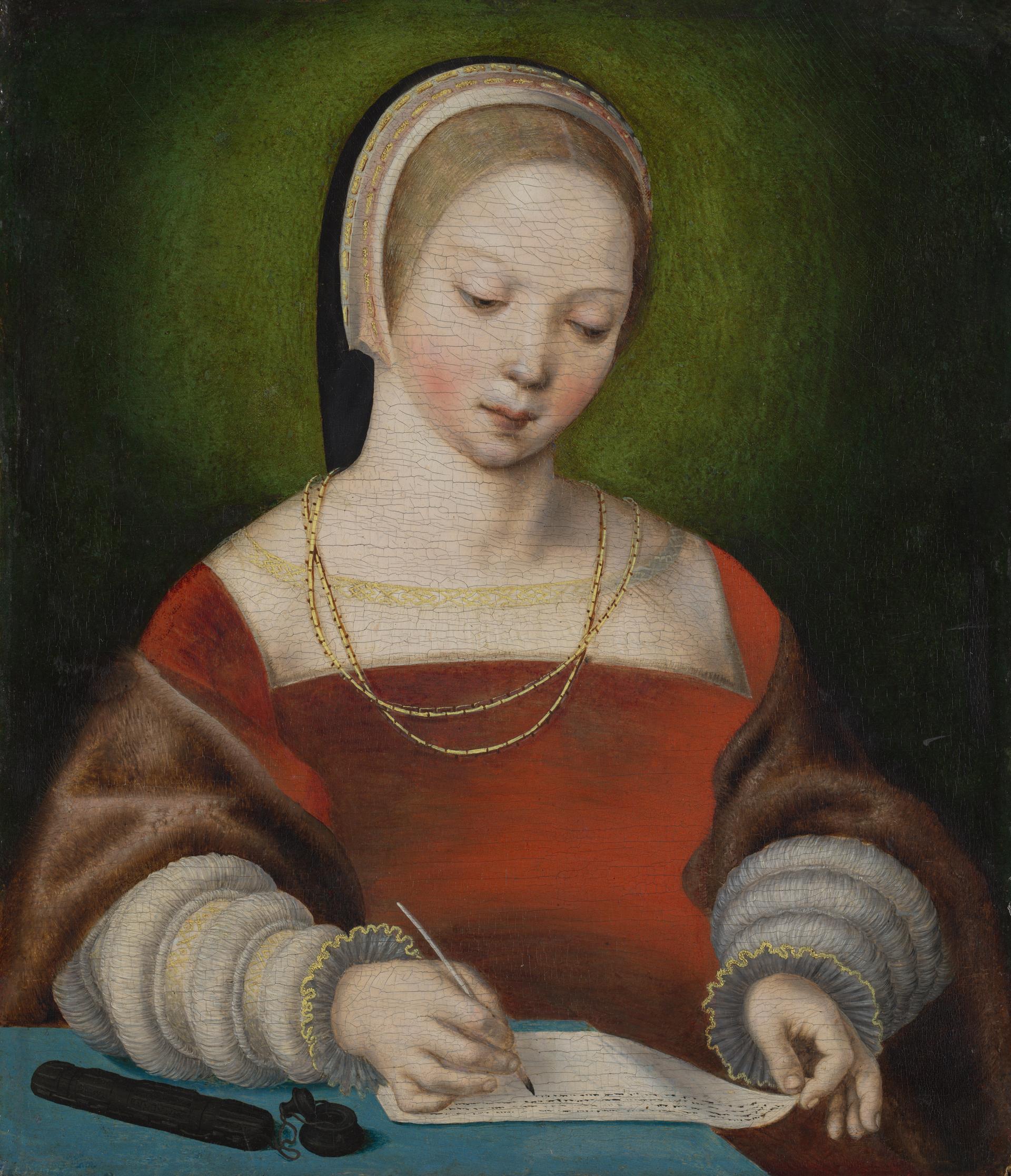
This is "A Young Woman" painted in the Greco-Roman style. The artist records her features with great accuracy, including her large, almond-shaped eyes that slant upwards and her low forehead, long thin nose, plump but small mouth, and small, square chin.
Her rich red tunic has a black gold-edged stripe at her right side, known as an aclavus, which was a sign of status in Rome. This portrait dates to the first century AD when Egypt was part of the Roman Empire.
It's likely that this image was commissioned after her death and placed within the mummy wrappings, serving as a recognizable feature during the burial ceremony. Only the wealthiest citizens could afford such portraiture and mummification, suggesting that this woman may have been of high social standing in her community.
The painting is an example of encaustic on wood, a medium that fell out of favour with early Renaissance artists but was used by those in the Greco-Roman style. This portrait, like others from this period, highlights the cultural exchange between different societies during ancient times and showcases the link between the art of the ancients and the painters of the Renaissance.
See it in person
A Young Woman hangs in The National Gallery on Trafalgar Square, London — free to enter. Point your phone at any artwork there and audioguide.london plays a free audio guide in six languages — no app download needed.