A Wagon fording a Stream
- Artist: Peter Paul Rubens
- Date: probably 1625-40
- Medium: black chalk and oil on paper, mounted on canvas
- Museum: The National Gallery
- Collection record: The National Gallery website
Listen to the free audio guide
About this artwork
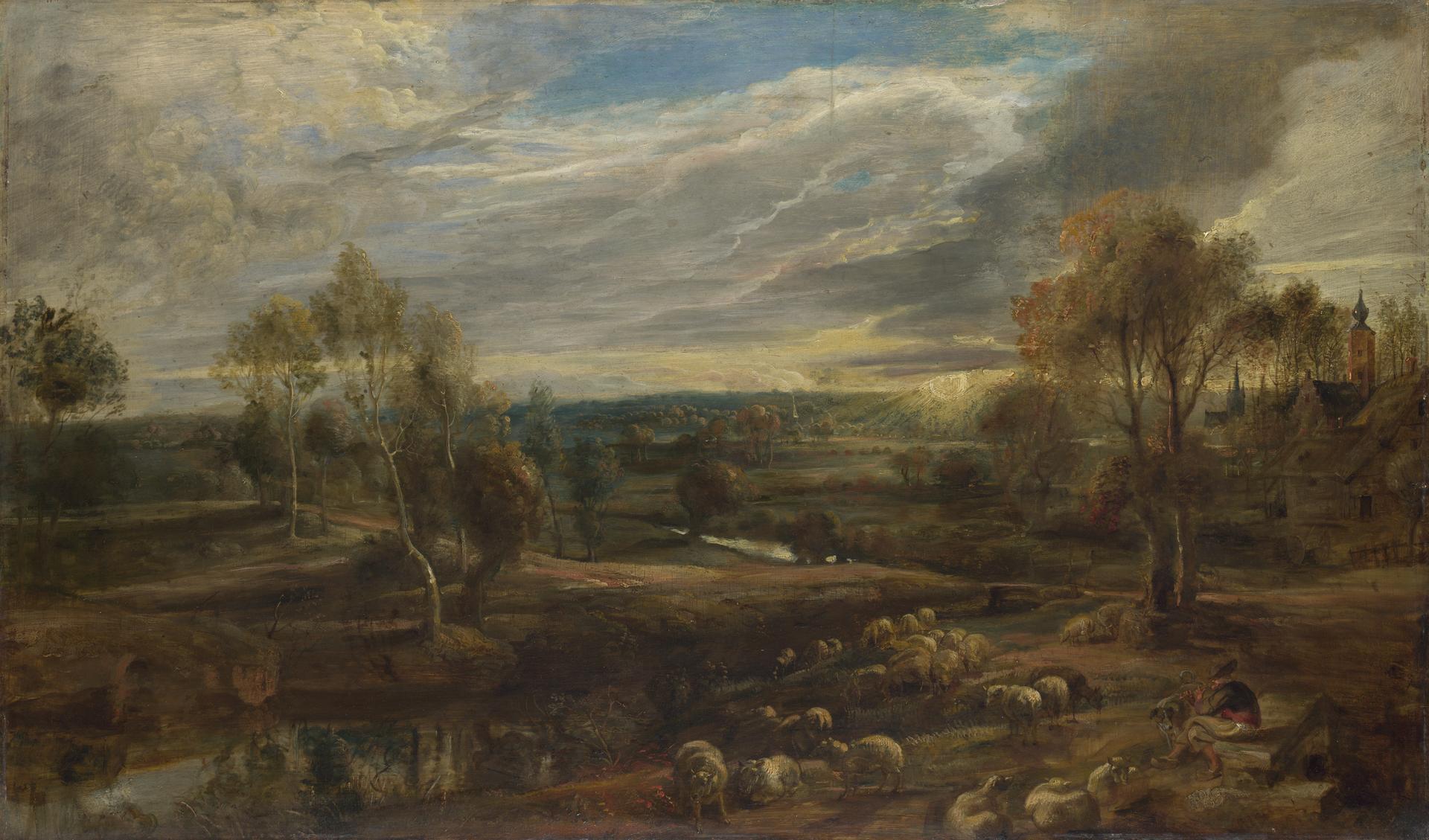
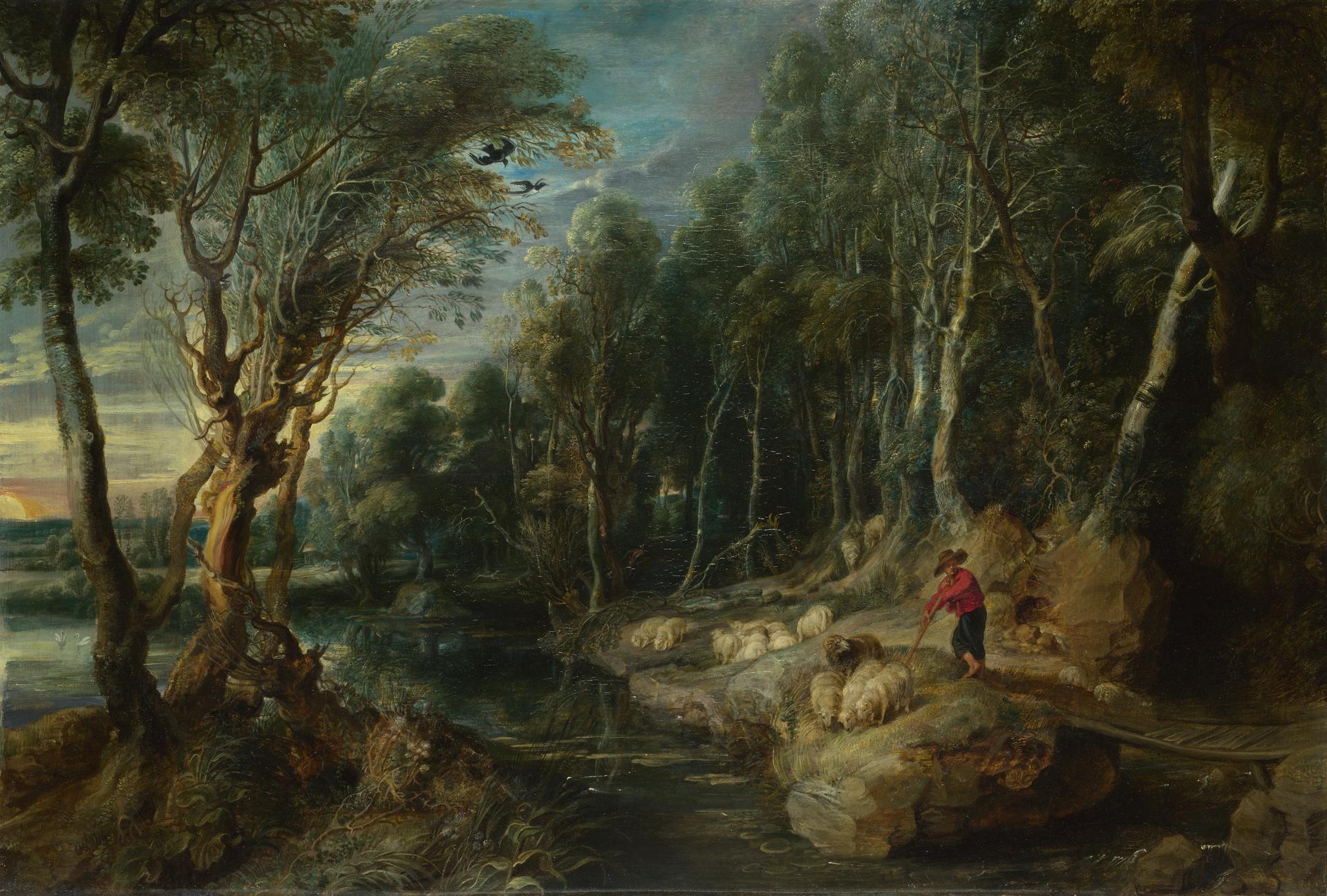
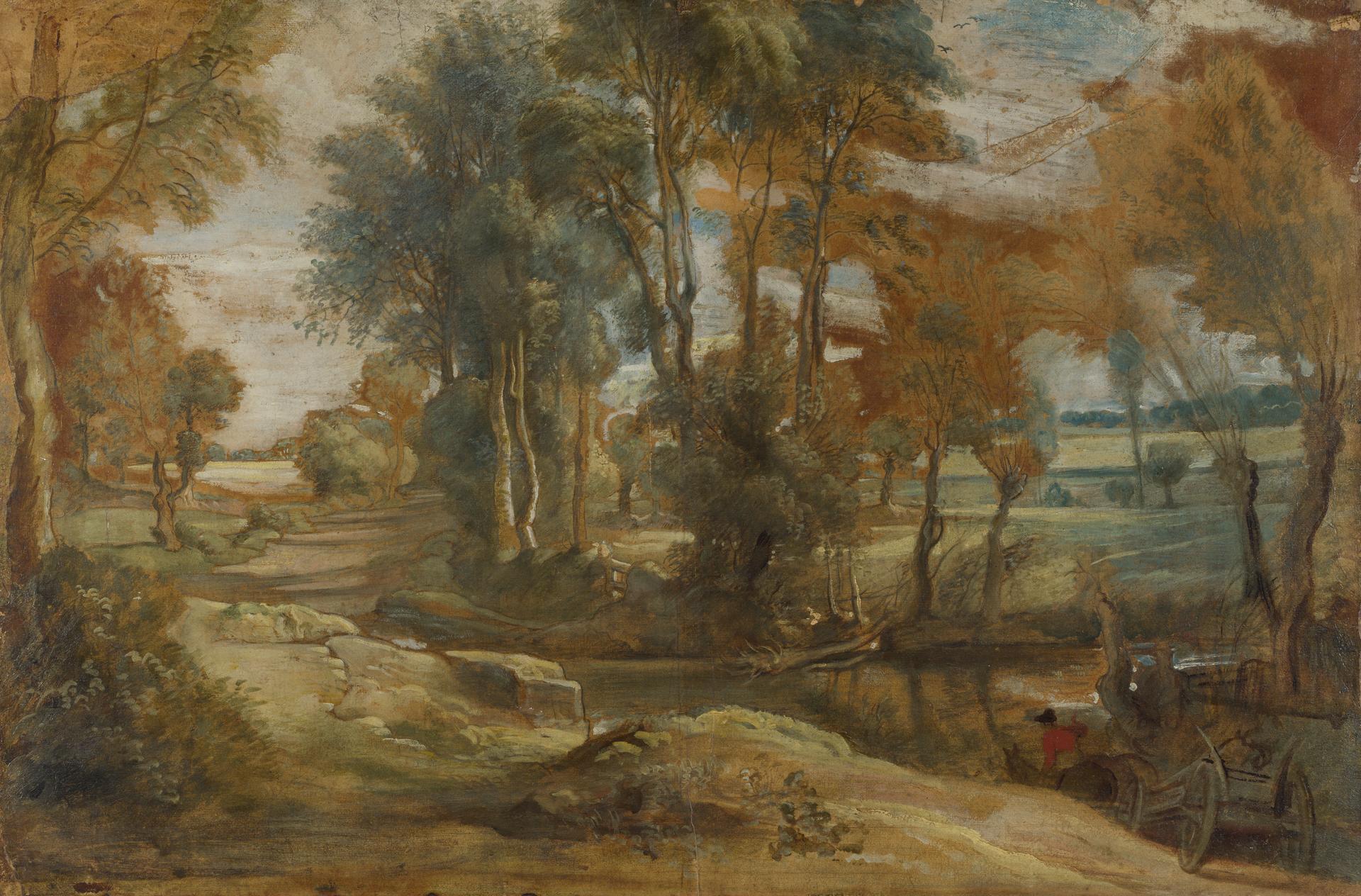
This is the "A Wagon fording a Stream" by Peter Paul Rubens. Painted in the Flemish tradition, it's an idyllic scene evoking afternoon light filtering through woodland. The subject is typical of Rubens's burst of interest in landscape painting in the last five years of his life.
You can see that the wagoner has been tucked into the right foreground, but he's still in a state of expectation - we're waiting for him to re-emerge from the river onto the pale, sandy road in the middle distance. This expectation helps draw our eye deeper into the landscape.
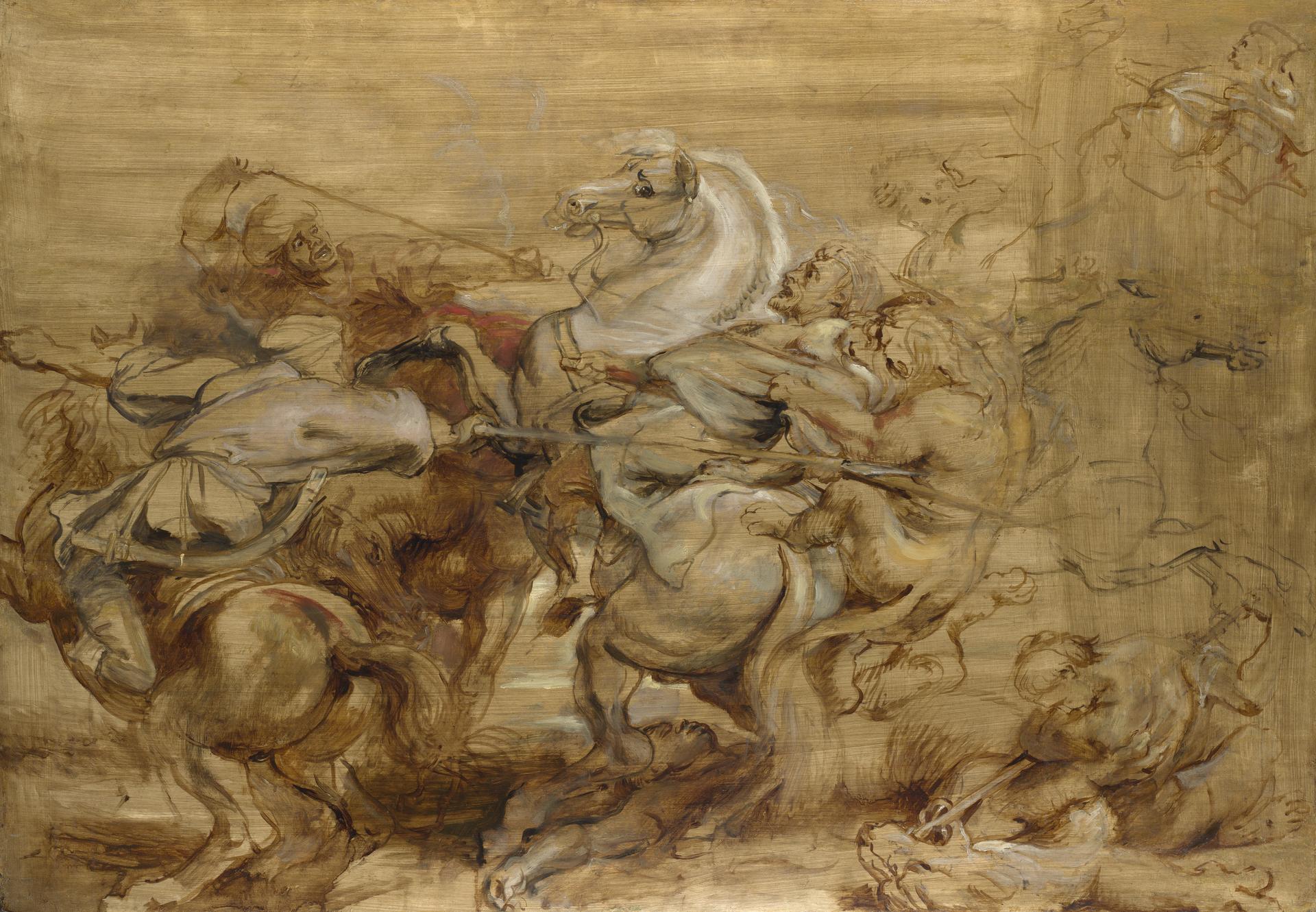
The painting is unfinished, with black chalk drafting lines and rough sketches of foliage on most of the trees. You can even see that the orangey-brown coloured background hasn't been fully covered yet. Despite its small size, it's thought to be a full-size preparatory sketch for another painting now in the Museum Boijmans Van Beuningen.
Rubens made about 20 landscapes during this period, mostly for his own pleasure rather than profit. He seems to have enjoyed his time as a country gentleman, living with his second wife and young family, and the countryside surrounding his estate became a new inspiration.
See it in person
A Wagon fording a Stream hangs in The National Gallery on Trafalgar Square, London — free to enter. Point your phone at any artwork there and audioguide.london plays a free audio guide in six languages — no app download needed.