A View of Delft
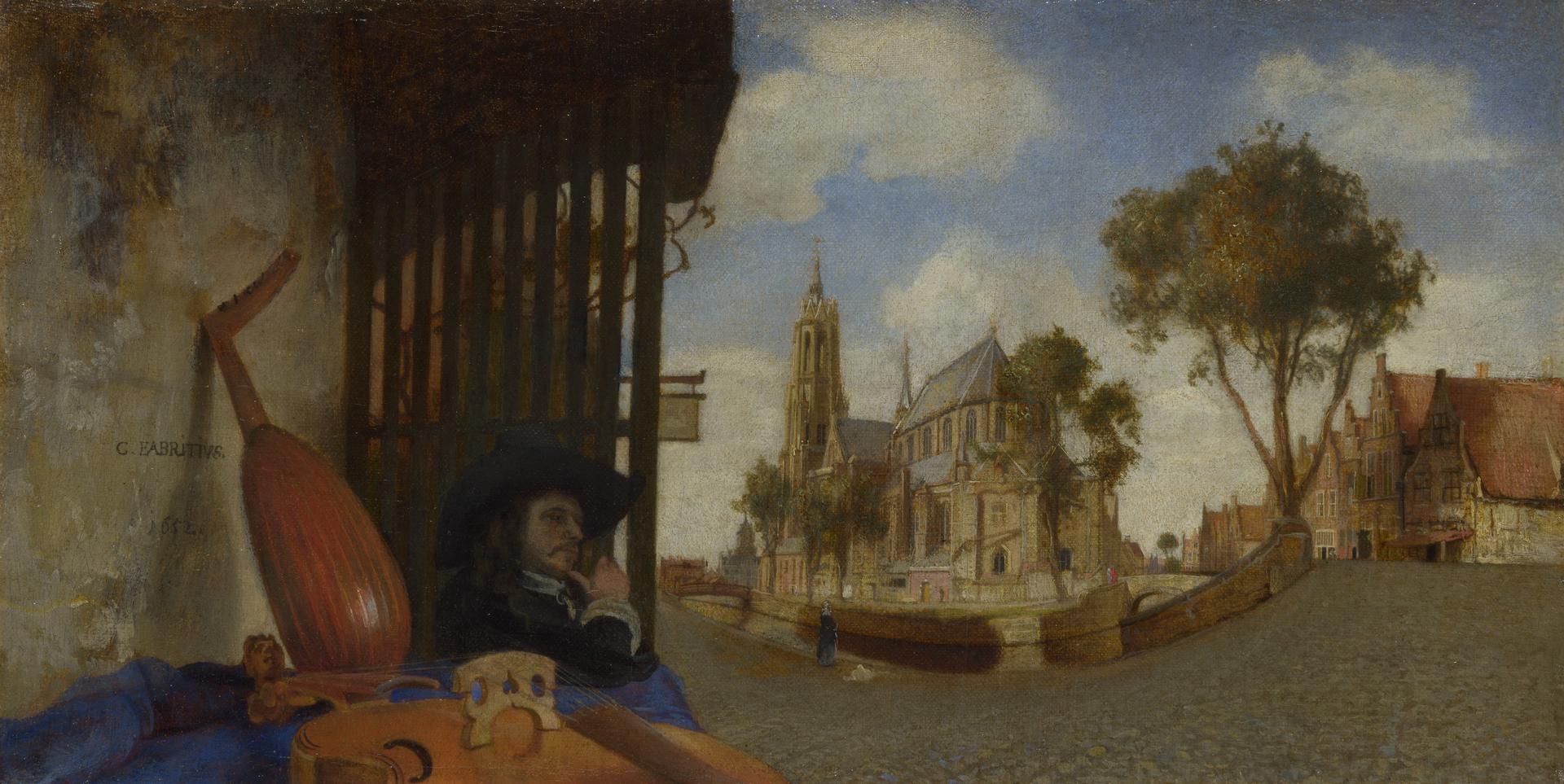
- Artist: Carel Fabritius
- Date: 1652
- Medium: oil on canvas
- Museum: The National Gallery
- Collection record: The National Gallery website
Listen to the free audio guide
About this artwork
This is "A View of Delft" by Carel Fabritius. Painted in 1652, it's an oil on canvas work that creates a striking optical illusion. The painting gives the impression of being viewed through a wide-angle lens, as if looking out from the corner of two streets in Delft.
The Nieuwe Kerk stands tall in the middle ground, while lines of sight disappear off into the distance on either side. This effect is amplified by two musical instruments placed on a table by a man sitting in the shade. The dramatic foreshortening of the violin creates an illusion that it's extremely close to us.
Art historians believe Fabritius designed this painting to create a specific optical illusion, possibly for use in a viewing box or peephole. This would have given viewers the impression of looking at a three-dimensional scene, known as the trompe l'oeil effect. It was a technique used by several artists around that time, including Samuel van Hoogstraten, whose perspective boxes created similar illusions.
See it in person
A View of Delft hangs in The National Gallery on Trafalgar Square, London — free to enter. Point your phone at any artwork there and audioguide.london plays a free audio guide in six languages — no app download needed.