A View of Delft after the Explosion of 1654
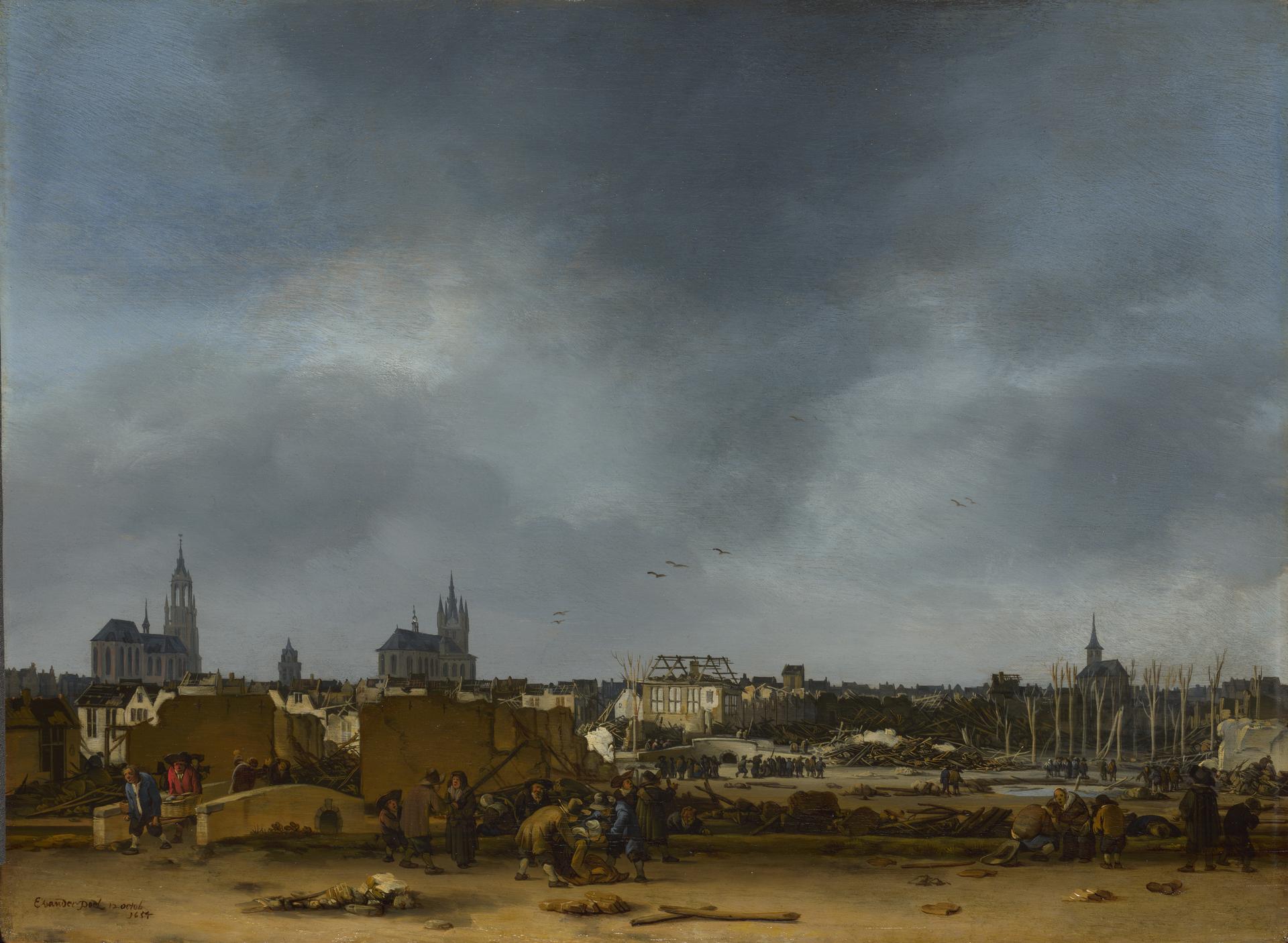
- Artist: Egbert van der Poel
- Date: 1654
- Medium: oil on wood
- Museum: The National Gallery
- Collection record: The National Gallery website
Listen to the free audio guide
In the museum now? Point your phone at the next artwork and hear its guide.
About this artwork
This is the "A View of Delft after the Explosion of 1654" by Egbert van der Poel. October 1654 - the date inscribed on the painting - was a devastating day for the city of Delft, where one of the gunpowder stores accidentally detonated, flattening a large part of the town. This explosion is known as the Delftsche Donderslag or the Delft Thunderclap, and it's believed that hundreds of people were killed.
The painting depicts the aftermath of the disaster, with much of the town devastated but its great institutions still standing strong. You can see a deep pool of water on the right side of the picture, which was left where the store used to be. The buildings in the background are churches, the town hall, and a hospital, and they're all largely intact, although their roofs show signs of damage.
What's interesting is that Egbert van der Poel painted this scene many times - over 20 versions still survive - and it's believed he based them on his own observations of the event or soon after. The painting gives us a sense not only of the physical impact of the disaster but also the horror of the human loss, with people gathered in shock and confusion, trying to come to terms with what has happened.
See it in person
A View of Delft after the Explosion of 1654 hangs in The National Gallery on Trafalgar Square, London — free to enter. Point your phone at any artwork there and audioguide.london plays a free audio guide in six languages — no app download needed.