A Scene from 'The Forcibly Bewitched'
- Artist: Francisco de Goya
- Date: 1798
- Medium: oil on canvas
- Museum: The National Gallery
- Collection record: The National Gallery website
Listen to the free audio guide
About this artwork
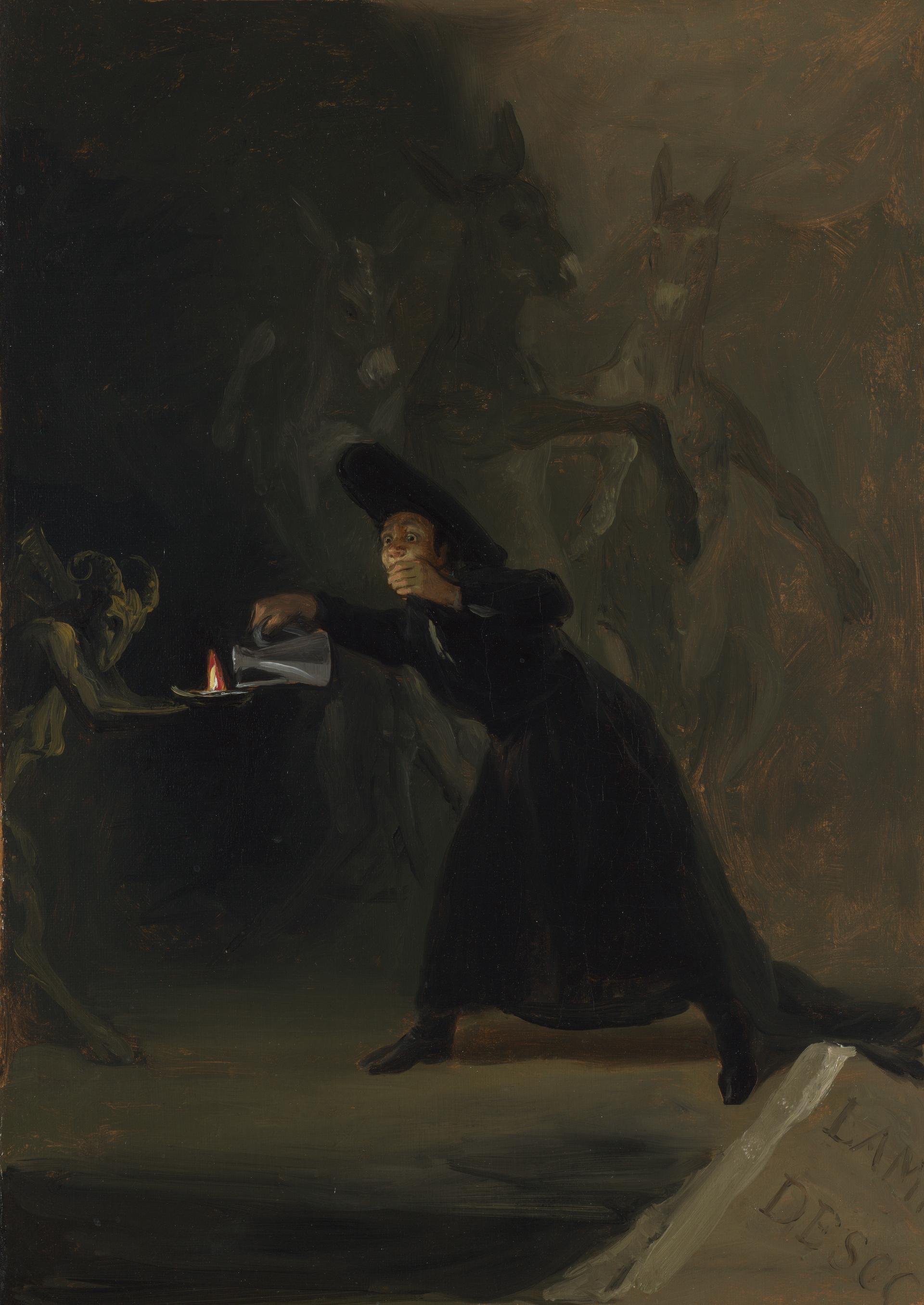
This is "A Scene from 'The Forcibly Bewitched' by Francisco de Goya. The painting depicts a comical scene where the reluctant priest, Don Claudio, is being frightened into marriage with Doña Leonora.
In this scene, Claudio has been made to believe that a slave, Lucia, has bewitched him and that his life will last only as long as the lamp in her room remains alight. We see Claudio eagerly replenishing the oil in the lamp, which is in the form of an almost life-size ram.
The inscription at the bottom right contains the phrase "lampara descomunal" or 'monstrous lamp', which is what Claudio cries out loud while pouring the oil. The painting on the wall behind him is a grotesque scene of dancing donkeys, adding to the air of mystery and sorcery.
However, it's essential to remember that this play is actually a comedy, and Goya intended for us to laugh at Claudio's gullibility. The use of dark colours like blacks and greys contrasts with the flash of orange from the candle flame, creating a sense of tension.
Goya's late works often explored satirical themes, reflecting his view of an unstable and flawed society. In this painting, he may be protesting against the Spanish Inquisition by making fun of folklore and the Church-led return to medieval fears.
This piece is just one of six scenes of witchcraft and sorcery painted for the Duke and Duchess of Osuna in 1798. They were Goya's most loyal patrons between 1785 and 1799, and their influence can be seen in many of his works from this period.
See it in person
A Scene from 'The Forcibly Bewitched' hangs in The National Gallery on Trafalgar Square, London — free to enter. Point your phone at any artwork there and audioguide.london plays a free audio guide in six languages — no app download needed.