Śiva
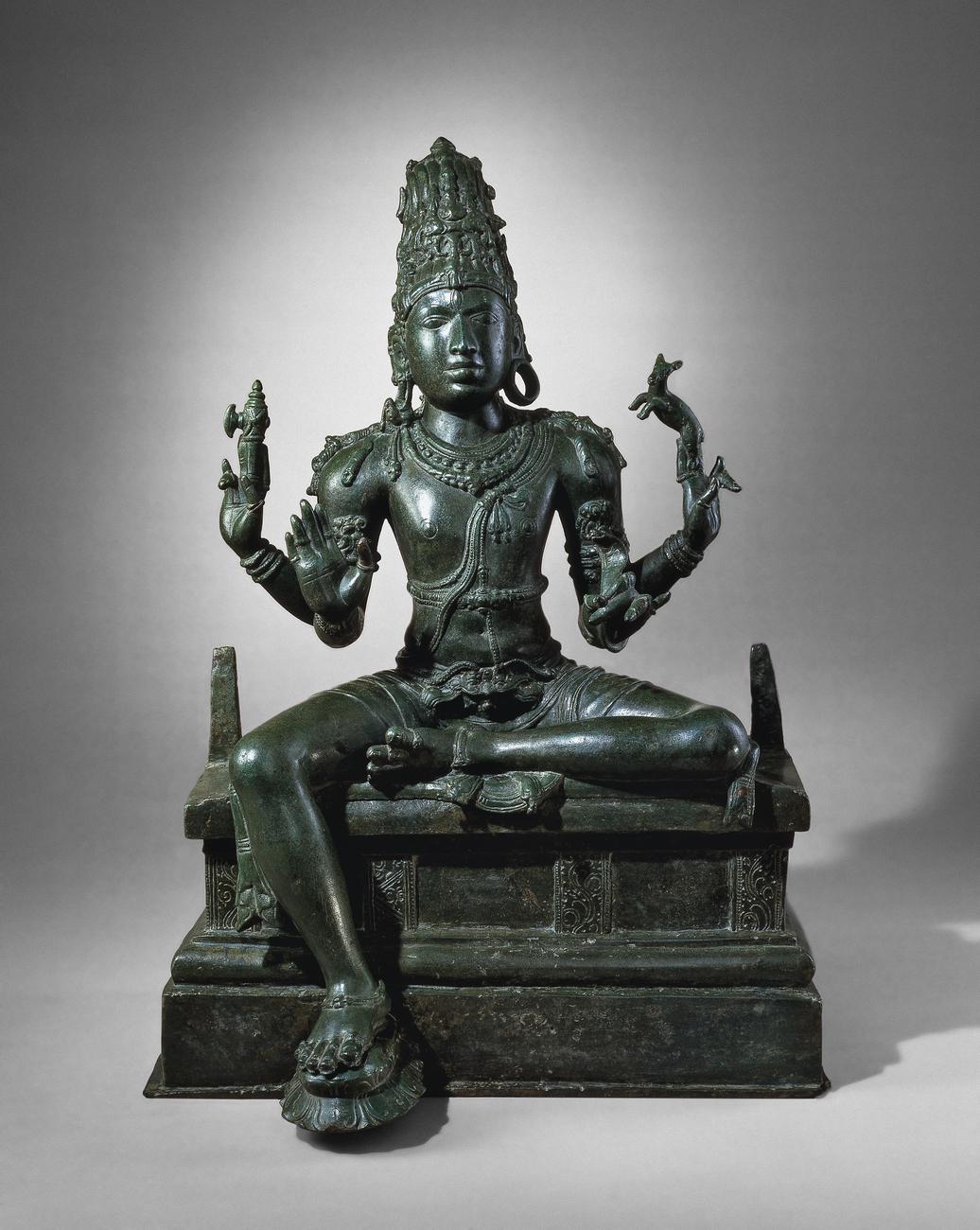
- Gallery: Room 33
- Culture: Chola
- Made in: Thanjavur District (probably)
- Date: 940-950 (circa)
- Object type: statue
- Materials: bronze
- Museum number: 1970,0921.1
- Museum: The British Museum
- Collection record: British Museum website
- Image © The Trustees of the British Museum, shared under a CC BY-NC-SA 4.0 licence.
Listen to the free audio guide
About this object
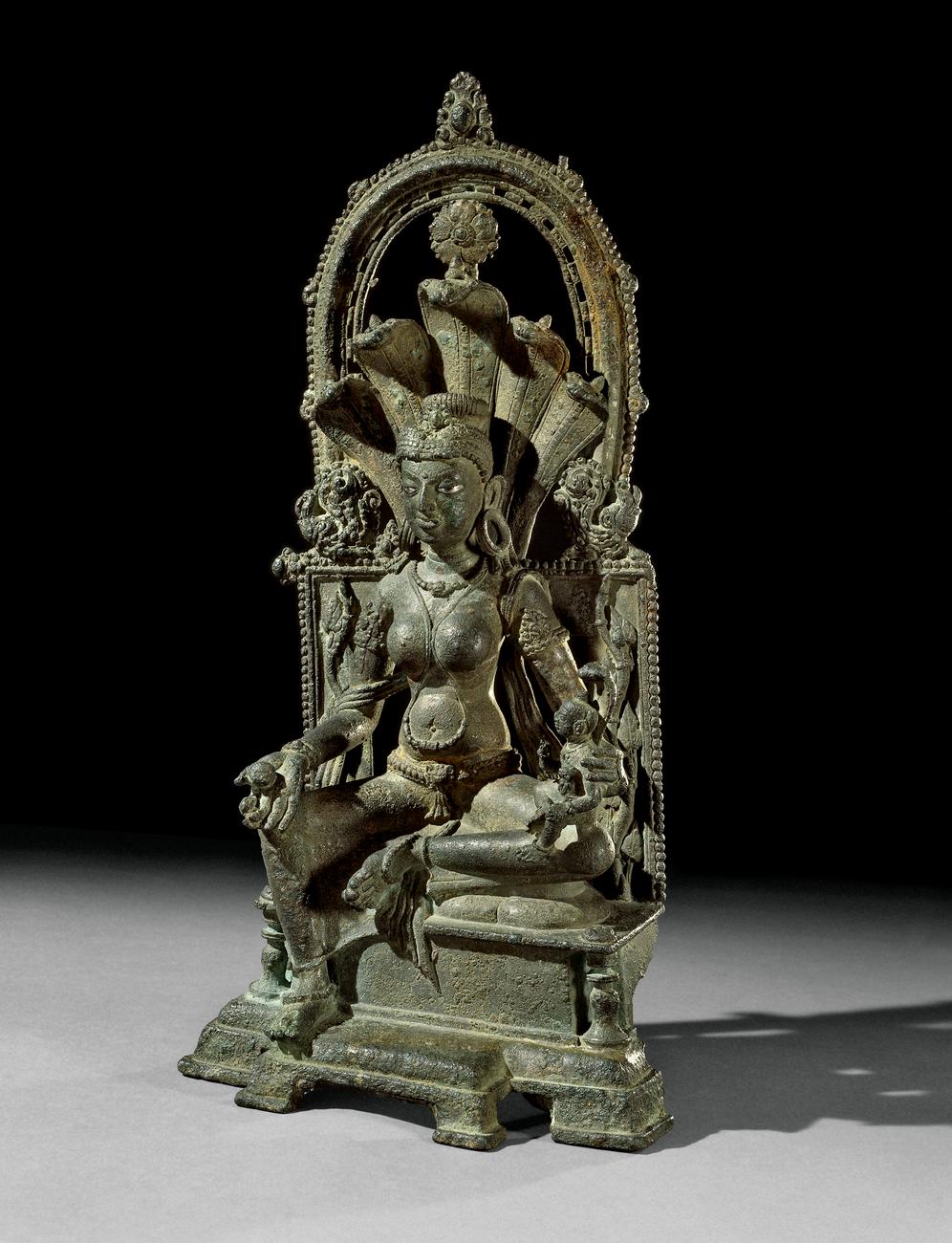
Before you is a stunning bronze sculpture of Śiva, one of the central deities in Hinduism. Crafted during the Chola period in southern India—likely in the Thanjavur District around 940–950 CE—this statue was made using the intricate lost-wax casting technique.
You'll notice Śiva depicted with four arms, each holding a symbolic object: an axe, a deer, a cobra, and one raised in the abhaya mudra, the gesture of protection. His posture, with one leg gracefully raised, conveys both power and calm. The base of the sculpture features vertical bars used to support a now-missing arch, suggesting it was once part of a larger religious display or procession.
Made from pancha loha, or five-metal alloy, the statue demonstrates the sophisticated craftsmanship of the time. This piece is associated with dramatic Hindu creation stories, notably when Śiva swallowed a deadly poison to save the world.
See it in person
Śiva is on display in Room 33 at the British Museum on Great Russell Street, Bloomsbury, London — free to enter. Choose British Museum on audioguide.london and take a photo of it to hear this free audio guide in six languages — no app download needed.
New, in beta. British Museum support has just launched and is still improving: over 1,000 objects so far, with more added all the time.