Virgin and Child with a Donor
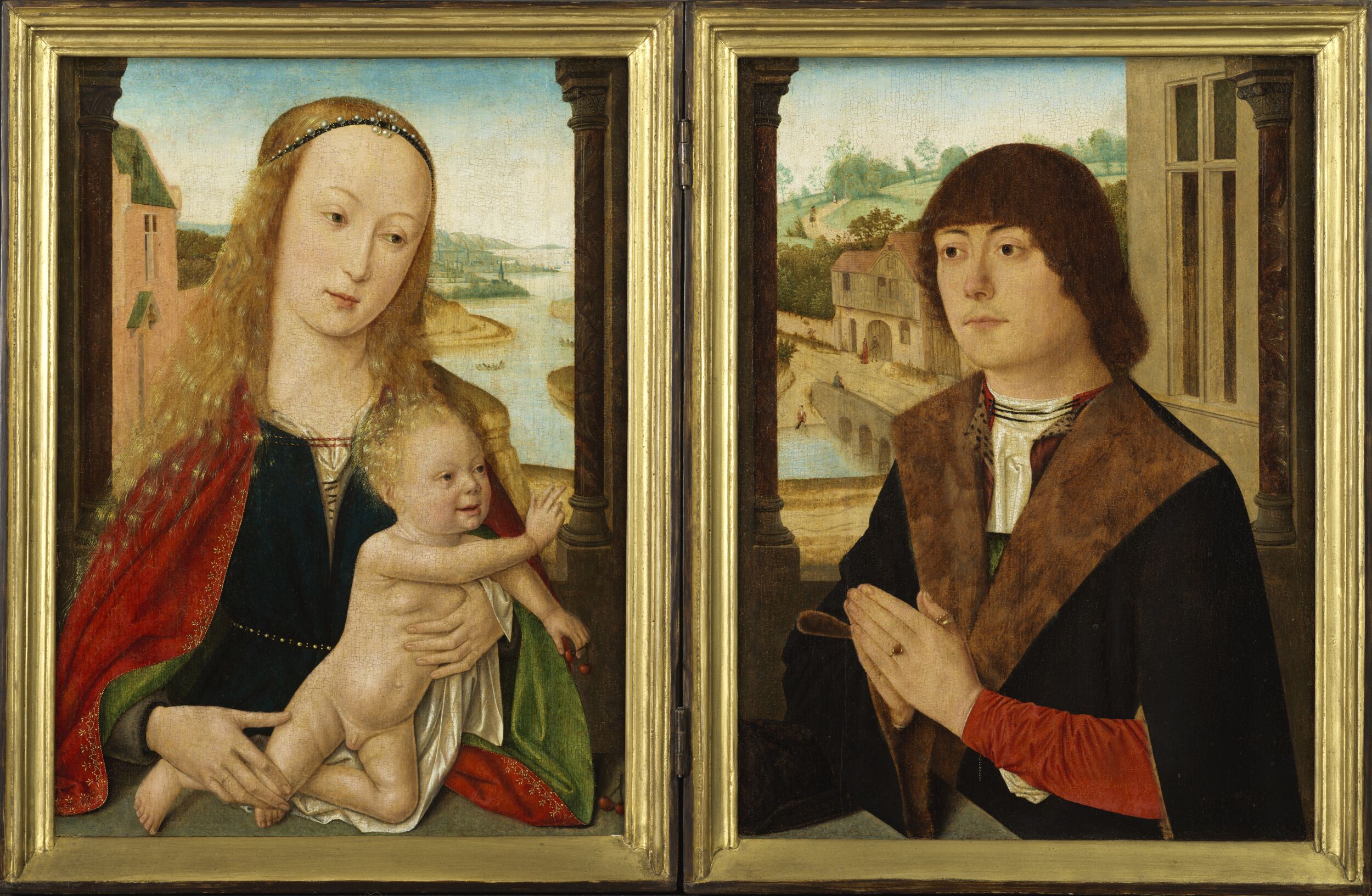
- Artist: Flanders (Bruges) 16th century
- Date: c. 1490-1500
- Medium: oil on panel
- Museum: The Courtauld Gallery
- Collection record: The Courtauld Gallery website
Listen to the free audio guide
In the museum now? Point your phone at the next artwork and hear its guide.
About this artwork
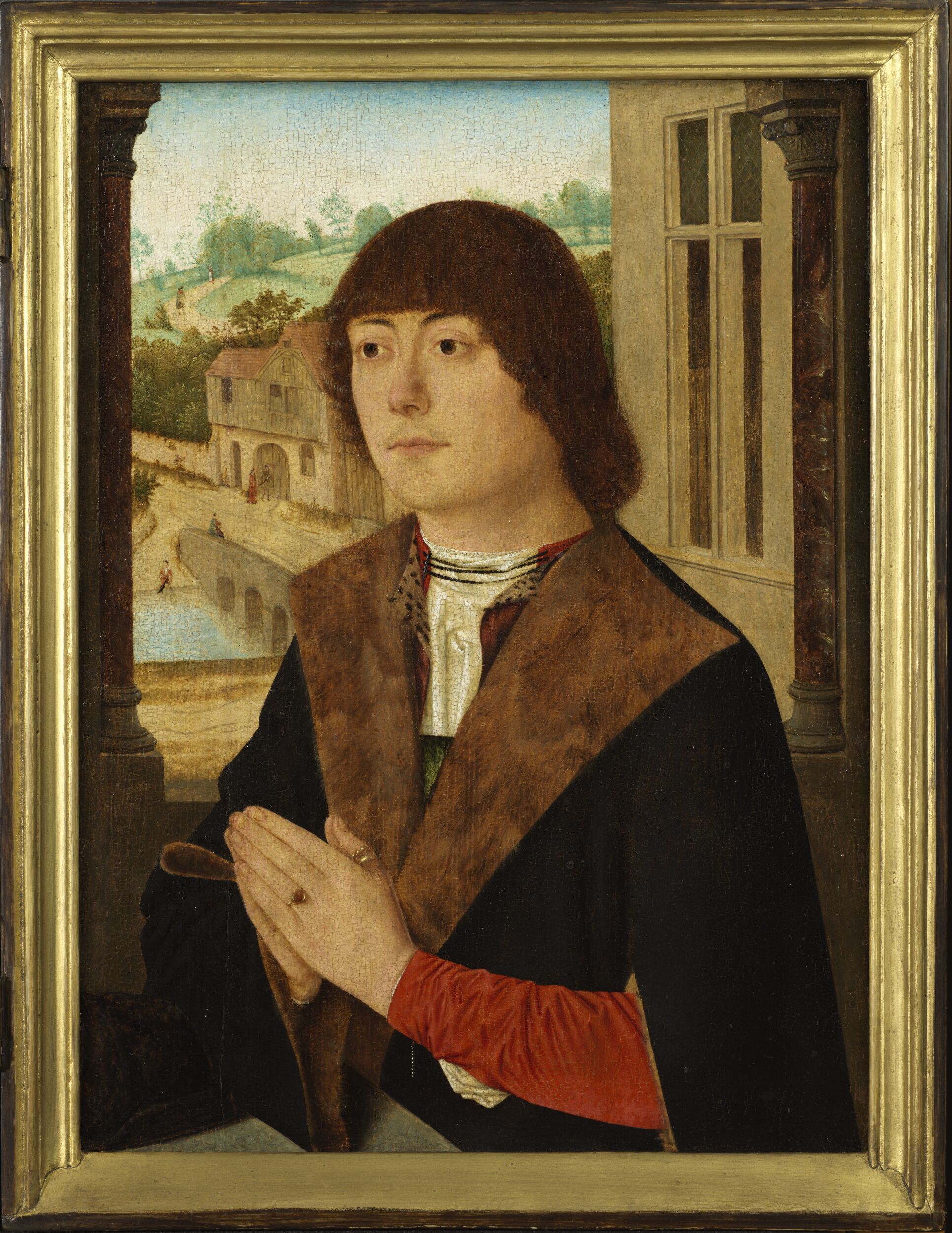
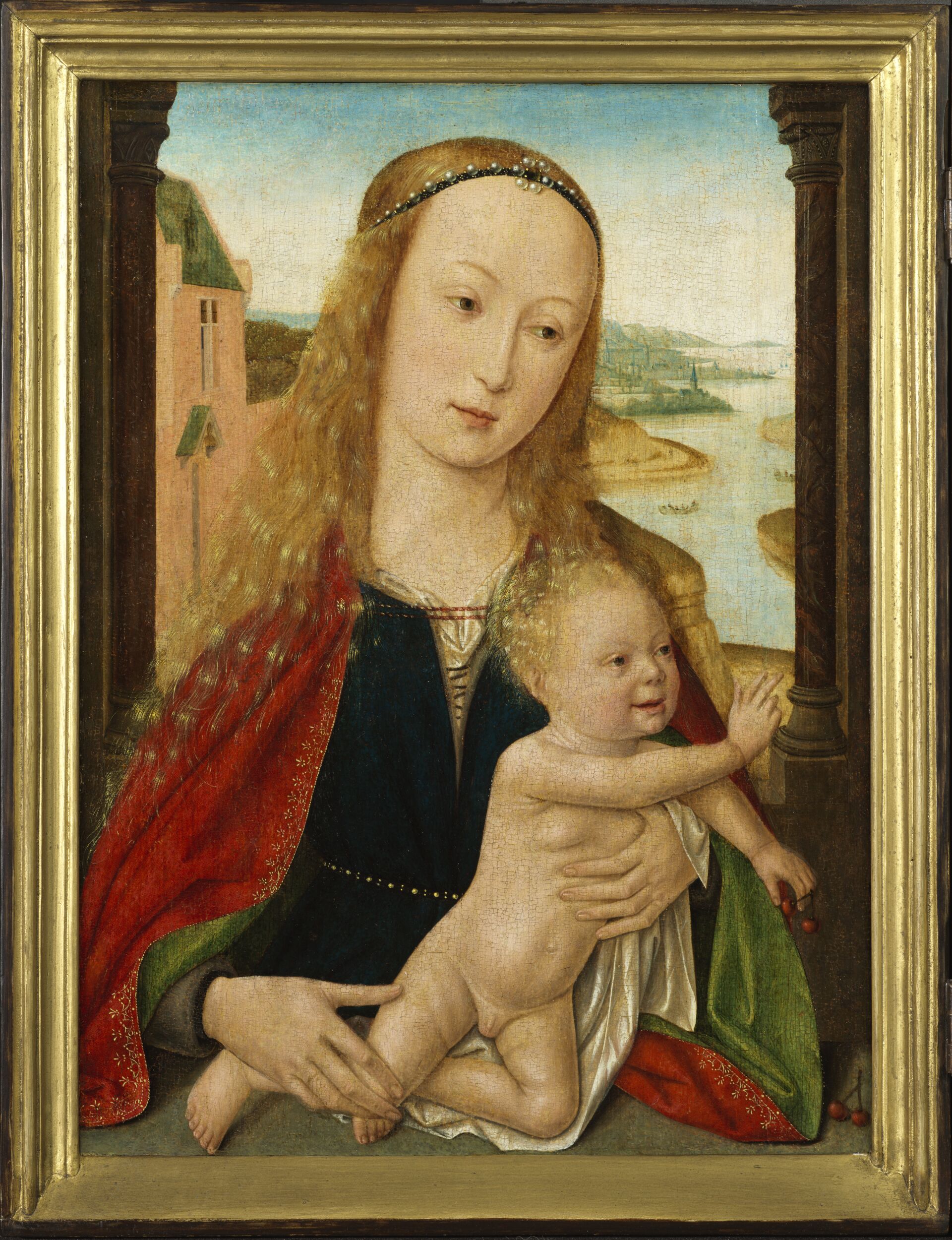
This is the “Virgin and Child with a Donor” painted in Flanders, Bruges, in the 16th century. The artist chose the diptych format—a pair of hinged panels that open like a book—an especially popular choice in the Netherlands at the time. The layout lets a patron insert their own portrait on one side and pair it with sacred figures on the other, turning a private devotion into a visual dialogue between earthly and heavenly realms.
Here you’ll see the Christ Child on the right, blessing a young man who looks directly at the viewer. His other hand holds cherries, a clear symbol of the sweet rewards promised in Heaven. On the left panel, the donor’s portrait is rendered with a calm, earnest gaze, framed by a stone ledge that demarcates the earthly sphere. The background landscape, however, stretches seamlessly across both panels, hinting at a shared, continuous world.
The work is executed in oil on panel, typical of the period’s technique, and dates from around 1490‑1500. The careful balance between the two spaces—one heavenly, one earthly—creates a subtle tension that invites viewers to reflect on the nature of devotion. The use of light and modest color palette keeps the focus on the gestures and symbolic objects, making this diptych a quintessential example of 16th‑century Flemish art.
See it in person
Virgin and Child with a Donor hangs in The Courtauld Gallery at Somerset House, London. Point your phone at any artwork there and audioguide.london plays a free audio guide in six languages — no app download needed.