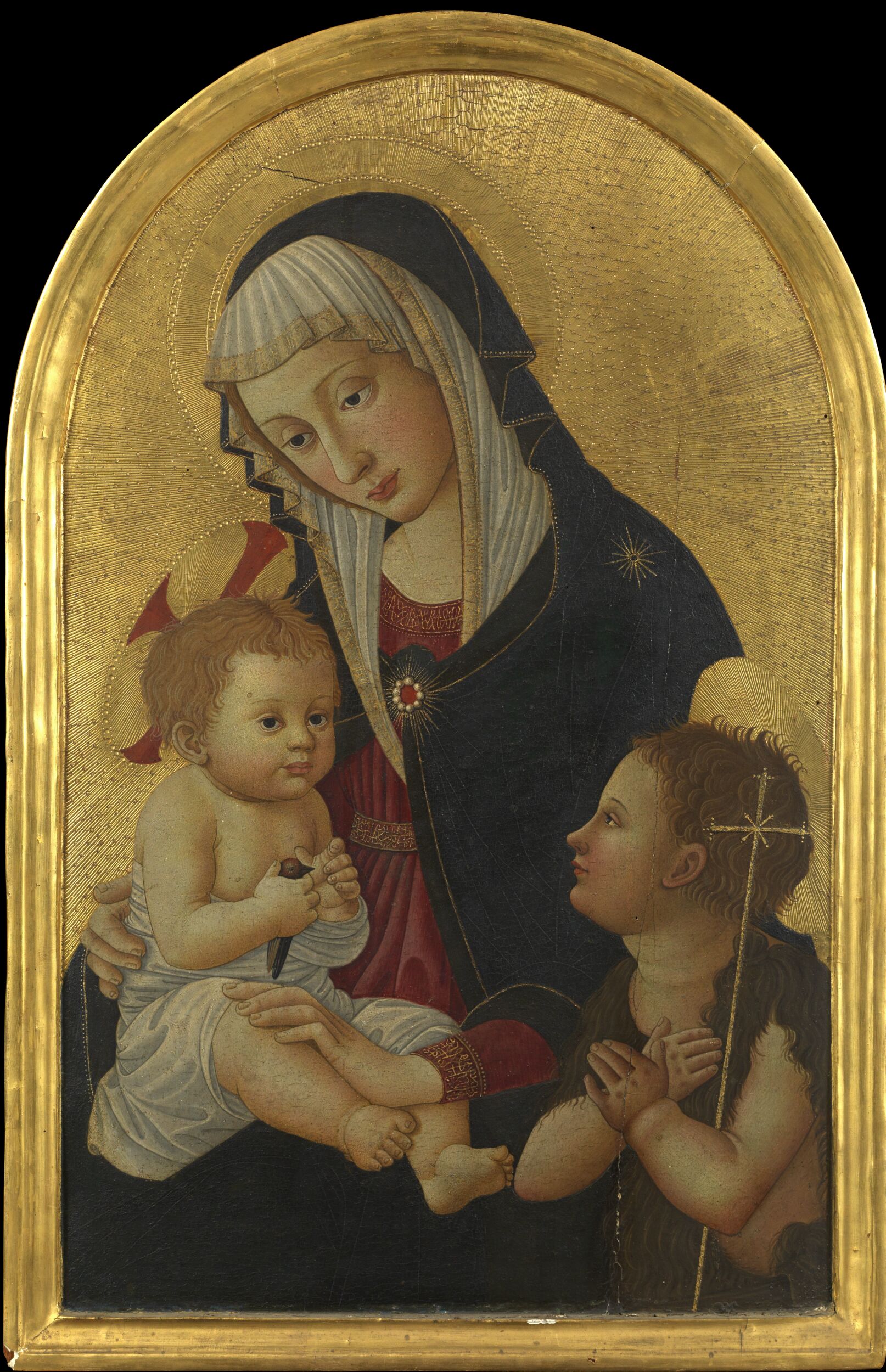
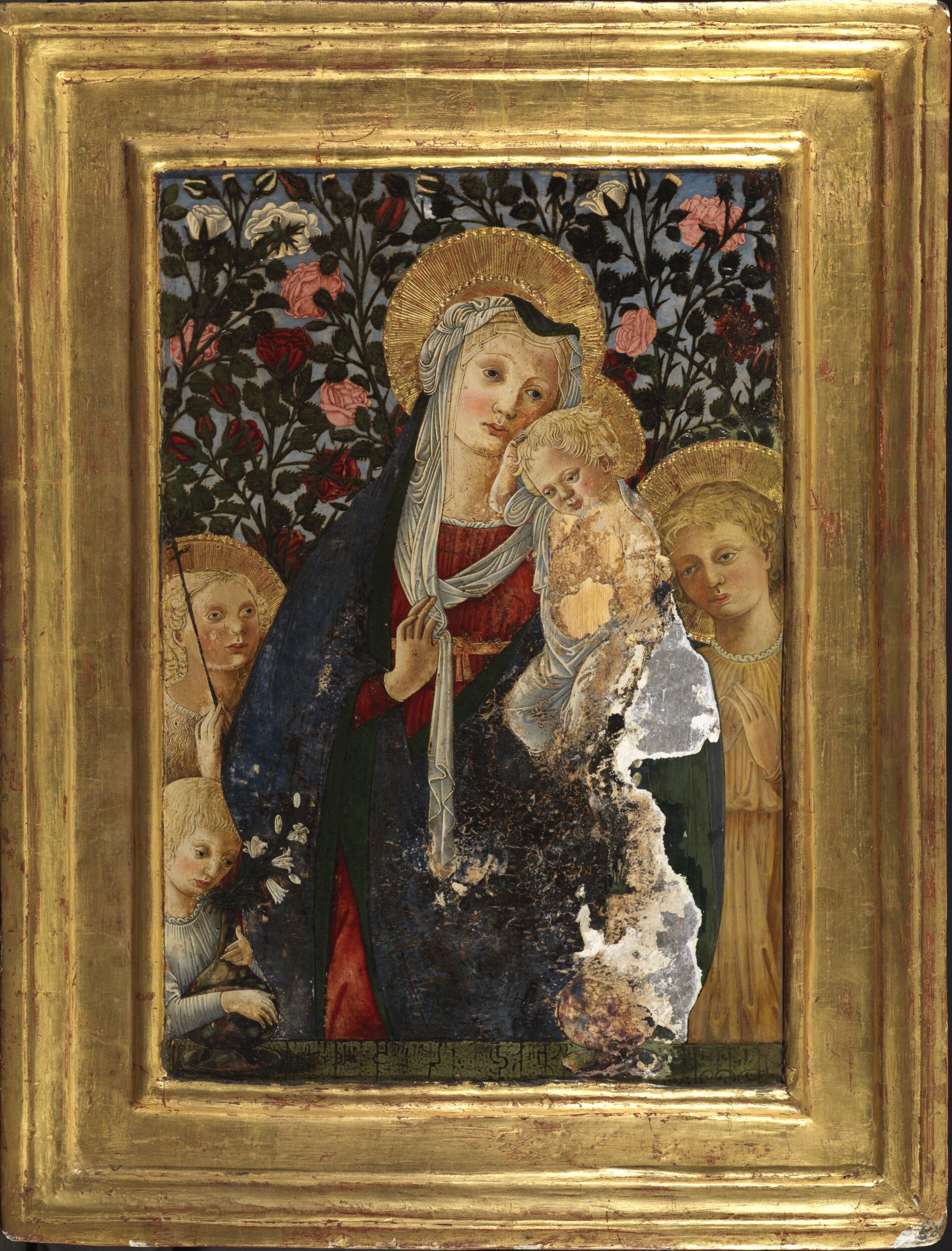
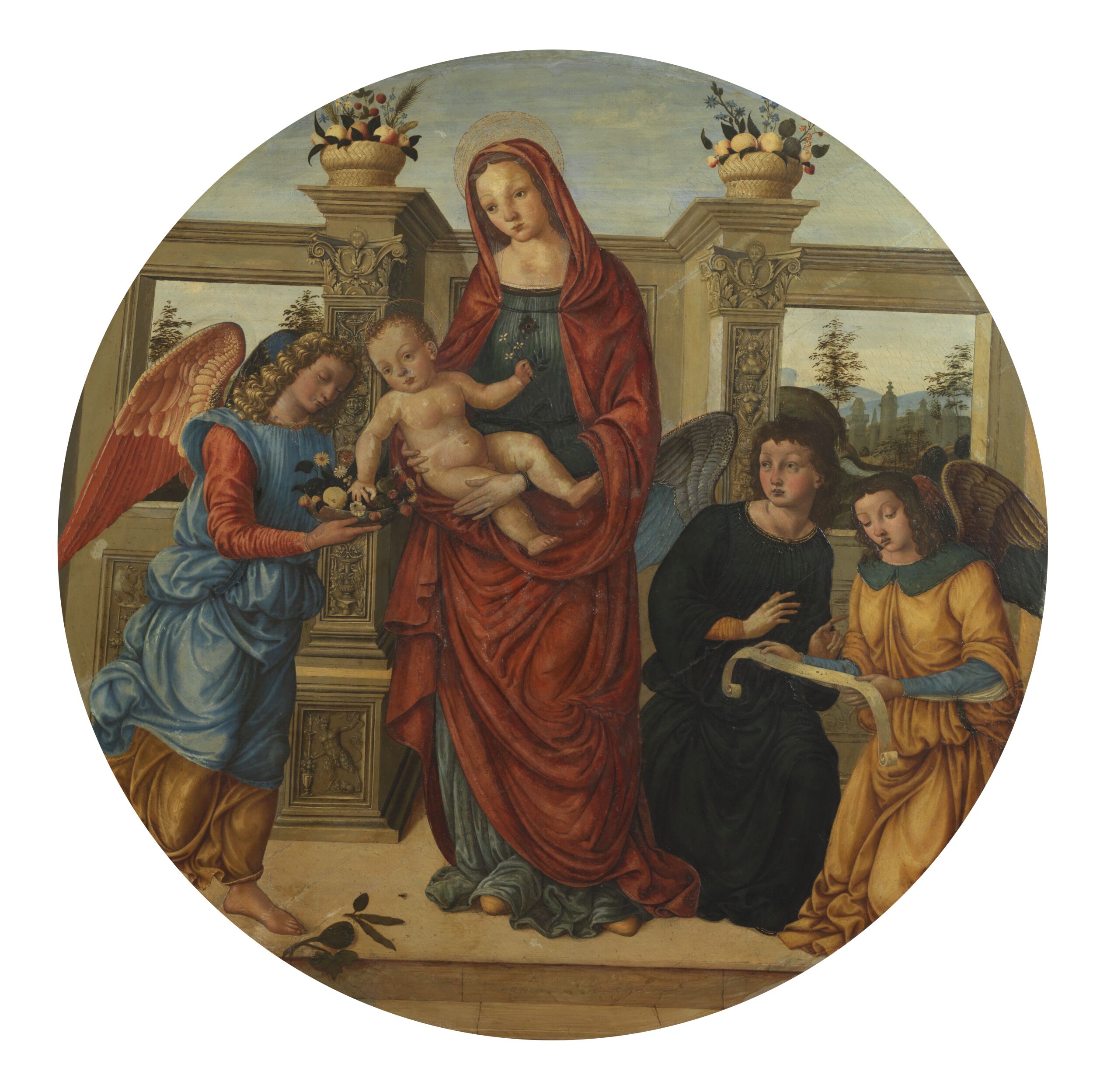
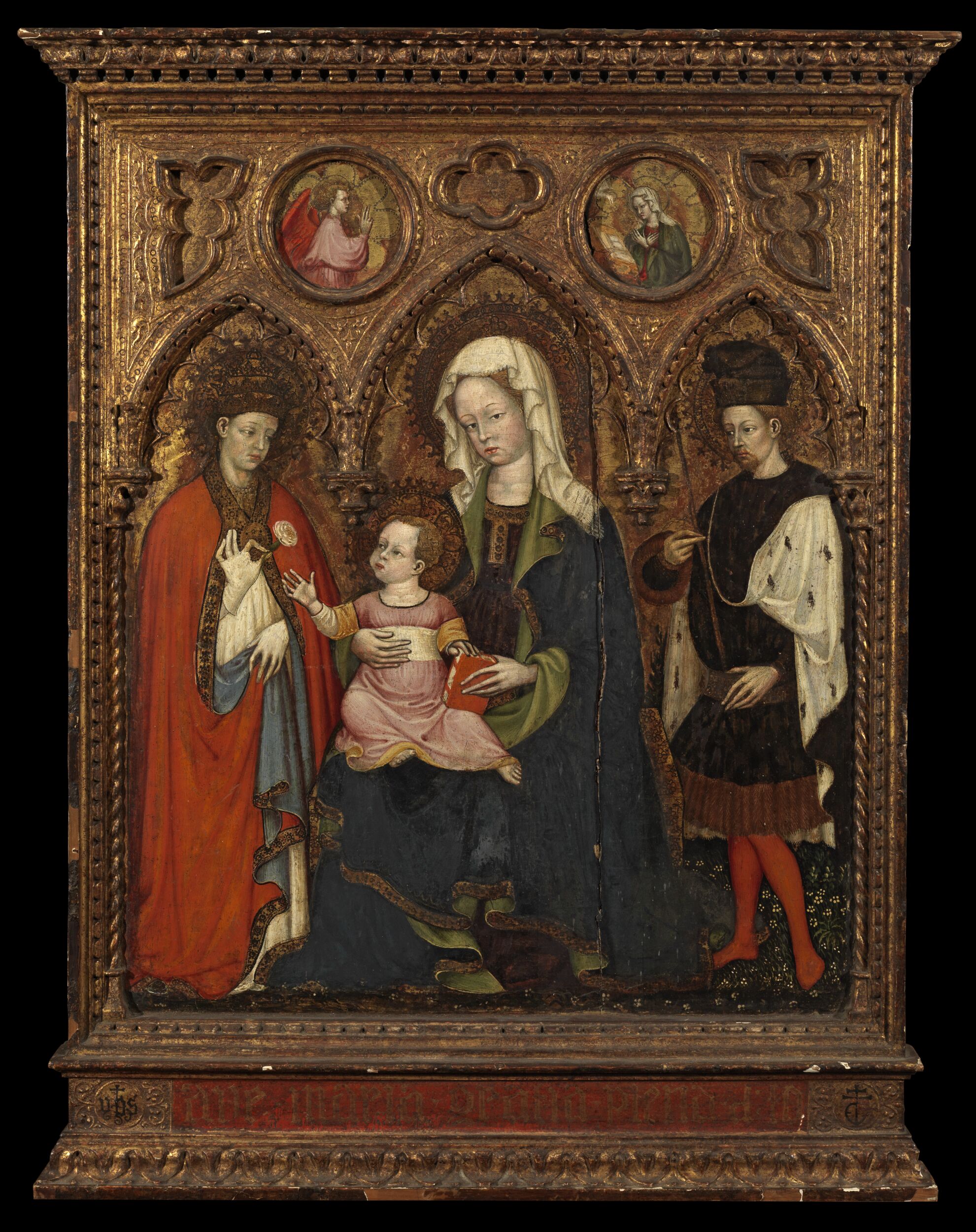
Virgin and Child with Two Angels
- Artist: Pseudo Pier Francesco Fiorentino
- Date: (mid 15th century?) 1550 - 1575
- Medium: tempera and oil (untested) on linen, mounted on panel
- Museum: The Courtauld Gallery
- Collection record: The Courtauld Gallery website
Listen to the free audio guide
In the museum now? Point your phone at the next artwork and hear its guide.
About this artwork
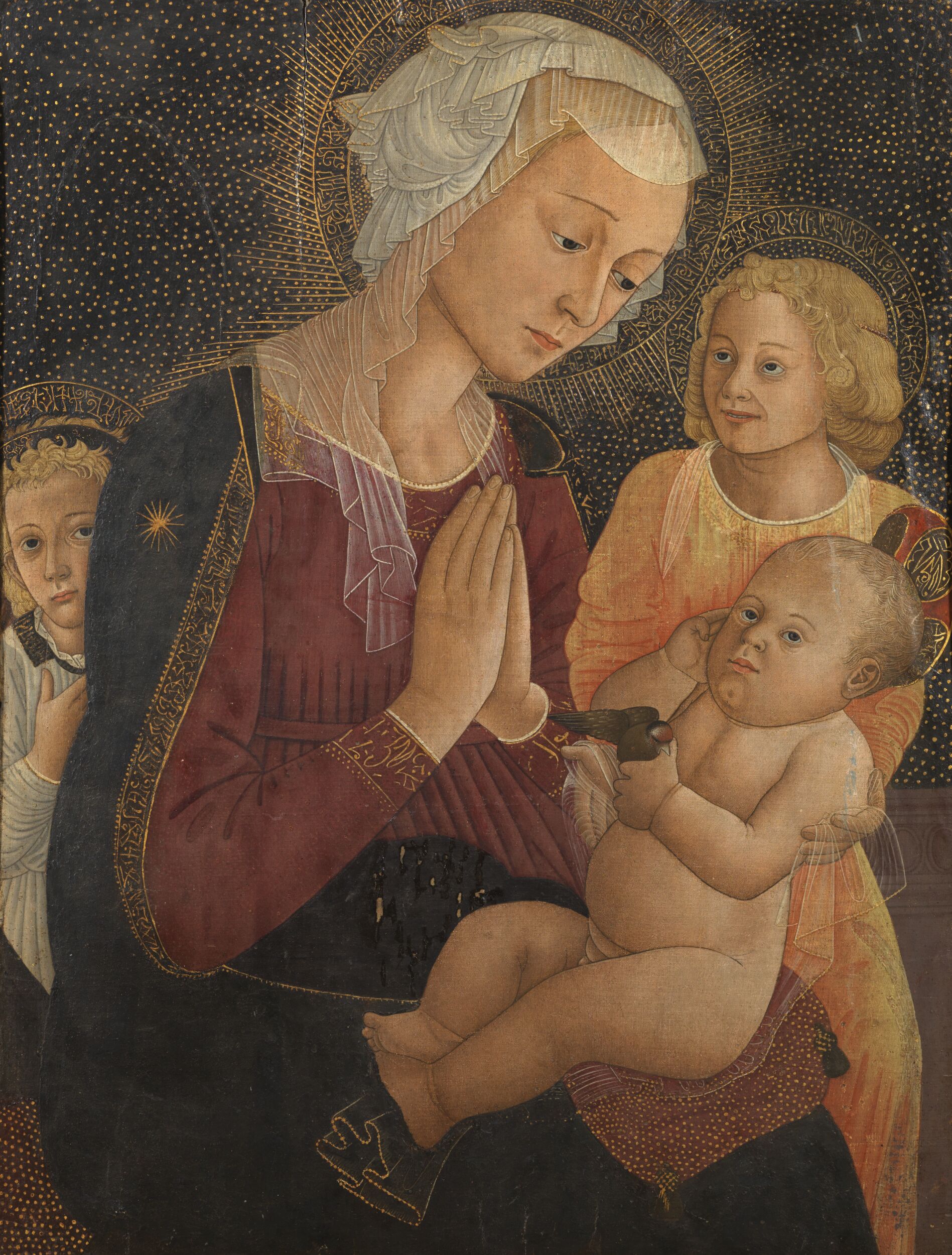
This is the *Virgin and Child with Two Angels* by Pseudo Pier Francesco Fiorentino. The work dates to the mid‑fifteenth‑century—most likely between 1550 and 1575—so it sits at the crossroads of Renaissance and early Baroque sensibilities. It’s executed in tempera and oil (the oil layer remains unconfirmed) on a linen ground that’s mounted to a panel, giving the surface a subtle depth while preserving the luminous quality typical of the period.
The composition is simple yet elegant. The Virgin occupies the centre, tenderly cradling the infant Christ. Two angels flank them, their wings slightly splayed; each holds a small attribute—a lily or a candle—adding symbolic layers to the scene. Notice the softness of the drapery: the folds fall in gentle, almost liquid lines that guide the eye toward the figures. The palette is restrained—earthy browns, muted blues, and a touch of gold that catches the light as it shifts.
In terms of technique, the tempera provides crisp outlines, while the oil, if present, adds subtle blending that enriches the flesh tones. The artist’s hand shows careful attention to proportion and a gentle realism that was becoming fashionable in mid‑century Italian workshops.
Overall, this painting captures a quiet devotional moment with understated grace, inviting the viewer to pause and reflect.
See it in person
Virgin and Child with Two Angels hangs in The Courtauld Gallery at Somerset House, London. Point your phone at any artwork there and audioguide.london plays a free audio guide in six languages — no app download needed.