Vertumnus and Pomona
- Artist: Domenico Fetti
- Date: 1621-23
- Medium: oil on copper
- Museum: The Courtauld Gallery
- Collection record: The Courtauld Gallery website
Listen to the free audio guide
About this artwork
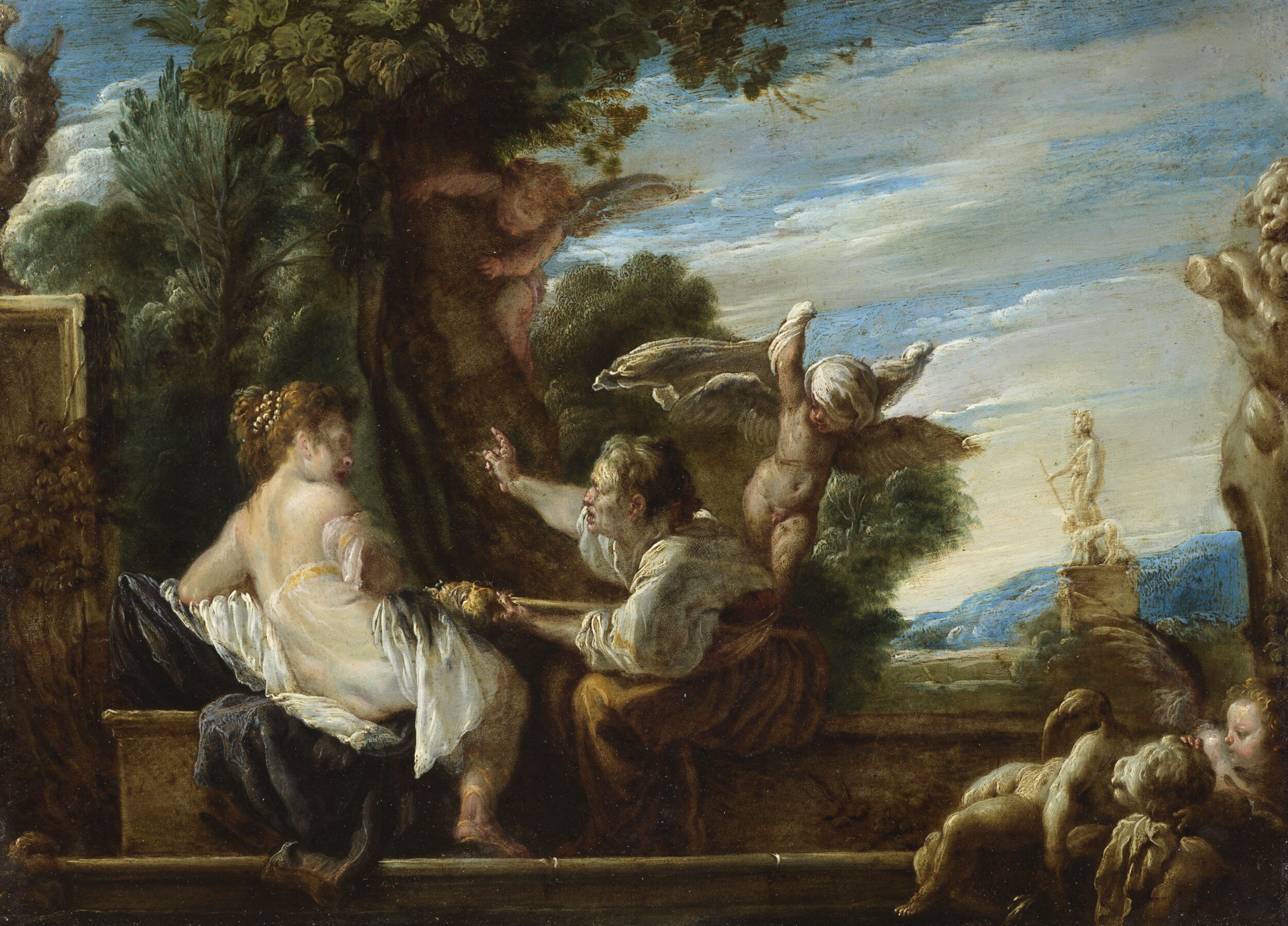
This is the painting “Vertumnus and Pomona” by Domenico Fetti, created between 1621 and 1623. It’s a striking example of early 17th‑century Italian genre painting, executed in oil on copper—a medium that gives the surface a subtle, almost translucent quality.
What you’re looking at is a single, dynamic moment from Ovid’s Metamorphoses. The god Vertumnus, the playful deity of gardens and seasons, has taken the guise of an elderly woman to sneak up on Pomona, the virgin goddess who guards the orchards. Fetti captures the instant just before Vertumnus sheds his disguise, and Pomona is about to be captivated. You can see the god’s exaggerated, theatrical expression as he reveals his true form, while Pomona’s face shifts from caution to curiosity, hinting at the romance that will soon unfold.
Fetti’s composition is tight, almost theatrical. He places both figures close together, focusing the viewer’s eye on their interaction. The use of copper as a support allows for fine detail and a luminous sheen, especially in the delicate rendering of Pomona’s draped clothing and the subtle play of light on the god’s aged skin. The colors are muted yet rich, typical of the Venetian influence that pervaded Fetti’s work during his time in Rome.
This scene reflects the 17th‑century fascination with classical myths, especially stories that explored transformation and disguise. It’s a wonderful snapshot of how artists like Fetti brought ancient narratives to life with humor, sensuality, and a touch of divine intrigue.
See it in person
Vertumnus and Pomona hangs in The Courtauld Gallery at Somerset House, London. Point your phone at any artwork there and audioguide.london plays a free audio guide in six languages — no app download needed.