Two Masks
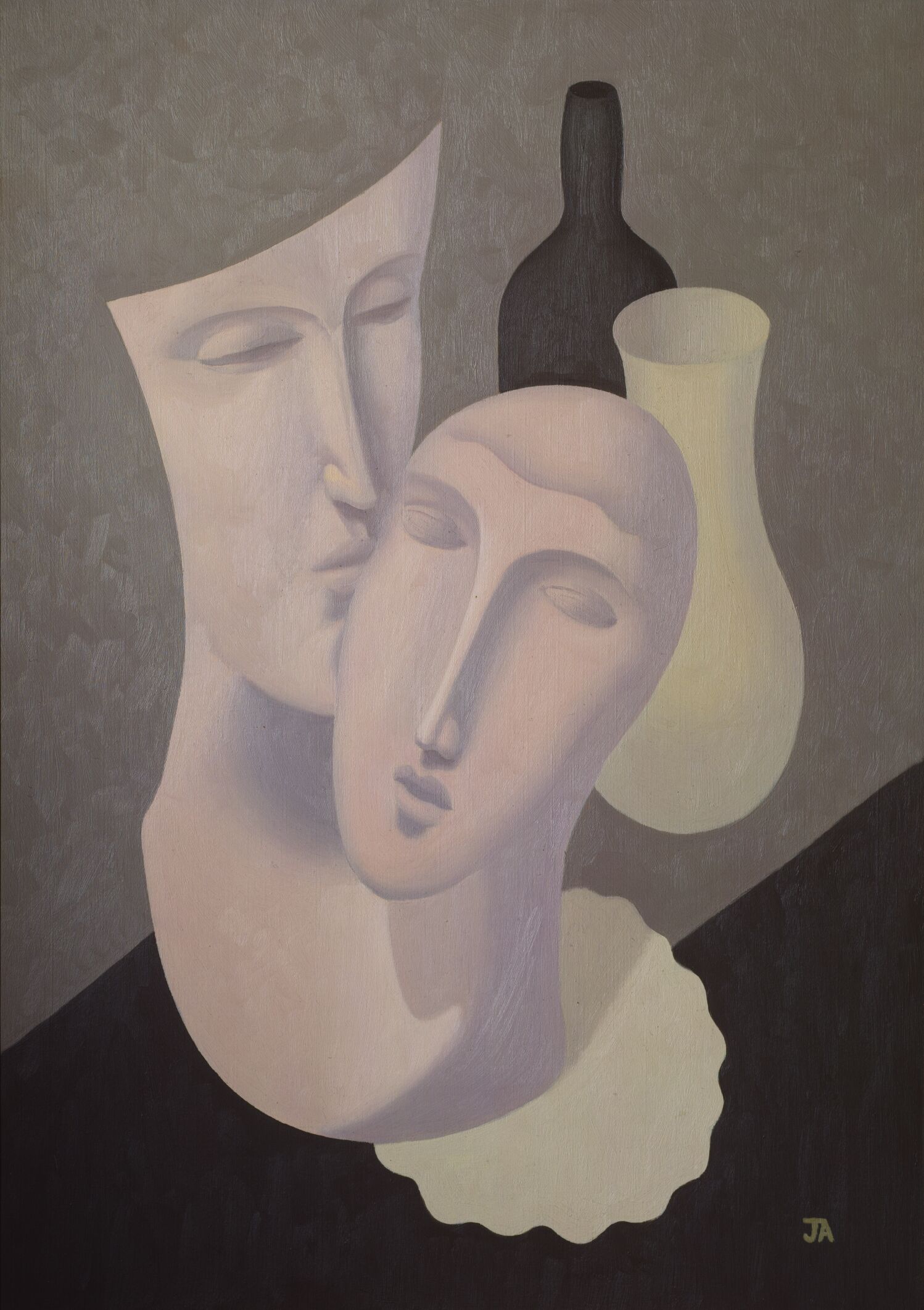
- Artist: John Armstrong
- Date: (circa) 1928
- Medium: medium : material : oil & support : material : canvas
- Museum: The Courtauld Gallery
- Collection record: The Courtauld Gallery website
Listen to the free audio guide
About this artwork
This is “Two Masks” by John Armstrong, a striking oil on canvas from around 1928. At first glance the viewer is drawn into the tight grouping of the two faces, each rendered with a flat, almost stylized silhouette. The color palette is dominated by muted earth tones—ochre, burnt umber, and a splash of deep blue—that give the scene a quiet, almost somber mood.
Armstrong’s brushwork is both precise and expressive: the masks are defined by sharp, almost mechanical lines, while the surrounding background shows a subtle wash of color that suggests a vague interior or stage set. This tension between rigid form and fluid backdrop hints at the psychological themes that were popular in the late 1920s, a period when artists were exploring identity and the performative aspects of everyday life.
The title “Two Masks” invites speculation about the nature of the subjects. Are they literal theatrical masks, or symbols of social roles and personas? The faces themselves are deliberately indistinct, suggesting anonymity and universality. In a time of rapid societal change, Armstrong may have been commenting on how people hide behind façades.
Overall, the painting captures a moment of quiet reflection. The simplicity of the composition, coupled with the subtle color interplay, allows viewers to project their own interpretations onto the enigmatic duo, making “Two Masks” a compelling study in form, color, and social commentary.
See it in person
Two Masks hangs in The Courtauld Gallery at Somerset House, London. Point your phone at any artwork there and audioguide.london plays a free audio guide in six languages — no app download needed.