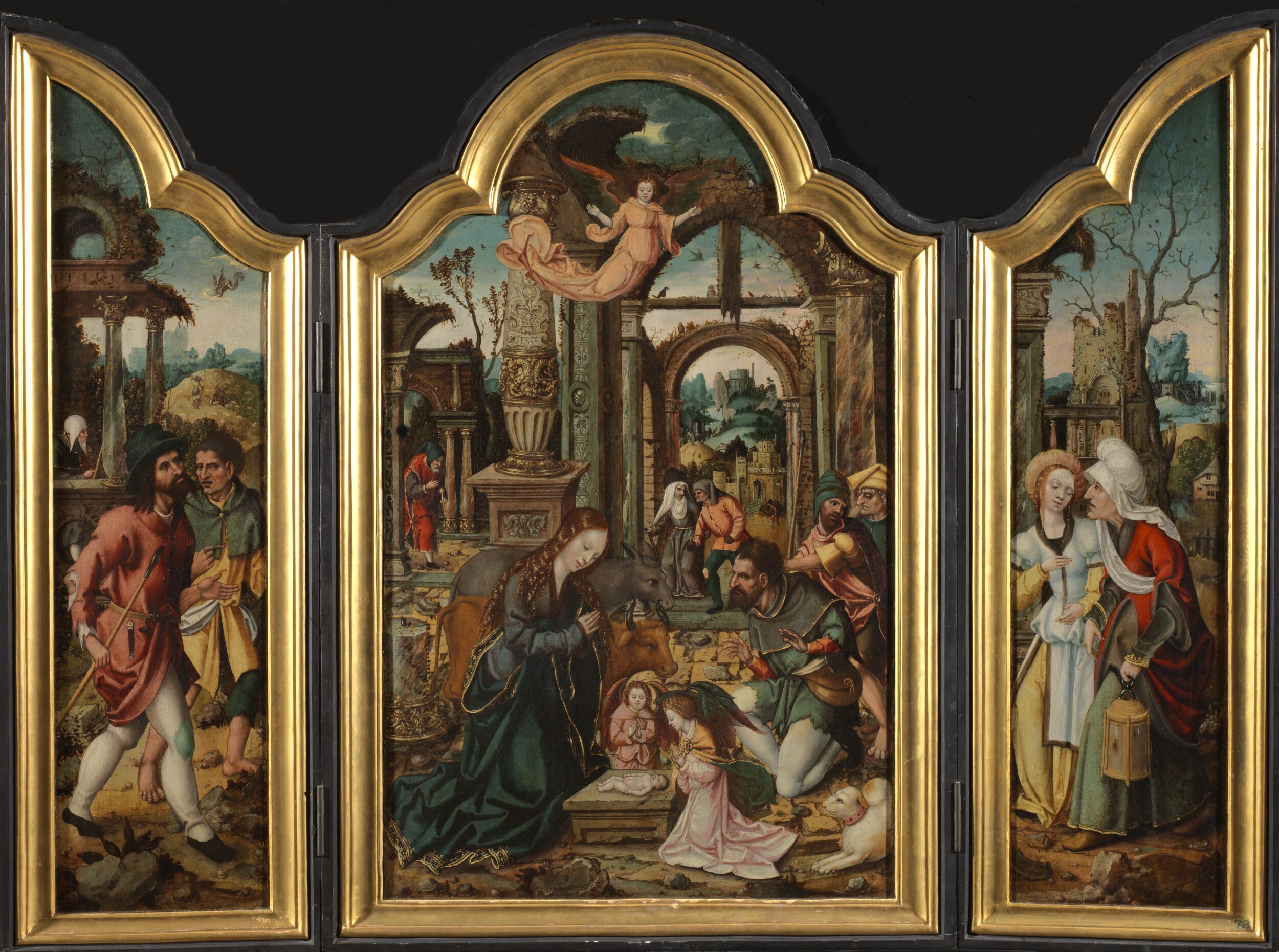
Triptych with the Adoration of the Shepherds
- Artist: Netherlands (Antwerp) 16th century
- Date: 1535
- Medium: oil on panel (oak)
- Museum: The Courtauld Gallery
- Collection record: The Courtauld Gallery website
Listen to the free audio guide
About this artwork
This is the “Triptych with the Adoration of the Shepherds,” painted in 1535 in Antwerp, a hub of Dutch art during the 16th century. The work is oil on oak panel, a common medium for domestic altarpieces of that era. What makes this piece stand out is its very specific commission feel, unlike the mass‑produced panels that flooded the market.
You’ll notice the date—1535—immediately above the Virgin’s head on a column. In ordinary workshop pieces the date is often omitted, so its presence signals that the artist was marking a particular occasion or patron. Additionally, the shepherds and midwives are placed prominently, almost as central figures. In typical altarpieces, they’re usually relegated to the background, their role secondary. Here, they share the space with the Virgin, suggesting the patron wanted a more intimate, relatable narrative rather than a purely devotional one.
The composition balances the sacred and the everyday. The Virgin’s serene countenance commands the panel, while the shepherds, with their simple garb and gentle expressions, bring a touch of pastoral realism. The midwives, a rare inclusion, highlight the domestic sphere and the nurturing aspect of motherhood. The overall layout demonstrates the workshop’s mastery of oil on oak, achieving depth through subtle glazing and careful attention to light.
In short, this triptych is a window into 16th‑century Antwerp’s workshop culture, revealing how an artist could tailor a piece to a patron’s specific wishes while still employing the polished techniques of the time.
See it in person
Triptych with the Adoration of the Shepherds hangs in The Courtauld Gallery at Somerset House, London. Point your phone at any artwork there and audioguide.london plays a free audio guide in six languages — no app download needed.