Study for ‘The Loss of an East Indiaman’

- Artist: Joseph Mallord William Turner
- Date: c.1818
- Medium: Graphite, watercolour and chalk on paper
- Dimensions: support: 311 x 460 mm
- Museum: Tate Britain
- Collection record: Tate Britain website
Listen to the free audio guide
About this artwork
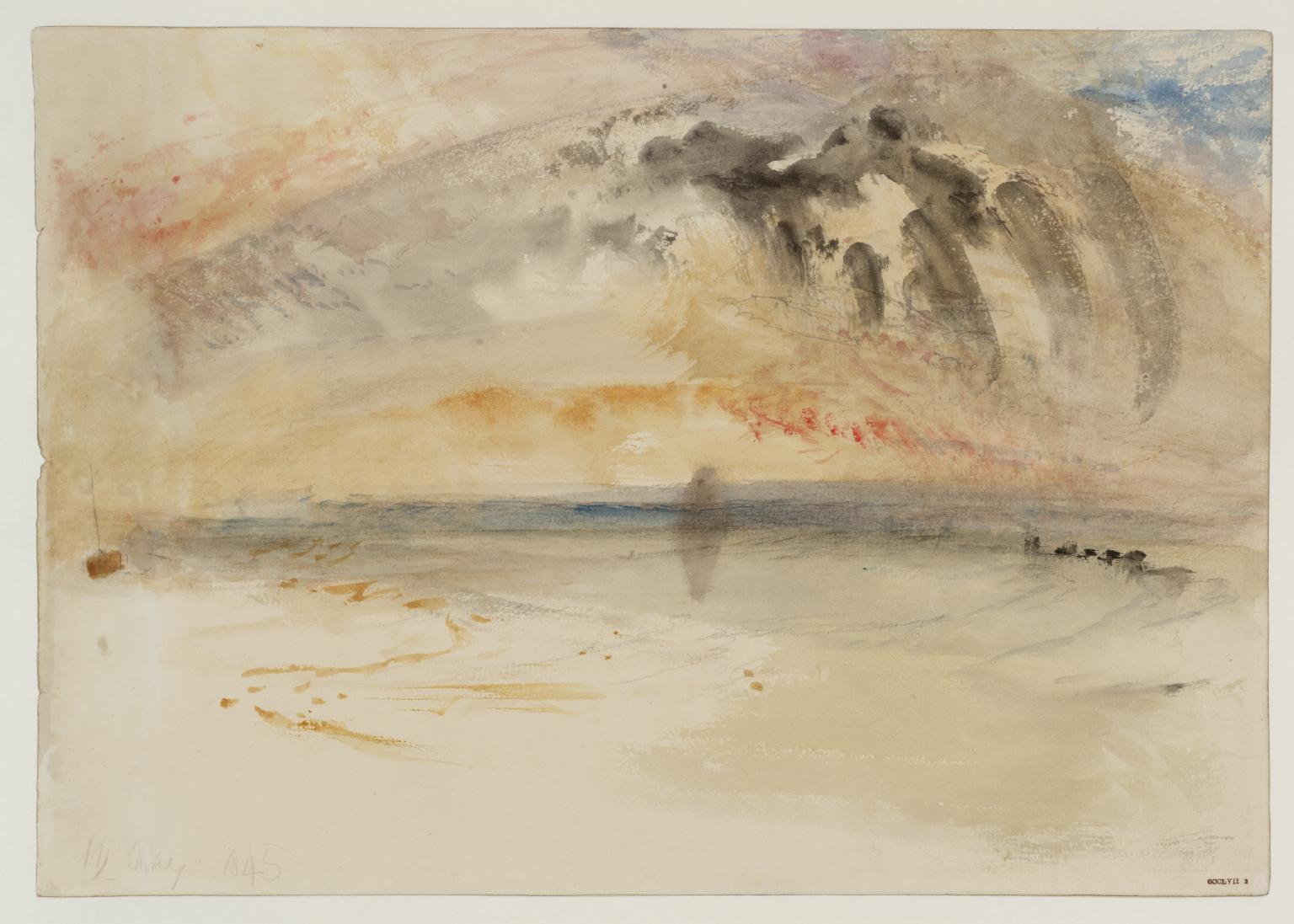
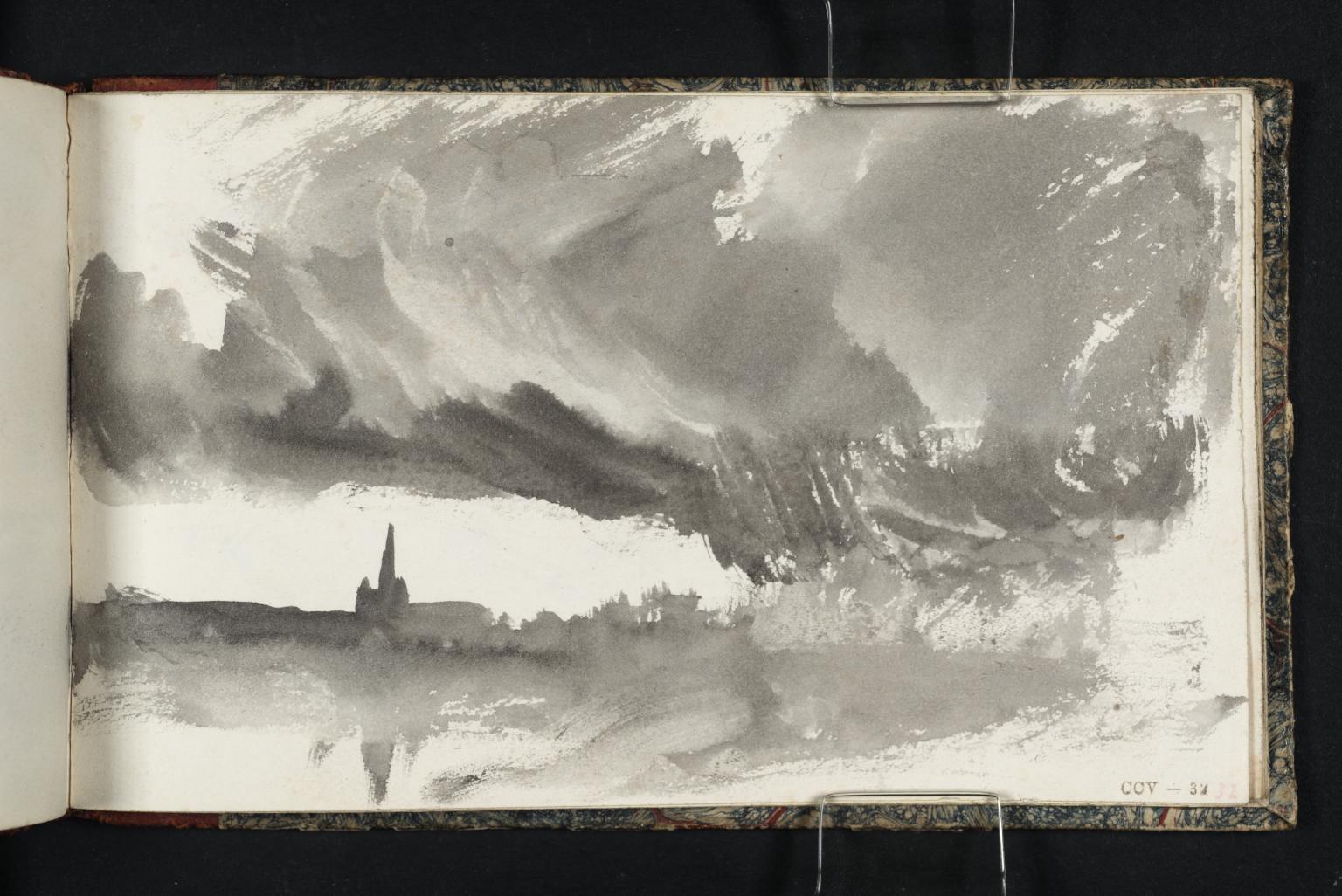
This is the “Study for The Loss of an East Indiaman” by Joseph Mallord William Turner, created around 1818. In this small 31 by 46‑centimetre sheet of graphite, watercolour and chalk, Turner captures a dramatic storm at sea, with a large merchant ship battling towering waves. The scene hints at the tragic fate of a British East Indiaman, a story that Turner was preparing to paint in a larger format for the 1820s. You can see how his early study balances the raw power of wind and light, a hallmark of his later work on the subject. It was part of a series of colour studies for commissions from Walter Fawkes, showing how Turner refined his technique before committing to a full canvas. The work was added to the national collection in 1856 as part of the Turner Bequest, ensuring his legacy lives on. Notice how the light plays across the water, turning the grey of the storm into a dramatic, almost luminous backdrop—Turner’s fascination with atmospheric effects at its most intense.
See it in person
Study for ‘The Loss of an East Indiaman’ is in the collection of Tate Britain on Millbank, London — free to enter. Point your phone at any artwork there and audioguide.london plays a free audio guide in six languages — no app download needed.