Study for ‘Flatford Mill’
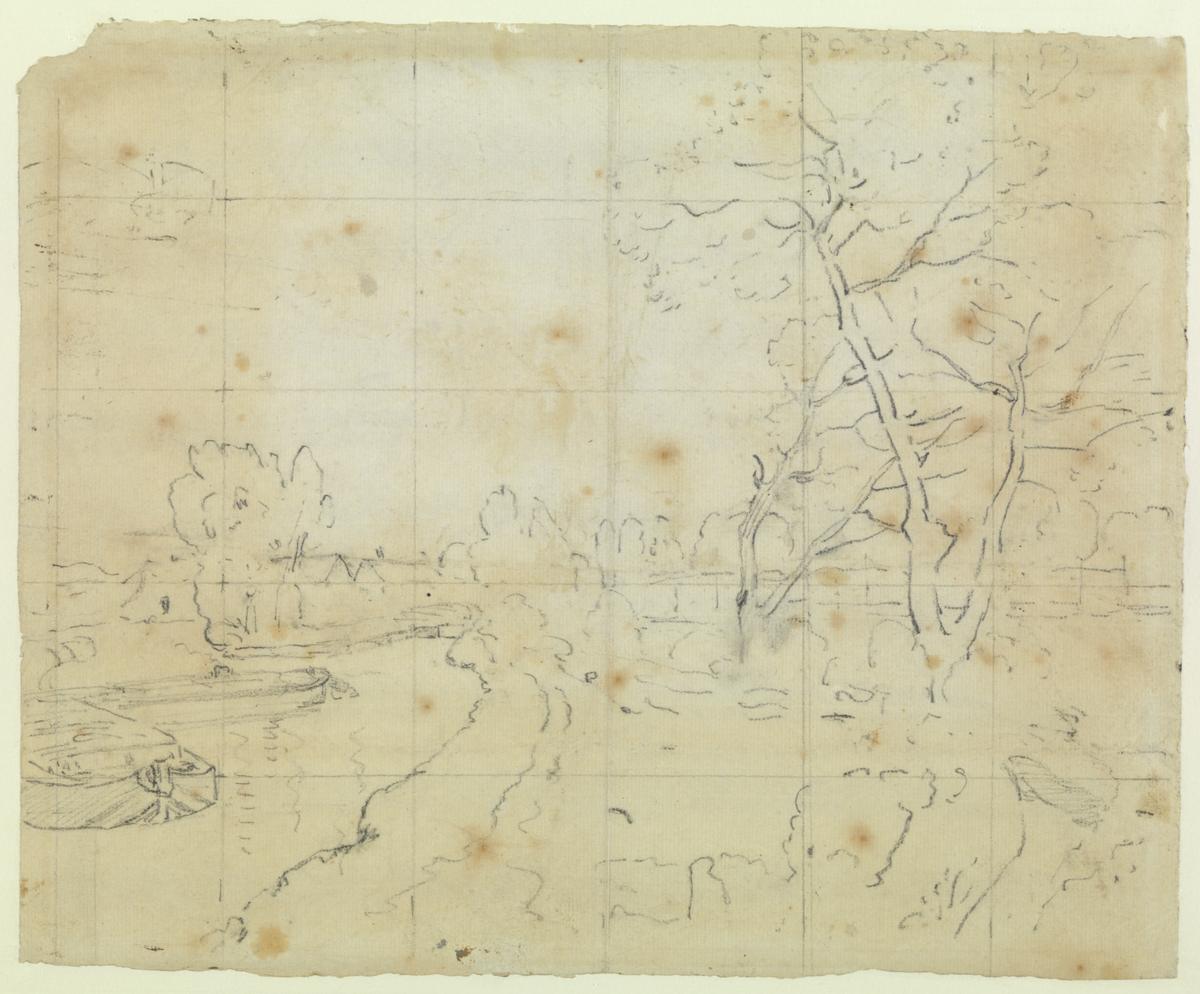
- Artist: John Constable
- Date: c.1816
- Medium: Graphite and oil paint on paper
- Dimensions: support: 255 x 312 mm
- Museum: Tate Britain
- Collection record: Tate Britain website
Listen to the free audio guide
About this artwork
This is the "Study for 'Flatford Mill'" by John Constable. Created around 1816, this graphite and oil on paper sketch is a preparatory work for his famous landscape, Flatford Mill, which he painted outdoors in Suffolk in 1816‑17. Constable’s technique was rather inventive: he set a sheet of glass on an easel, painted a quick outline of the scene with oil, then pressed paper onto the wet paint. The image transferred as a reversed off‑print on the paper’s back, which he then traced in pencil to correct the mirror effect. That traced image was later squared up for transfer to the canvas. In this study we can already spot the two barges that appear in the finished painting, but no figures. The drawing reveals how Constable used perspective tricks to capture the River Stour and the watermill’s wooden bridge, ensuring the final canvas would have the right depth. Arthur Parsey noted this very method in his 1840 book, underscoring Constable’s scientific approach to landscape. The piece shows the artist’s meticulous planning before committing to the large canvas.
See it in person
Study for ‘Flatford Mill’ is in the collection of Tate Britain on Millbank, London — free to enter. Point your phone at any artwork there and audioguide.london plays a free audio guide in six languages — no app download needed.