Self-Portrait
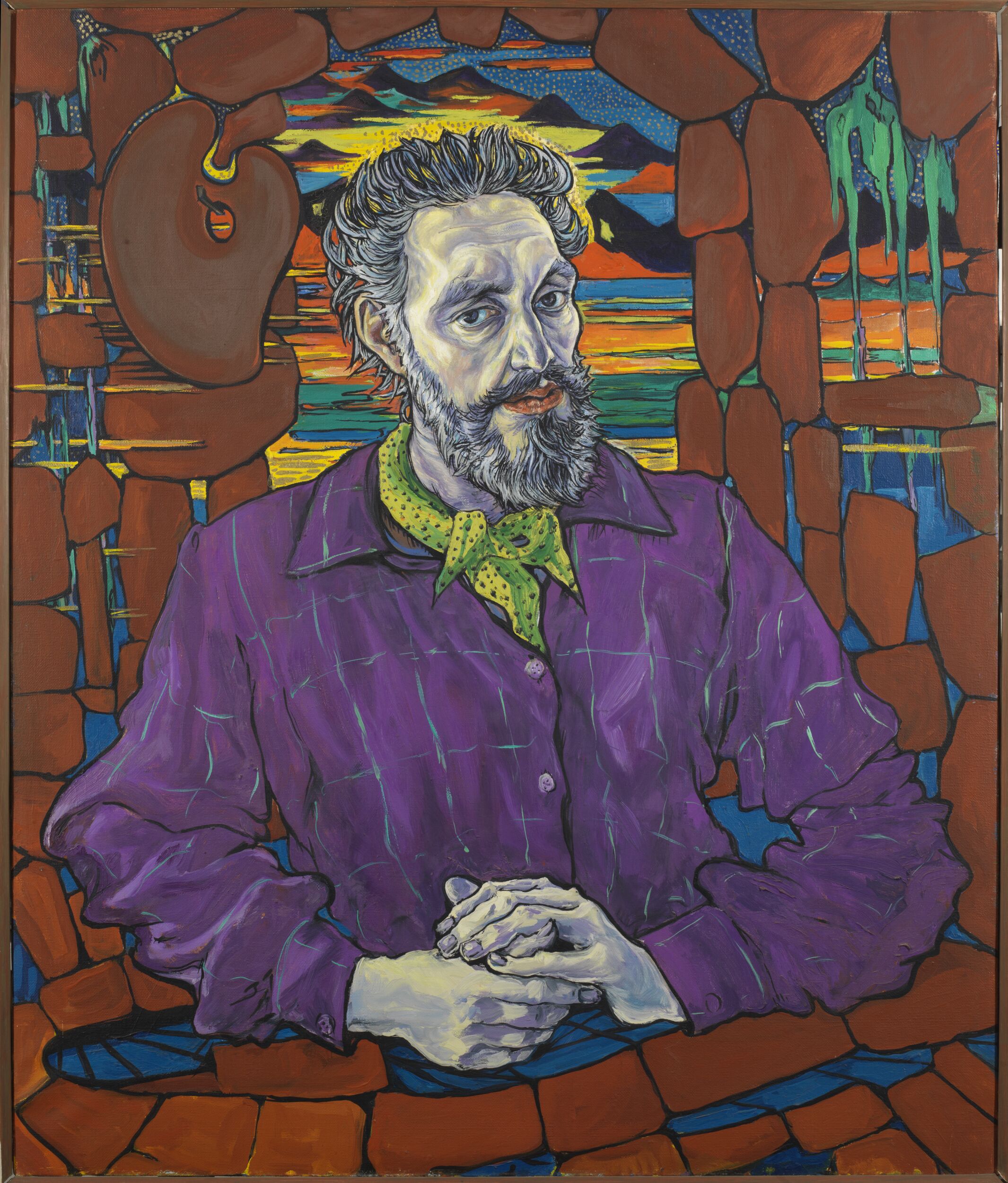
- Artist: Tomás Harris
- Date: 1954
- Medium: oil on canvas
- Museum: The Courtauld Gallery
- Collection record: The Courtauld Gallery website
Listen to the free audio guide
About this artwork
This is the “Self‑Portrait” by Tomás Harris, painted in 1954. Right off the bat, you’ll notice the immediacy of the gesture—a bold, direct eye that seems to follow you from any angle. Harris worked with oil on canvas, a medium that lets him layer rich, almost velvety textures while still maintaining a crisp underdrawing that you can almost feel beneath the surface.
The color palette here is deliberately restrained: muted ochres, deep browns, and a splash of ochre‑green that gives the background a subtle, almost dreamlike quality. He balances the figure against a slightly abstracted backdrop, which hints at the interior of a studio more than a concrete setting. It’s a moment caught between introspection and performance—his face is composed, yet the brushwork around the jaw and cheekbones suggests movement, a fleeting pulse.
Harris’s technique shows a keen attention to light. The light source comes from the left, casting soft shadows across the right side of the face, which brings depth to the contours. You can see the careful glazing that adds a slight luminosity to the eyes, giving them a lifelike sparkle.
All in all, the painting feels intimate yet powerful. It captures a self‑reflection that feels timeless, a snapshot of a man looking back into the viewer’s gaze, asking you to see yourself in the process.
See it in person
Self-Portrait hangs in The Courtauld Gallery at Somerset House, London. Point your phone at any artwork there and audioguide.london plays a free audio guide in six languages — no app download needed.