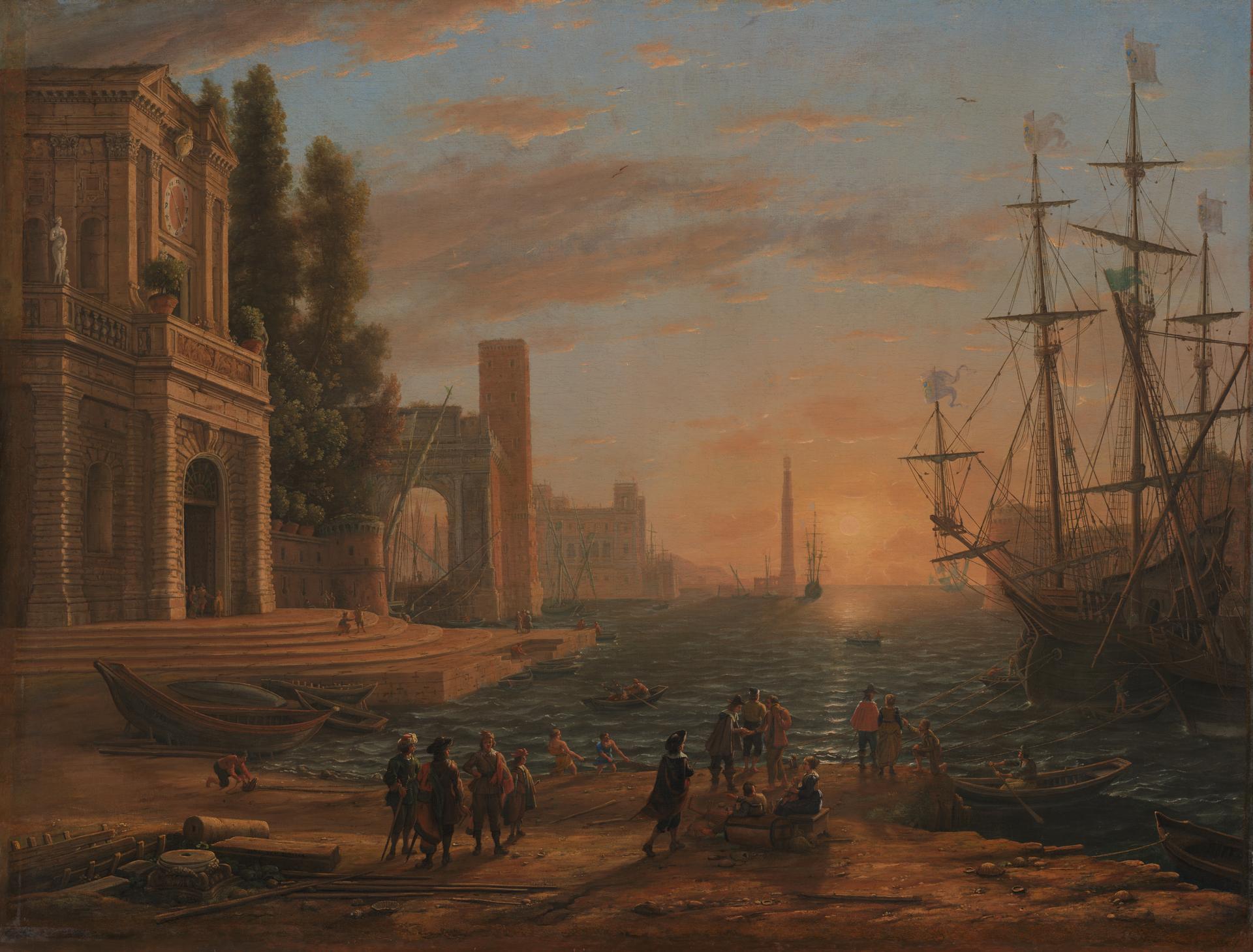
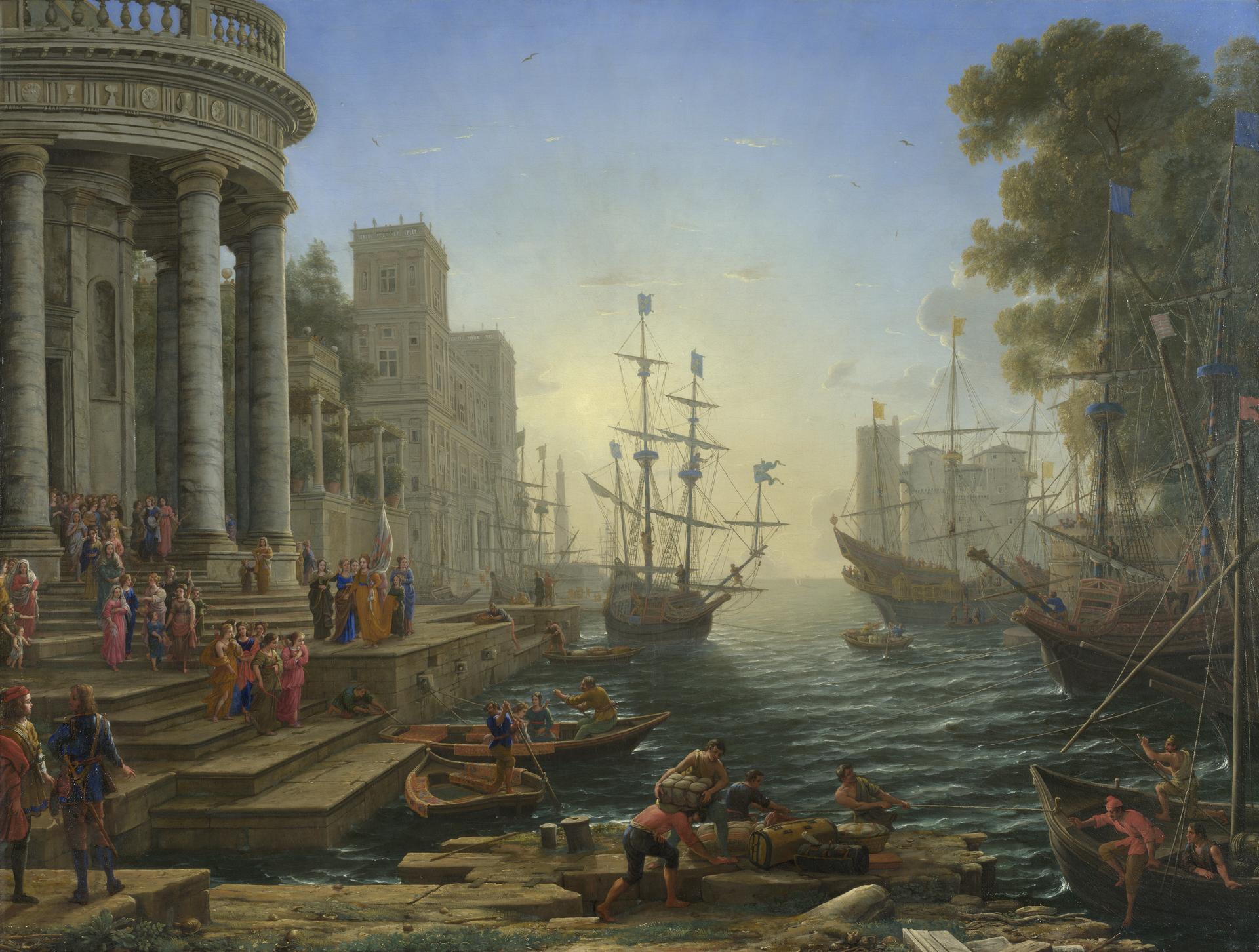
Seaport with the Embarkation of Saint Ursula
- Artist: Claude
- Date: 1641
- Medium: oil on canvas
- Museum: The National Gallery
- Collection record: The National Gallery website
Listen to the free audio guide
About this artwork
This is the Seaport with the Embarkation of Saint Ursula by Claude, painted in 1641. The scene depicts Saint Ursula, a Christian princess from Britain or Brittany, watching her companions embark on their return voyage to Rome. They're carrying bows and arrows, which represent their martyrdom later in the story.
Notice how the balance between the soft warmth of the sky and calm sea is typical of Claude's seascapes. The buildings, trees, and ships are all depicted in detail, framing the scene. The circular building with columns on the left foreground is based on a temple built on the spot of Saint Peter's crucifixion.
The painting was commissioned by Fausto Poll, a future cardinal, who would later become one of Claude's most influential patrons. You can see the emblem of the Barberini family on the blue flags of the ships in the centre, which were being admired by two figures in the middle distance. The Barberini family wielded immense power and influence in seventeenth-century Rome.
Claude spent most of his life in Rome, drawing inspiration from the buildings he was familiar with. This painting is a great example of his ability to capture the soft, hazy light and calm sea that's characteristic of his seascapes.
See it in person
Seaport with the Embarkation of Saint Ursula hangs in The National Gallery on Trafalgar Square, London — free to enter. Point your phone at any artwork there and audioguide.london plays a free audio guide in six languages — no app download needed.