Saint Sebastian, (after Andrea Mantegna, around 1431–1506)
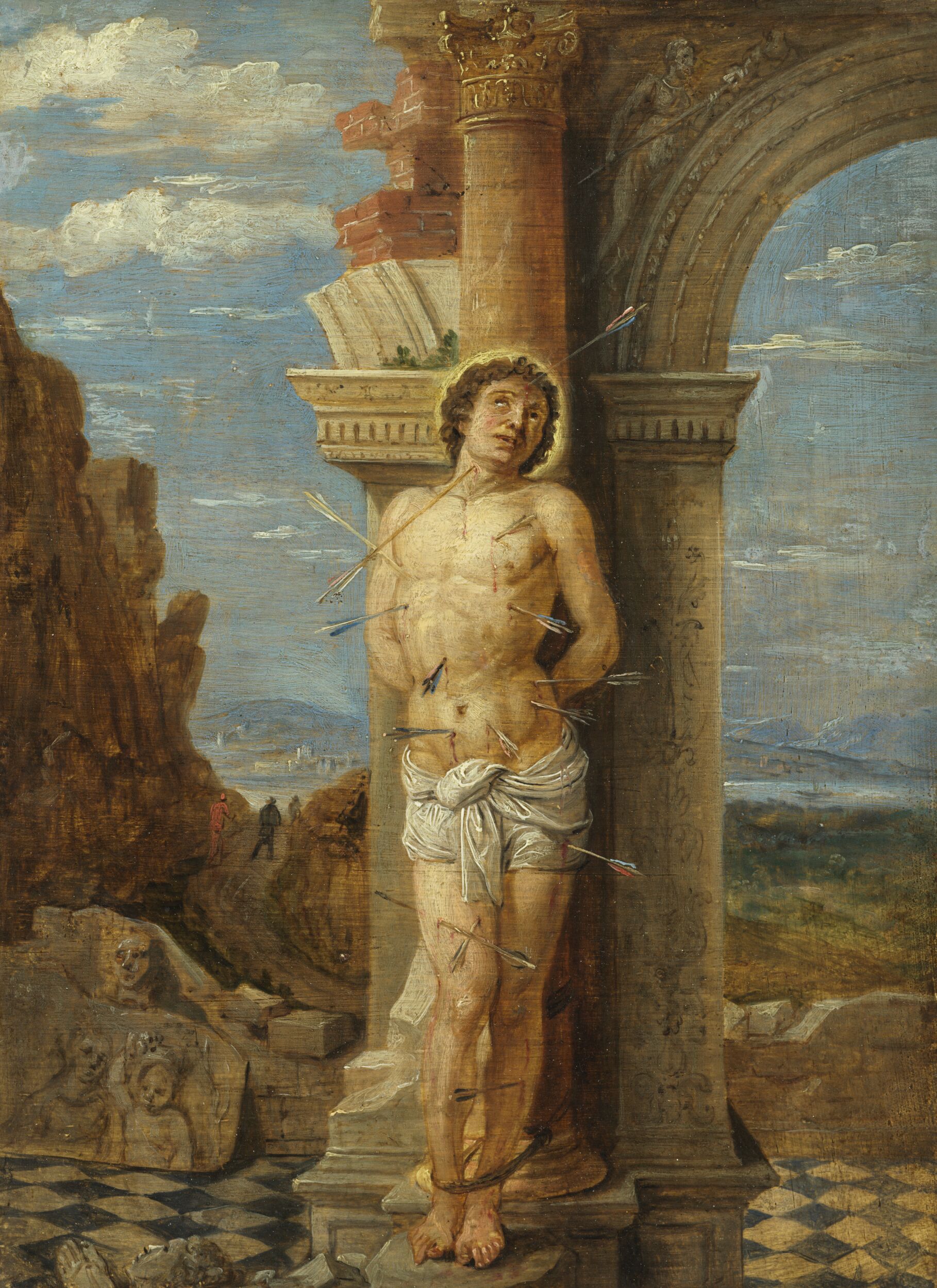
- Artist: David Teniers II
- Date: 1650-56
- Medium: oil on panel
- Museum: The Courtauld Gallery
- Collection record: The Courtauld Gallery website
Listen to the free audio guide
About this artwork
This is the “Saint Sebastian” (after Andrea Mantegna, around 1431–1506) by David Teniers II. Painted in the mid‑1650s, the work is an oil on panel finished between 1650 and 1656. Teniers created it as part of a larger project: the 1660 publication of *Theatrum Pictorium*, the first printed and illustrated catalogue of a major art collection. The collection belonged to Archduke Leopold Wilhelm, governor of the Southern Netherlands, who, over a decade, amassed more than 1,300 paintings spanning two centuries, most of them Italian Renaissance masterpieces.
For the catalogue, Teniers made faithful copies of the originals on small wooden panels, then sent these miniature studies to specialist engravers. The resulting prints were reproduced in the book, making the art accessible beyond the archduke’s private circle. The 14 copies that survive in the Courtauld’s collection— the largest number in any public collection— are a valuable record of works that have since been altered or lost.
Teniers’ precision and attention to detail are evident in this small panel, where he captures the tension of the martyr’s pose and the subtle play of light. The painting stands as a testament not only to the artist’s skill but also to the growing 17th‑century interest in reviving and preserving the art of the past.
See it in person
Saint Sebastian, (after Andrea Mantegna, around 1431–1506) hangs in The Courtauld Gallery at Somerset House, London. Point your phone at any artwork there and audioguide.london plays a free audio guide in six languages — no app download needed.


