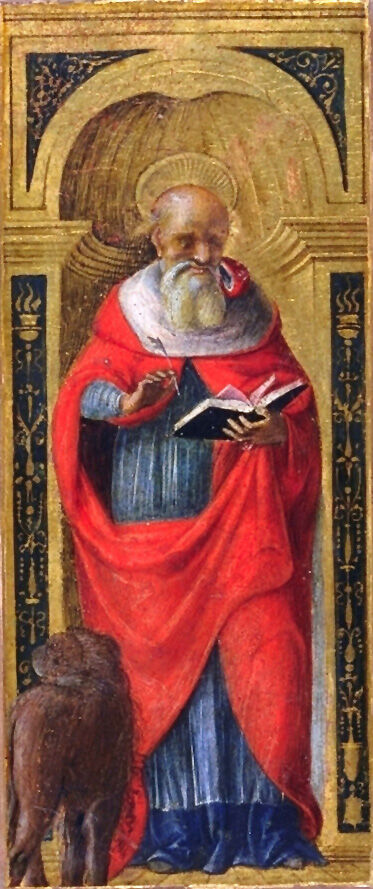
Saint John the Evangelist
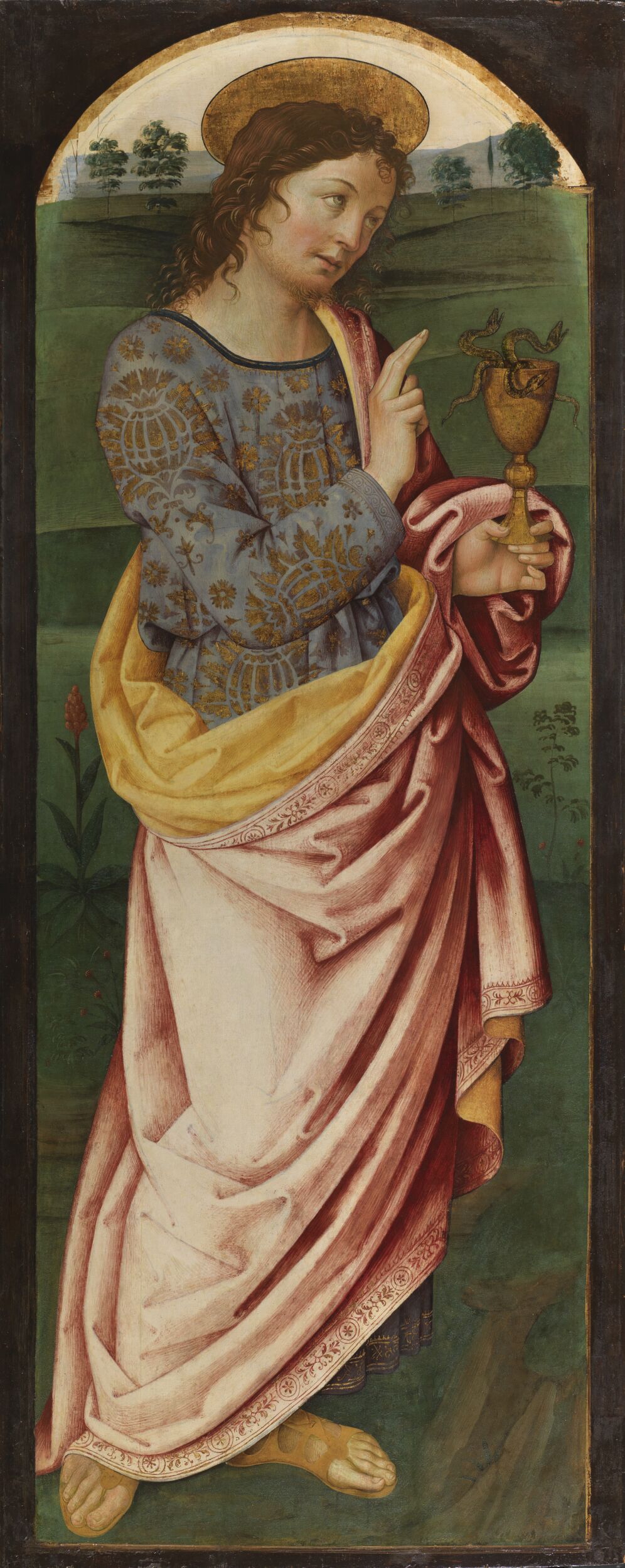
- Artist: Workshop ofItaly (Florence) 15th century (Artists)
- Date: (circa) 1470 - 1490
- Medium: tempera on panel
- Museum: The Courtauld Gallery
- Collection record: The Courtauld Gallery website
Listen to the free audio guide
In the museum now? Point your phone at the next artwork and hear its guide.
About this artwork
This is the “Saint John the Evangelist” painted by a Florentine workshop in the mid‑15th century. Created around 1470‑1490, it reflects the careful, detailed technique typical of that period in Italy. The work is executed in tempera on panel, a medium that was favored for its bright, quick‑dry colors and the fine, controlled brushwork the Florentine artists mastered. The panel itself bears the subtle wood grain that gives the painting a sense of solidity and timelessness, while the tempera layer provides a luminous surface that catches the light differently as you move around it.
Notice how the light is handled—soft yet precise, with a subtle chiaroscuro that guides the eye across the composition. The careful layering of colors and the delicate rendering of textures are hallmarks of the workshop’s disciplined approach. Although the iconography of Saint John is not described in the record, the overall style speaks to the broader context of Renaissance devotional art: a blend of realism, symbolic detail, and a reverent focus on the saint’s spiritual role.
The painting’s date, spanning from circa 1470 to 1490, places it in a vibrant era of artistic innovation in Florence, where tempera was still widely used before oil painting became dominant. It serves as a fine example of how local workshops balanced traditional techniques with emerging styles, preserving a link between medieval iconography and the burgeoning humanist spirit of the Renaissance.
See it in person
Saint John the Evangelist hangs in The Courtauld Gallery at Somerset House, London. Point your phone at any artwork there and audioguide.london plays a free audio guide in six languages — no app download needed.