Saint Aloysius Gonzaga in Glory
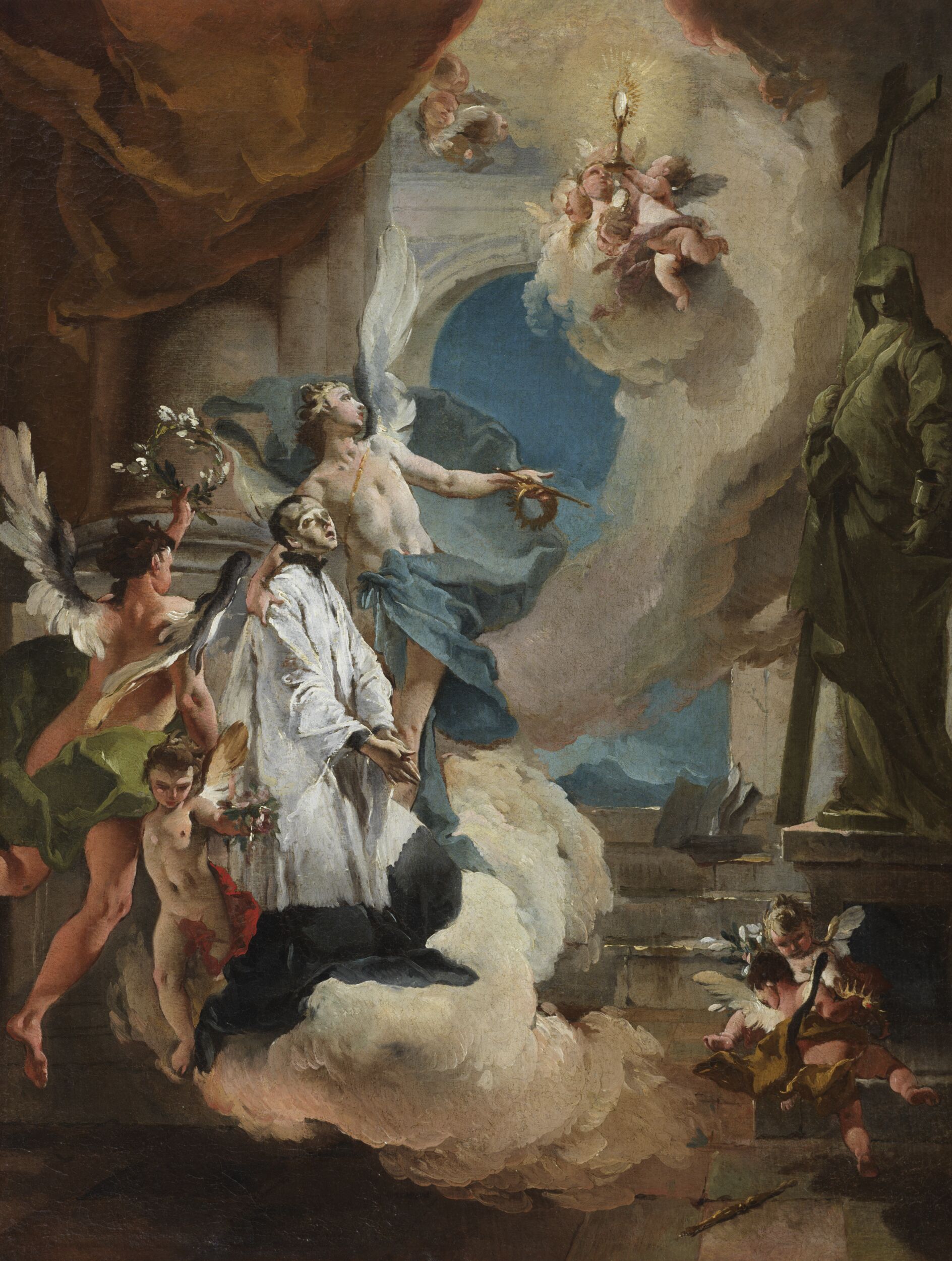
- Artist: Giovanni Battista Tiepolo
- Date: (circa) 1726
- Medium: oil on canvas
- Museum: The Courtauld Gallery
- Collection record: The Courtauld Gallery website
Listen to the free audio guide
About this artwork
This is the "Saint Aloysius Gonzaga in Glory" by Giovanni Battista Tiepolo. Painted around 1726, the work is an oil on canvas that captures a moment of pure spiritual fervor. In the composition, young Jesuit Saint Aloysius Gonzaga closes his eyes, his face reflecting an ecstatic vision of the communion wafer. He sees the bread transform into Christ’s body during Mass—a powerful image of the Eucharist that the artist has rendered with delicate light and soft color.
The subject is not just a biblical scene; it echoes Gonzaga’s recent canonization and his status as the Catholic Church’s patron of youth. Tiepolo likely created this canvas speculatively, perhaps as a preliminary study for an altarpiece he hoped to secure. He kept the piece in his studio for years before gifting it to the family of his collaborator, Antonio Fantoni.
Tiepolo’s hand is unmistakable—fluid brushwork, a luminous palette, and a dramatic use of chiaroscuro that heightens the mystical quality of the scene. The painting invites viewers to imagine the silent, almost reverent pause of a saint caught in divine revelation. It’s a compelling blend of devotion, artistry, and a touch of speculative ambition that defined much of Tiepolo’s early career.
See it in person
Saint Aloysius Gonzaga in Glory hangs in The Courtauld Gallery at Somerset House, London. Point your phone at any artwork there and audioguide.london plays a free audio guide in six languages — no app download needed.