Portrait of the Emperor Charles V (after Titian)
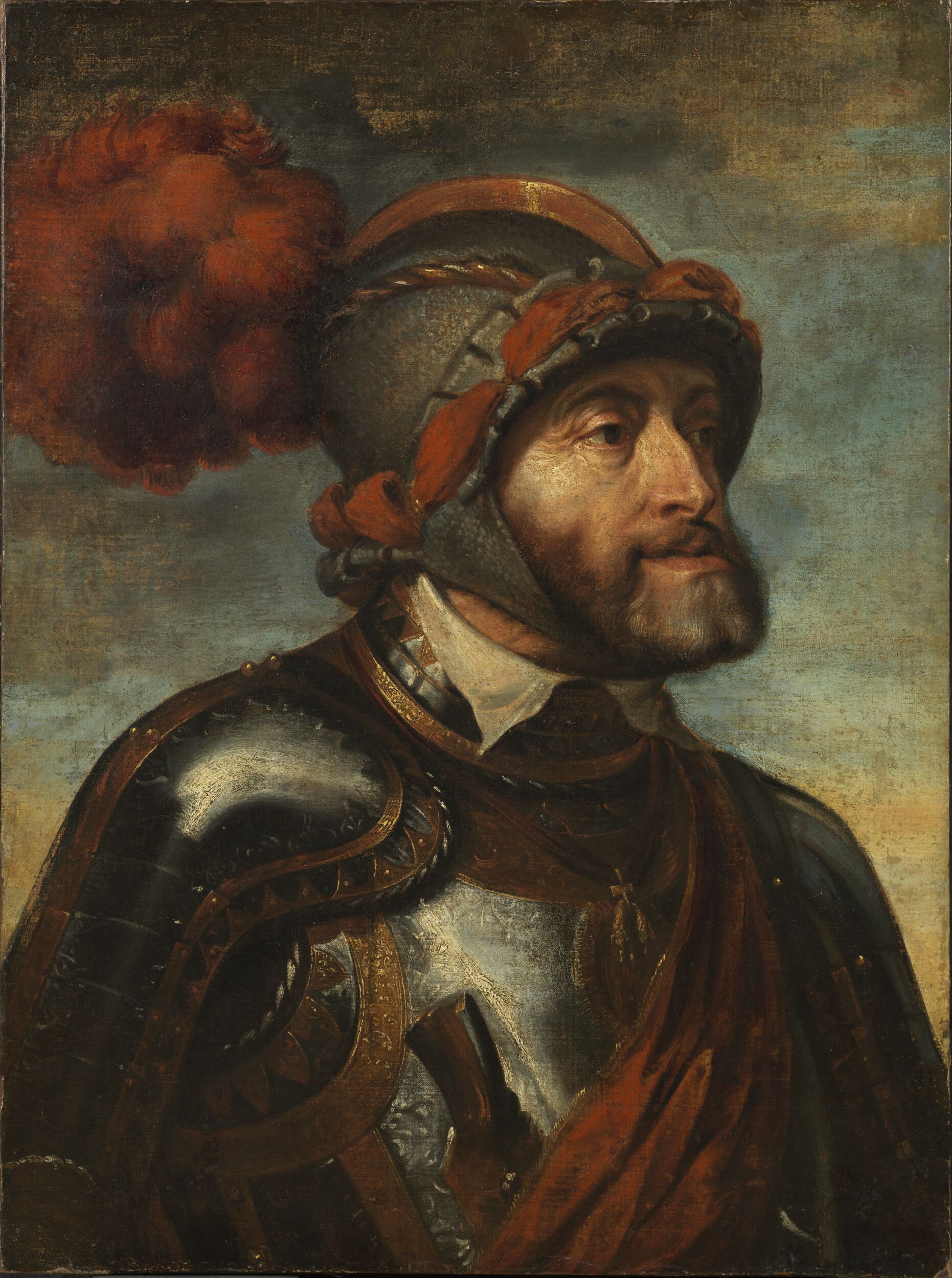
- Artist: Peter Paul Rubens
- Date: 1603
- Medium: oil on canvas (cut down)
- Museum: The Courtauld Gallery
- Collection record: The Courtauld Gallery website
Listen to the free audio guide
About this artwork
This is the Portrait of the Emperor Charles V (after Titian) by Peter Paul Rubens. Rubens, who held the position of official court painter for the Habsburgs, had a keen eye for the iconography of imperial power. He studied the early portraits of Charles V, especially the lost first depiction by Titian, and used those studies as a springboard for his own work.
In this canvas, finished in 1603, you see the emperor rendered as a knight in full armor, a visual shorthand for martial authority that was common in early‑modern portraiture. Rubens places Charles in a tight, almost sculptural composition, his gaze forward, hands resting on a sword that signals readiness for battle. The rich, textured fabric of the armor—highlighted by subtle glazes—shows the painter’s skill in capturing the interplay of light on metal and cloth.
Because the original Titian is no longer extant, Rubens’ copy functions as a crucial witness to the early visual conception of Charles V’s rule. The oil on canvas, cut down in size, gives the work a more intimate scale, encouraging viewers to contemplate the emperor’s presence up close.
Overall, the piece offers a fascinating blend of historical reverence and artistic reinterpretation, revealing how Rubens balanced fidelity to the lost original with his own Baroque flair for drama and detail.
See it in person
Portrait of the Emperor Charles V (after Titian) hangs in The Courtauld Gallery at Somerset House, London. Point your phone at any artwork there and audioguide.london plays a free audio guide in six languages — no app download needed.