Portrait of a Young Man
- Artist: Sandro Botticelli
- Date: probably about 1480-5
- Medium: egg tempera and oil on wood
- Museum: The National Gallery
- Collection record: The National Gallery website
Listen to the free audio guide
About this artwork
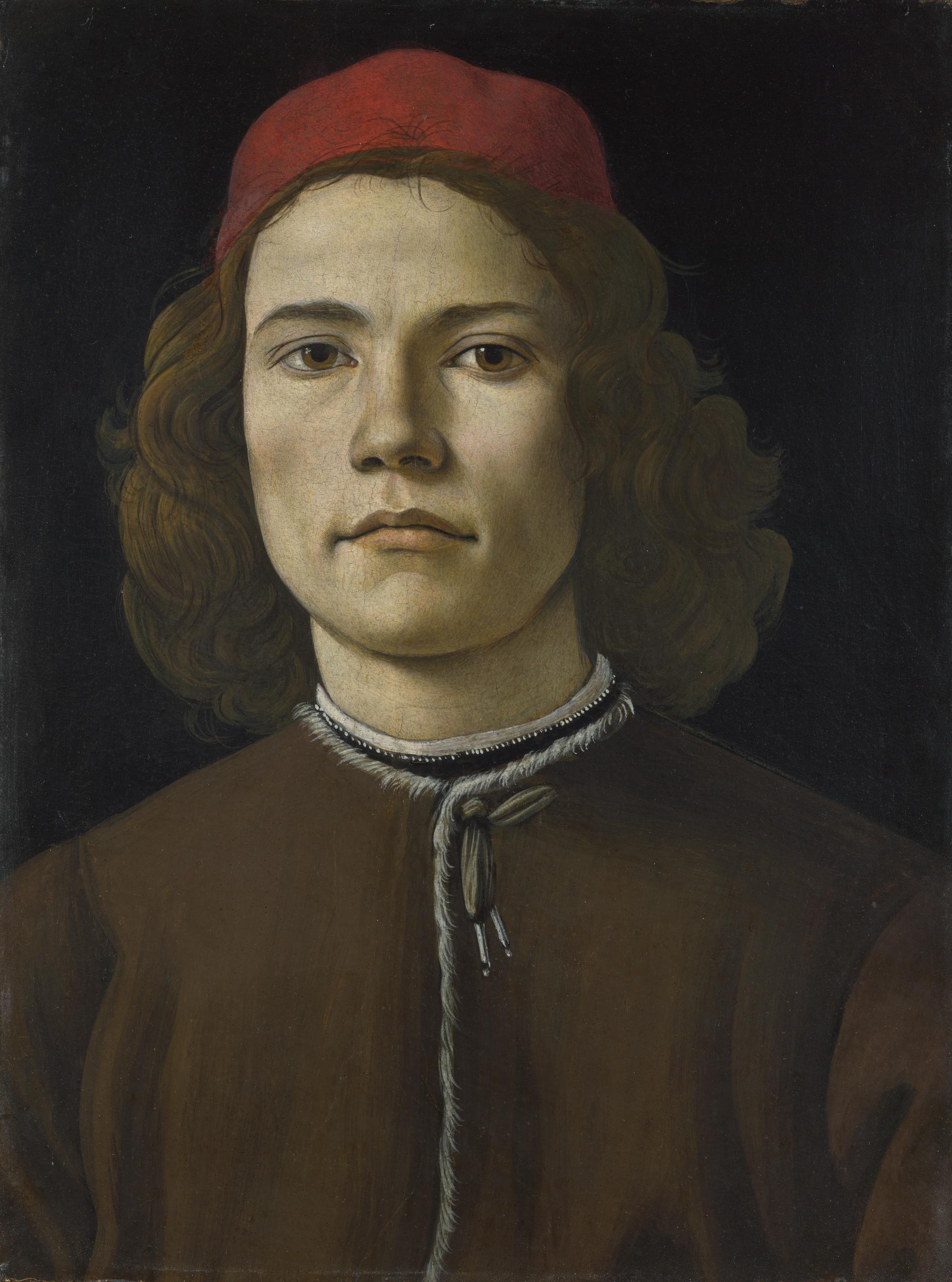
This is the "Portrait of a Young Man" painted in the Italian north. Until this moment, artists painted people either in profile view or by turning them three-quarters to face the viewer. Here, Botticelli paints the boy head on, mapping his whole face – the fleshy nose, dimpled cheeks, warm brown eyes and determined, protruding chin. Images of the whole face were usually reserved for so-called 'portraits' of Christ used for private prayer; showing a young man in such a way was radical.
The boy is dressed simply in brown, his dark blond curls escaping from beneath his red cap. His features are individual but his overall look resembles Botticelli's idealised males, particularly Mars in his painting "Venus and Mars", also in this collection. Renaissance portraits often beautified their subjects because outward beauty was supposed to reflect inner virtue: the portrait was an eternal witness to the person's soul as well as their appearance.
Botticelli has taken inspiration from Northern European portraiture, which emerged in Florence due to trade connections with Bruges. This style was all about direct communication with the viewer and detailed observation of features made possible by strong lighting from the left.
See it in person
Portrait of a Young Man hangs in The National Gallery on Trafalgar Square, London — free to enter. Point your phone at any artwork there and audioguide.london plays a free audio guide in six languages — no app download needed.