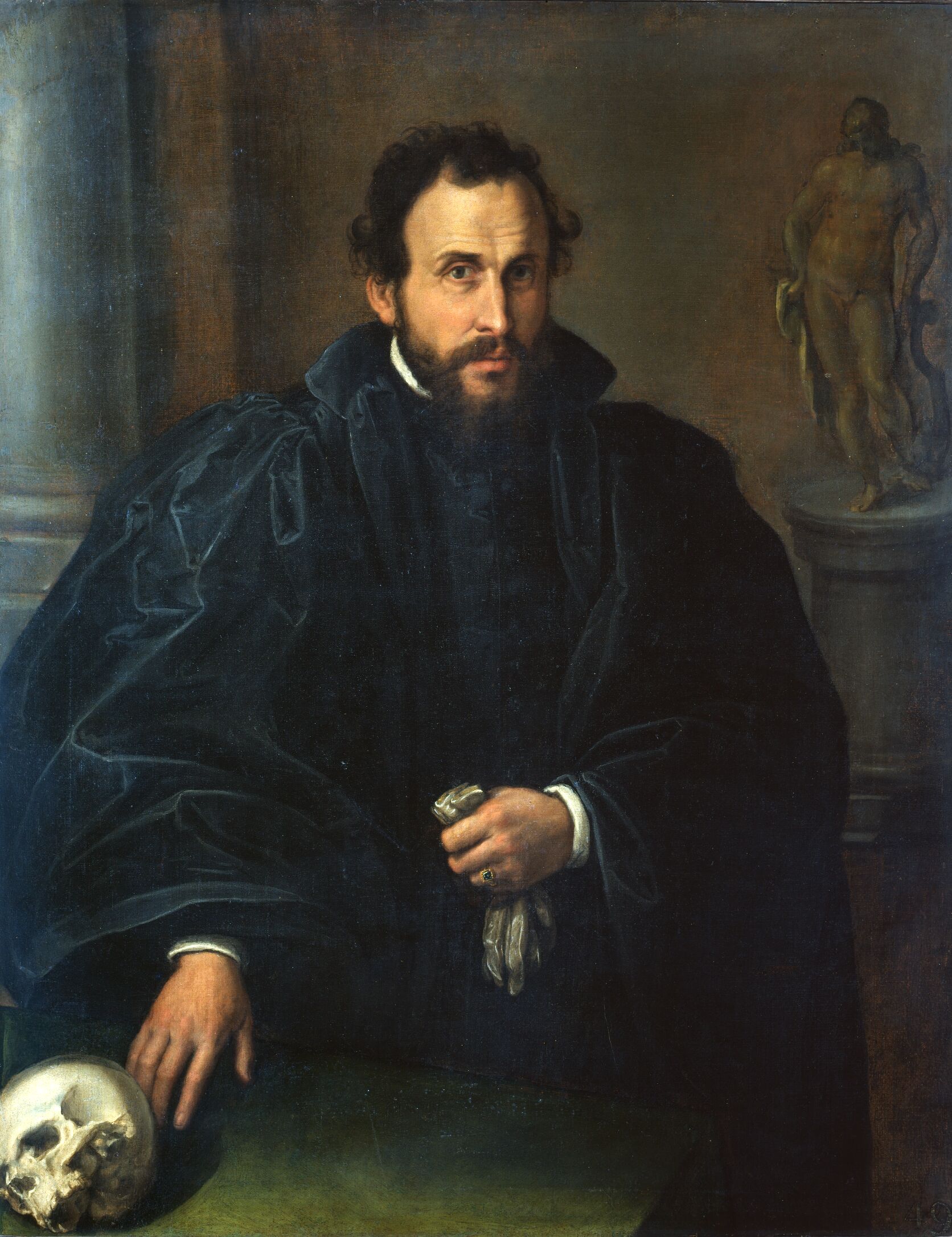
Portrait of a Man with a Skull
- Artist: Follower ofPieter Coecke van Aelst (Artists)
- Date: 1550
- Medium: oil on panel
- Museum: The Courtauld Gallery
- Collection record: The Courtauld Gallery website
Listen to the free audio guide
In the museum now? Point your phone at the next artwork and hear its guide.
About this artwork
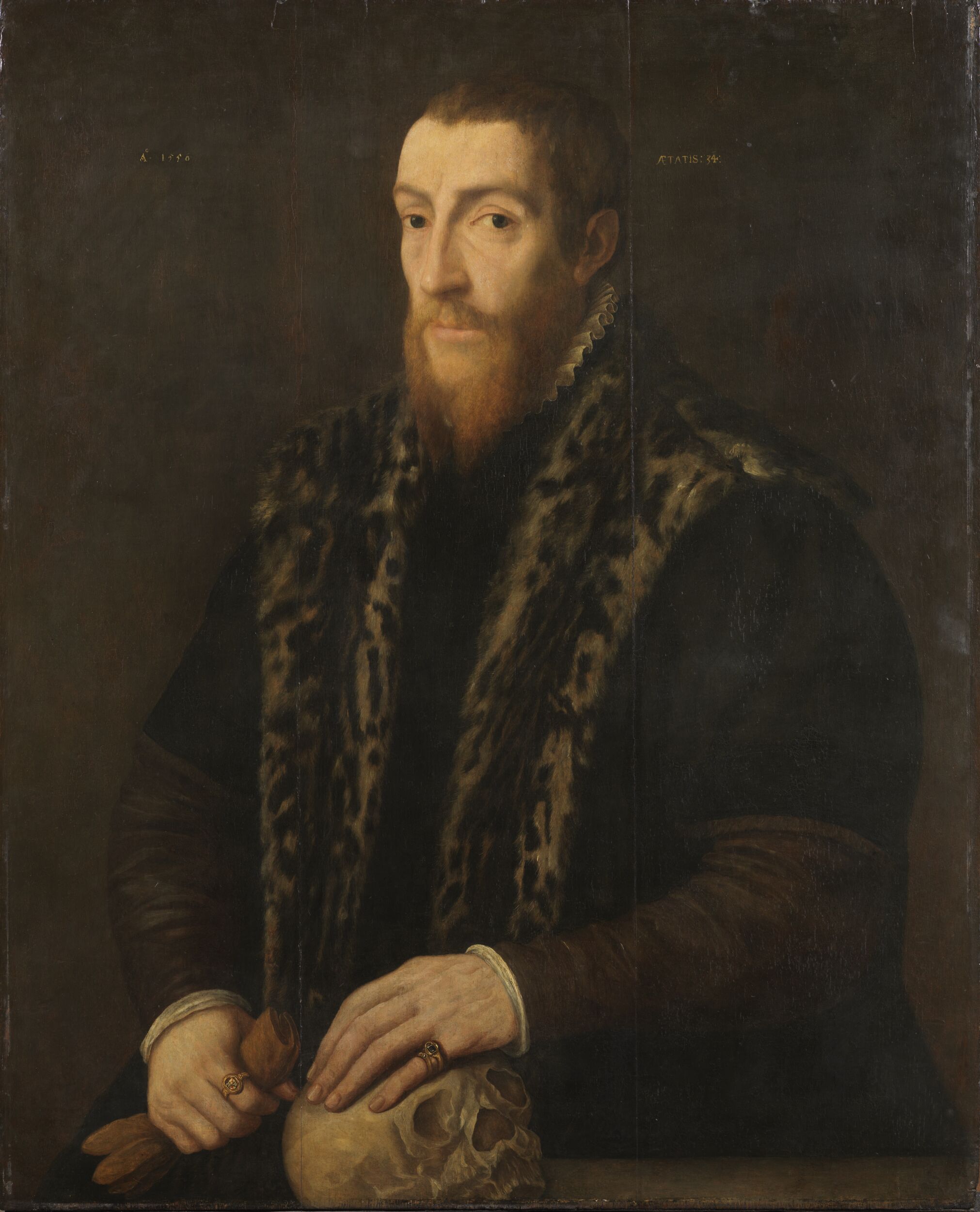
This is the “Portrait of a Man with a Skull”, painted around 1550 by a follower of Pieter Coecke van Aelst. The work is oil on panel, a medium that was popular in Northern Europe at the time and allows the artist to build rich, layered textures. The sitter is positioned in a tight half‑length pose, his face turned slightly to the right, eyes fixed directly on the viewer. He wears a dark double‑topped collar and a cloak that folds in soft folds, suggesting a modest, perhaps mercantile, status. In his left hand he holds a skull—an unmistakable memento mori—its skullcap painted with a subtle sheen that catches the light. The skull’s empty eye sockets give the portrait an eerie, almost theatrical, quality.
The background is a muted, indigo‑grey that serves to focus attention on the man and the skull. The brushwork is detailed, especially in the rendering of the lace and the subtle play of light on the skin, yet the overall palette remains subdued, emphasizing the solemn mood. This painting reflects the late‑Renaissance fascination with mortality and the moral messages it conveyed to viewers. The follower of Coecke van Aelst managed to capture the dramatic tension between worldly life and the inevitable fate of death in a concise, striking composition that still resonates with us today.
See it in person
Portrait of a Man with a Skull hangs in The Courtauld Gallery at Somerset House, London. Point your phone at any artwork there and audioguide.london plays a free audio guide in six languages — no app download needed.