Portrait of a Man in an Armchair
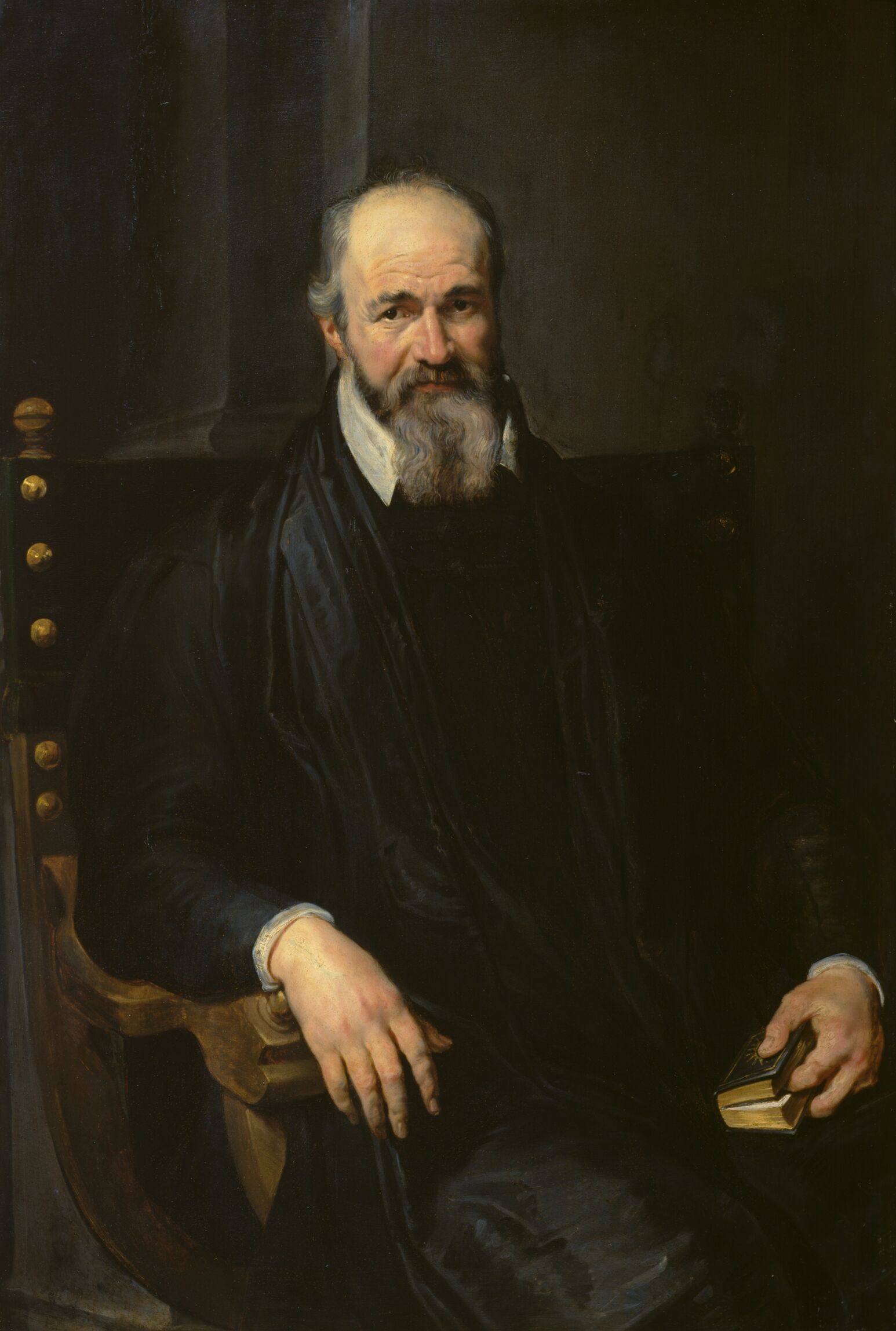
- Artist: Anthony van Dyck
- Date: 1616 - 1618
- Medium: oil on panel
- Museum: The Courtauld Gallery
- Collection record: The Courtauld Gallery website
Listen to the free audio guide
About this artwork
This is the "Portrait of a Man in an Armchair" by Anthony van Dyck. Painted between 1616 and 1618, it marks the early phase of the artist’s career when he was still working as an assistant in Peter Paul Rubens’s studio. The sitter, whose identity remains unknown, sits relaxed in a wide armchair, the kind that would have been common in a well‑furnished city house of the time. He is dressed in a simple black coat, the color echoing the modest, sober atmosphere that pervades the canvas. A small prayer book rests in his lap, and a finger is delicately placed upon its page, perhaps to mark the current verse or to indicate a moment of contemplation.
The background is intentionally plain: a subtle, almost invisible architectural frame that keeps the focus entirely on the figure. Van Dyck’s use of oil on panel allows for subtle gradations of light that enhance the sitter’s gentle, almost benevolent gaze. His eyes, slightly turned toward the viewer, create an intimate dialogue, as though inviting the observer to pause and reflect. The overall effect is one of restrained dignity, a quiet strength that hints at the emerging mastery that would later define van Dyck’s celebrated portraits.
See it in person
Portrait of a Man in an Armchair hangs in The Courtauld Gallery at Somerset House, London. Point your phone at any artwork there and audioguide.london plays a free audio guide in six languages — no app download needed.


