Portrait of a Man
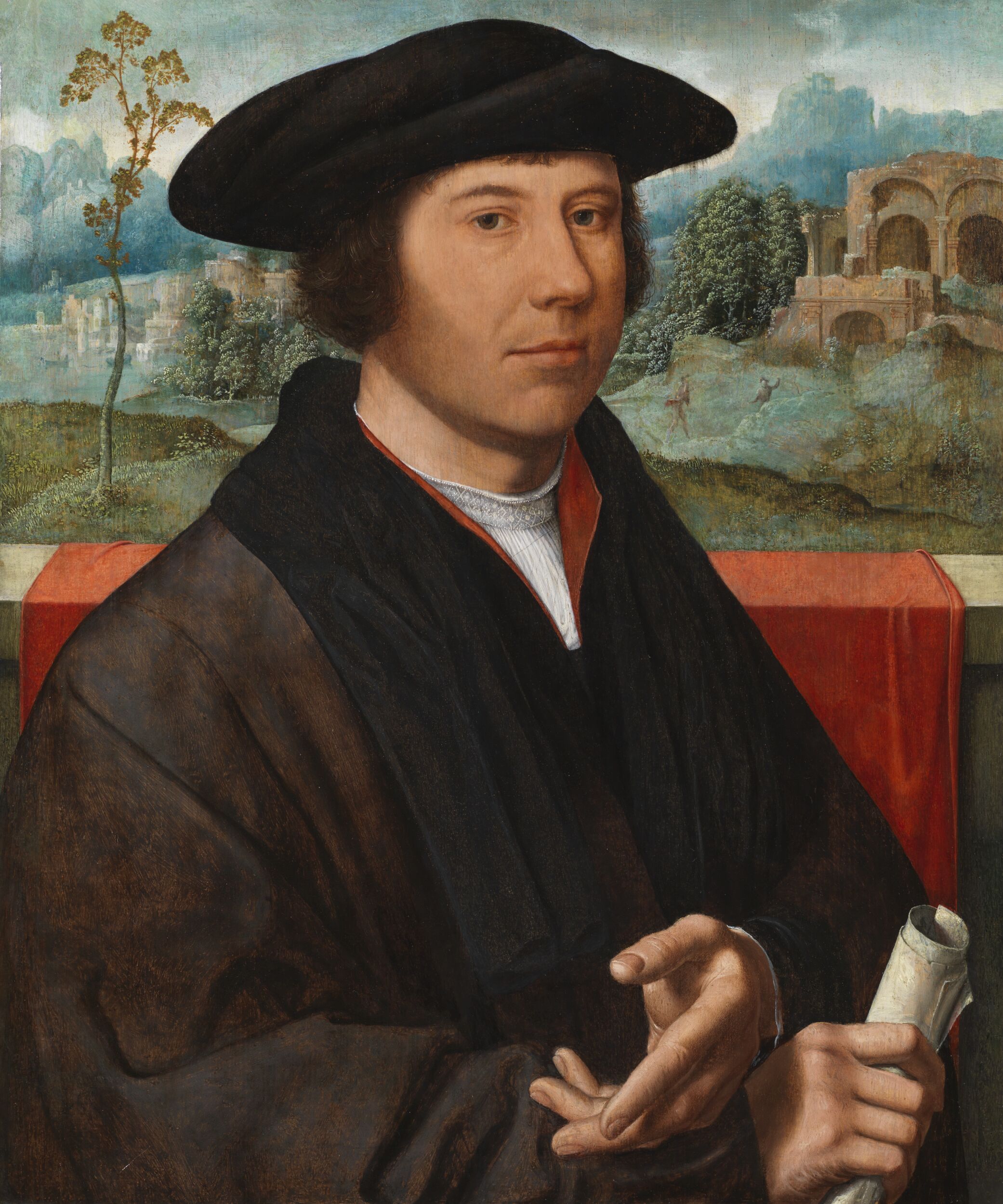
- Artist: Joos van Cleve
- Date: 1520 - 1529
- Medium: oil on panel
- Museum: The Courtauld Gallery
- Collection record: The Courtauld Gallery website
Listen to the free audio guide
About this artwork
This is the “Portrait of a Man” by Joos van Cleve. The canvas is actually a panel painted with oil between 1520 and 1529, placing it squarely in the early‑Renaissance period. Van Cleve, a prolific Dutch painter of the time, was known for his refined portrait work, and this piece exemplifies that precision.
The sitter sits in a relaxed yet dignified pose, his gaze directed slightly to the left, as if caught mid‑conversation. His clothing hints at the fashion of the 1520s, with a richly patterned doublet and a subtle ruff framing his face. The artist’s use of light is subtle; a soft source from the side illuminates the features, creating gentle shadows that give the face depth and a three‑dimensional quality.
The panel itself is fine, with a smooth surface that allows the oil paint to lay down in thin, translucent layers. Van Cleve’s technique here shows his mastery of glazing, evident in the subtle tonal variations across the sitter’s skin and the slightly veined texture of the cloth.
Overall, this portrait captures both the individual’s likeness and the stylistic tendencies of early 16th‑century Dutch art—balanced composition, careful detail, and a quiet sense of personality.
See it in person
Portrait of a Man hangs in The Courtauld Gallery at Somerset House, London. Point your phone at any artwork there and audioguide.london plays a free audio guide in six languages — no app download needed.