Portrait of a Gentleman, probably of the West Family
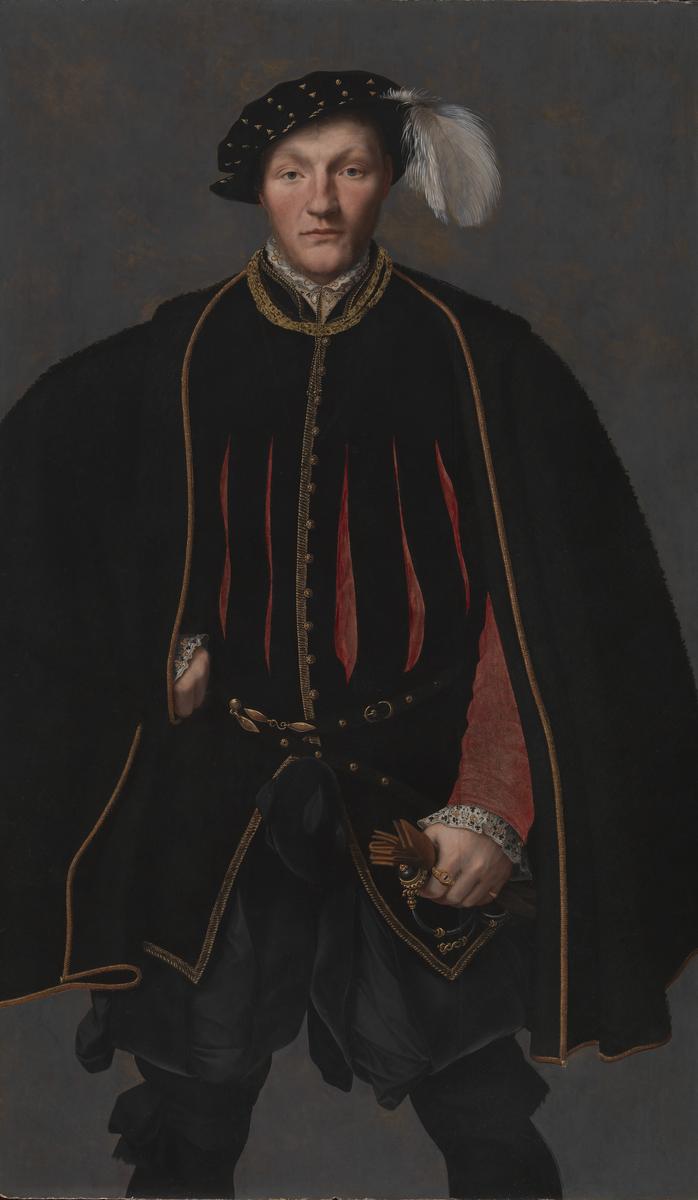
- Artist: Unknown artist, Britain
- Date: 1545–60
- Medium: Oil paint on oak
- Dimensions: support: 1330 x 785 mm
- Museum: Tate Britain
- Collection record: Tate Britain website
Listen to the free audio guide
About this artwork
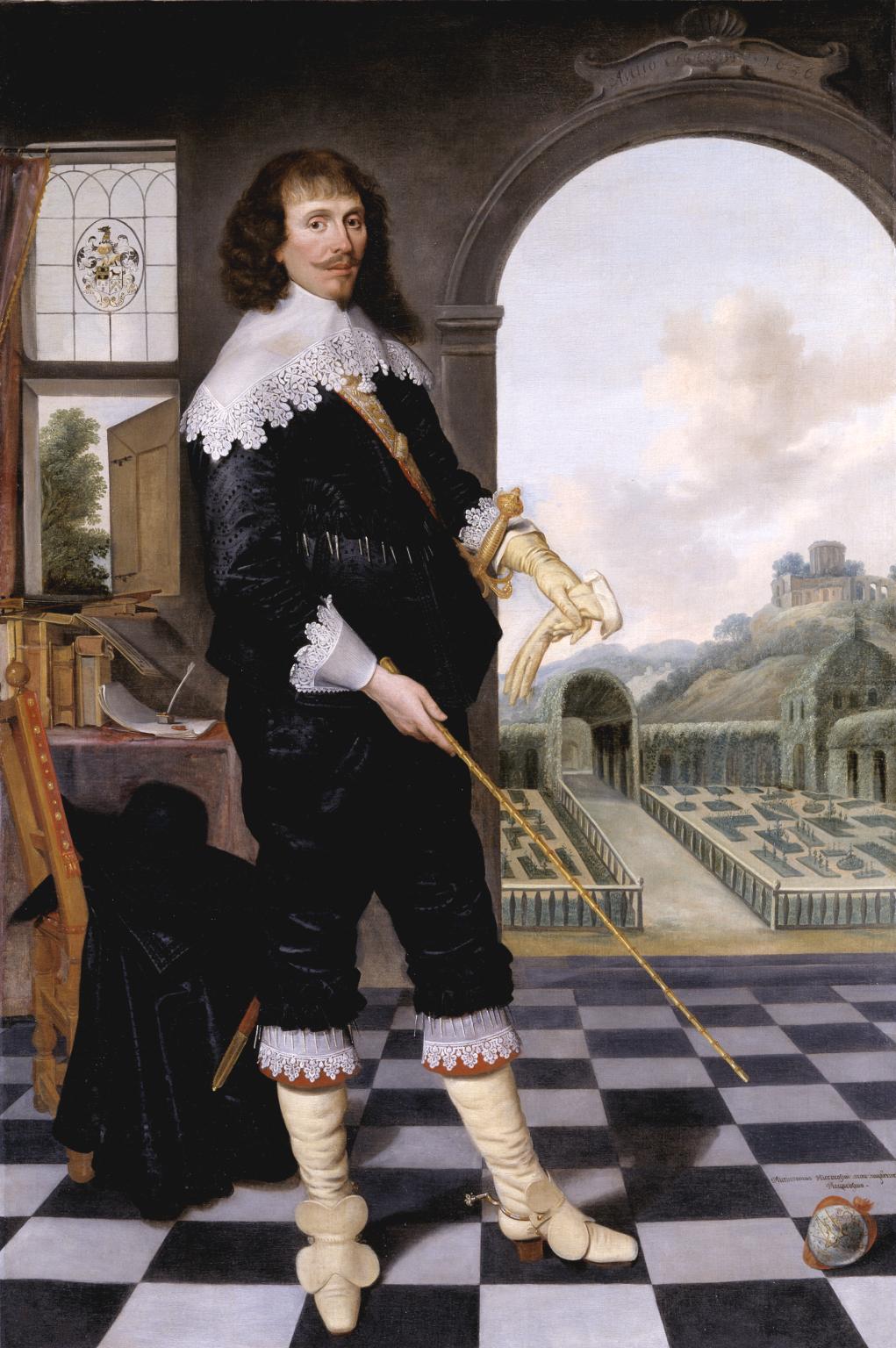
This is the Portrait of a Gentleman, probably of the West Family, painted by an unknown British artist in the mid‑16th century. The work was once credited to Hans Holbein, but modern research places it around 1550, based on the oak panel, pigment analysis, and the fashion of the period.
He is likely William West, born 1519, who later became Baron De La Warr. He was the nephew of the 9th Lord De La Warre and, as legend has it, tried to poison him to seize the family estates.
The ring on his finger displays the West family crest—a white field with a black wavy band— a subtle clue that ties the sitter to the West lineage.
His pose mirrors Holbein’s iconic Henry VIII portrait: full front, steady gaze. The attire is very 1550s: black hat with gold trim, a long black cloak edged in gold, a white shirt embroidered in gold and black, a black jerkin over a red doublet, black hose, and a prominent codpiece. In his left hand he grips a rapier hilt, the height of fashion at that time.
The combination of heraldry, clothing, and the panel’s oak gives us a fascinating glimpse into the political intrigue and style of Tudor England.
See it in person
Portrait of a Gentleman, probably of the West Family is in the collection of Tate Britain on Millbank, London — free to enter. Point your phone at any artwork there and audioguide.london plays a free audio guide in six languages — no app download needed.