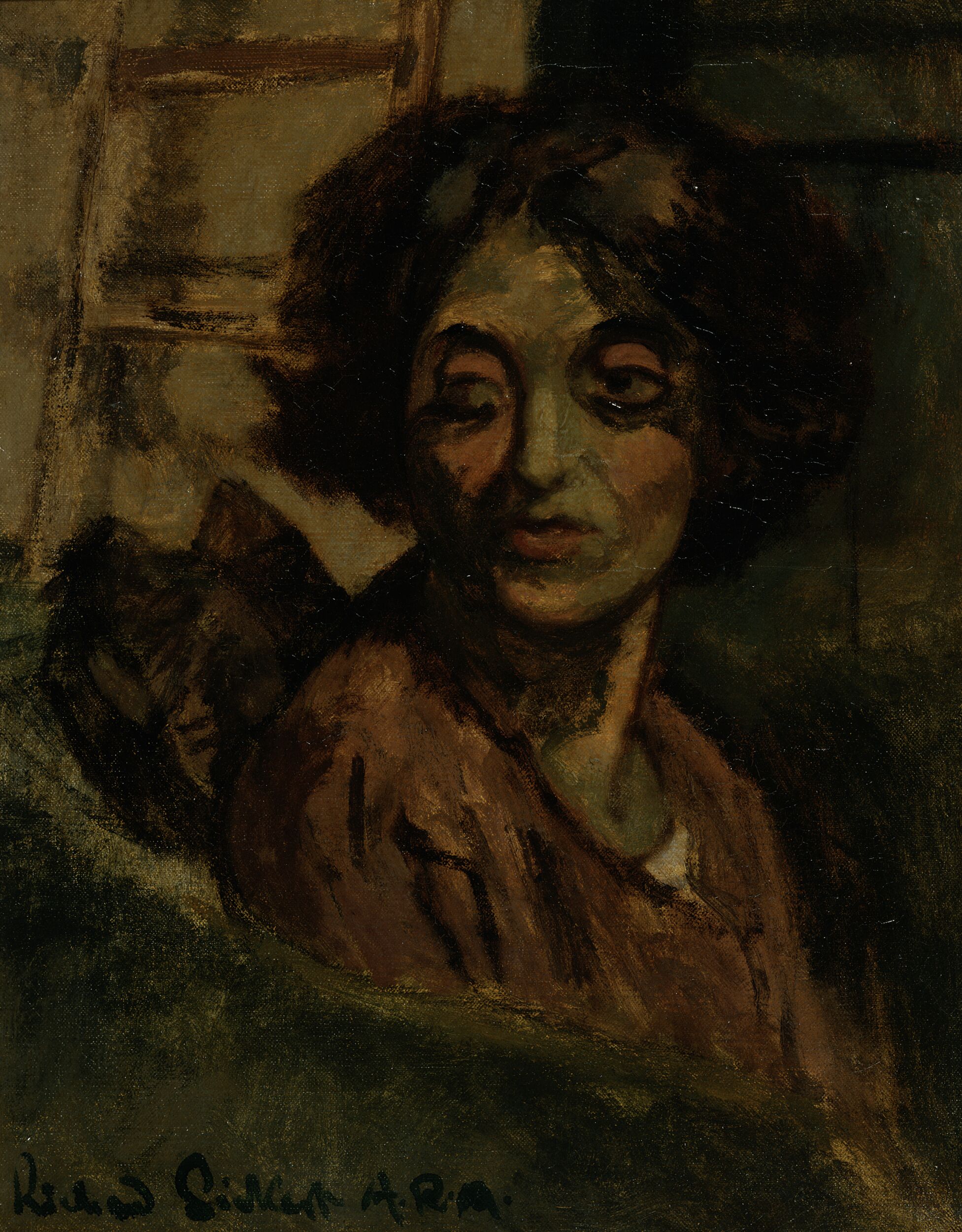
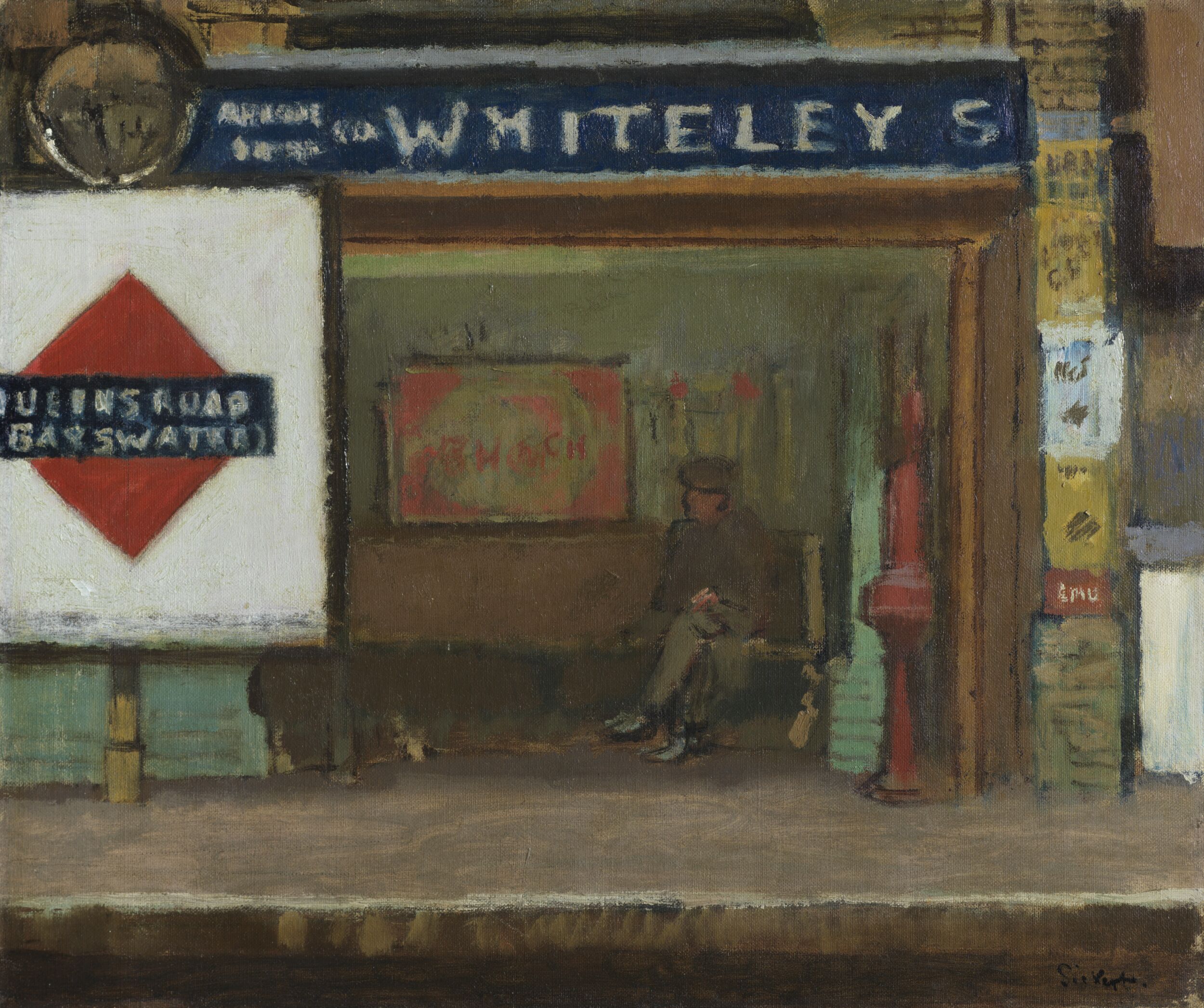
Portrait of Mrs Barrett
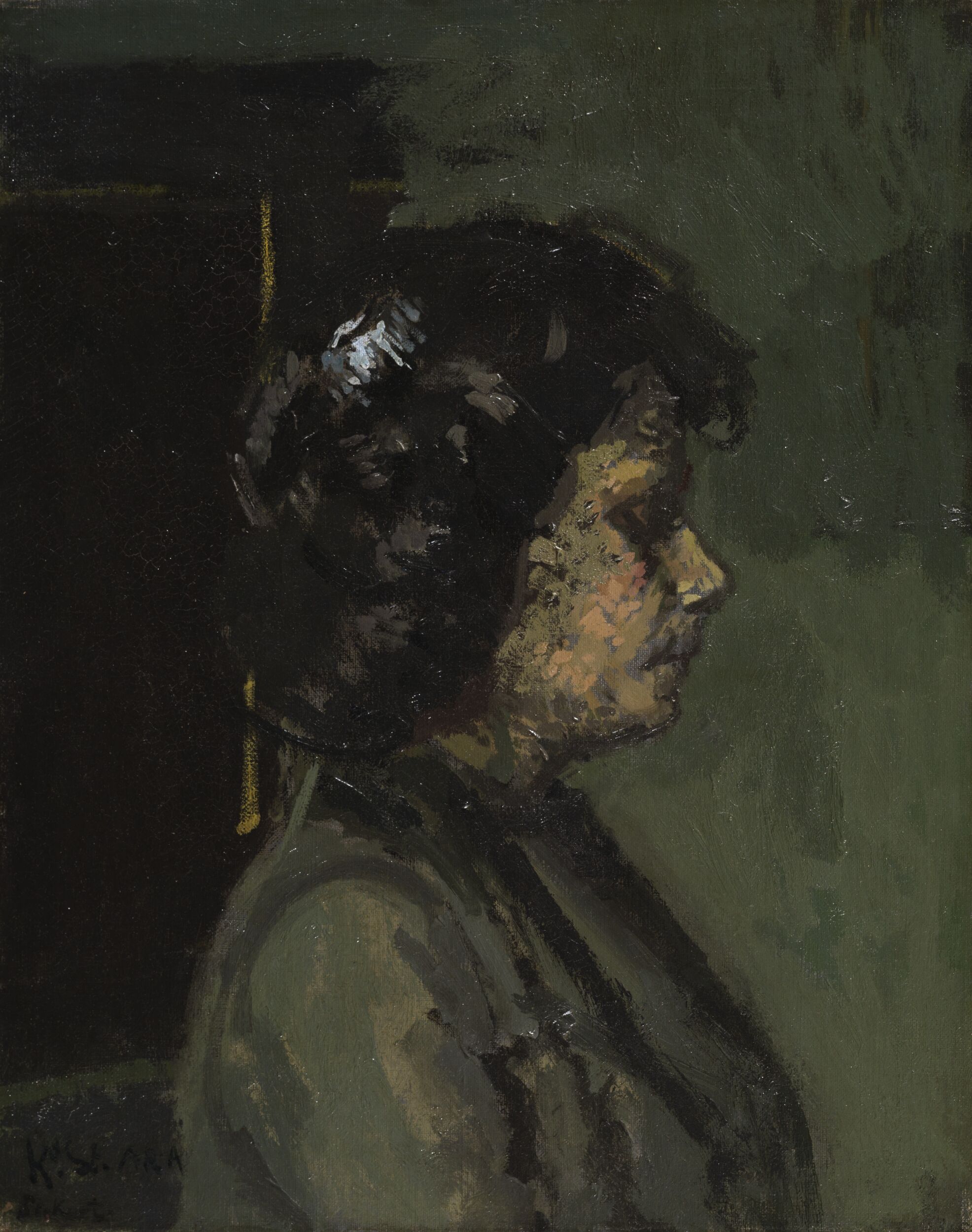
- Artist: Walter Richard Sickert
- Date: 1906
- Medium: oil on canvas
- Museum: The Courtauld Gallery
- Collection record: The Courtauld Gallery website
Listen to the free audio guide
About this artwork
This is the “Portrait of Mrs Barrett” by Walter Richard Sickert. Created in 1906, the work is an oil on canvas that captures the quiet dignity of its sitter with Sickert’s characteristic subtle brushwork and muted palette.
Sickert, a key figure in early 20th‑century British painting and a founding member of the Camden Town Group, often blended elements of Impressionism with a more realist sensibility. In this portrait he leans into that hybrid style, using looser strokes to convey the texture of Mrs Barrett’s dress while keeping her face sharply rendered, almost as if she were peeking out from the surrounding gloom.
Notice the controlled use of light: a soft, almost diffused glow washes the upper half of her face, creating a gentle contrast with the darker background. This chiaroscuro effect draws the viewer’s eye directly to her eyes, which hold a quiet intensity that suggests a narrative beyond the canvas.
The composition is straightforward—Mrs Barrett sits upright, slightly turned to the side, her hands resting calmly on her lap. The restrained color scheme of browns, grays, and muted greens complements the understated mood, reinforcing the portrait’s sense of calm observation rather than flamboyance.
Overall, the painting exemplifies Sickert’s interest in ordinary subjects portrayed with a nuanced psychological depth, making the “Portrait of Mrs Barrett” a compelling snapshot of early 20th‑century portraiture.
See it in person
Portrait of Mrs Barrett hangs in The Courtauld Gallery at Somerset House, London. Point your phone at any artwork there and audioguide.london plays a free audio guide in six languages — no app download needed.