Portrait of Lady Witt
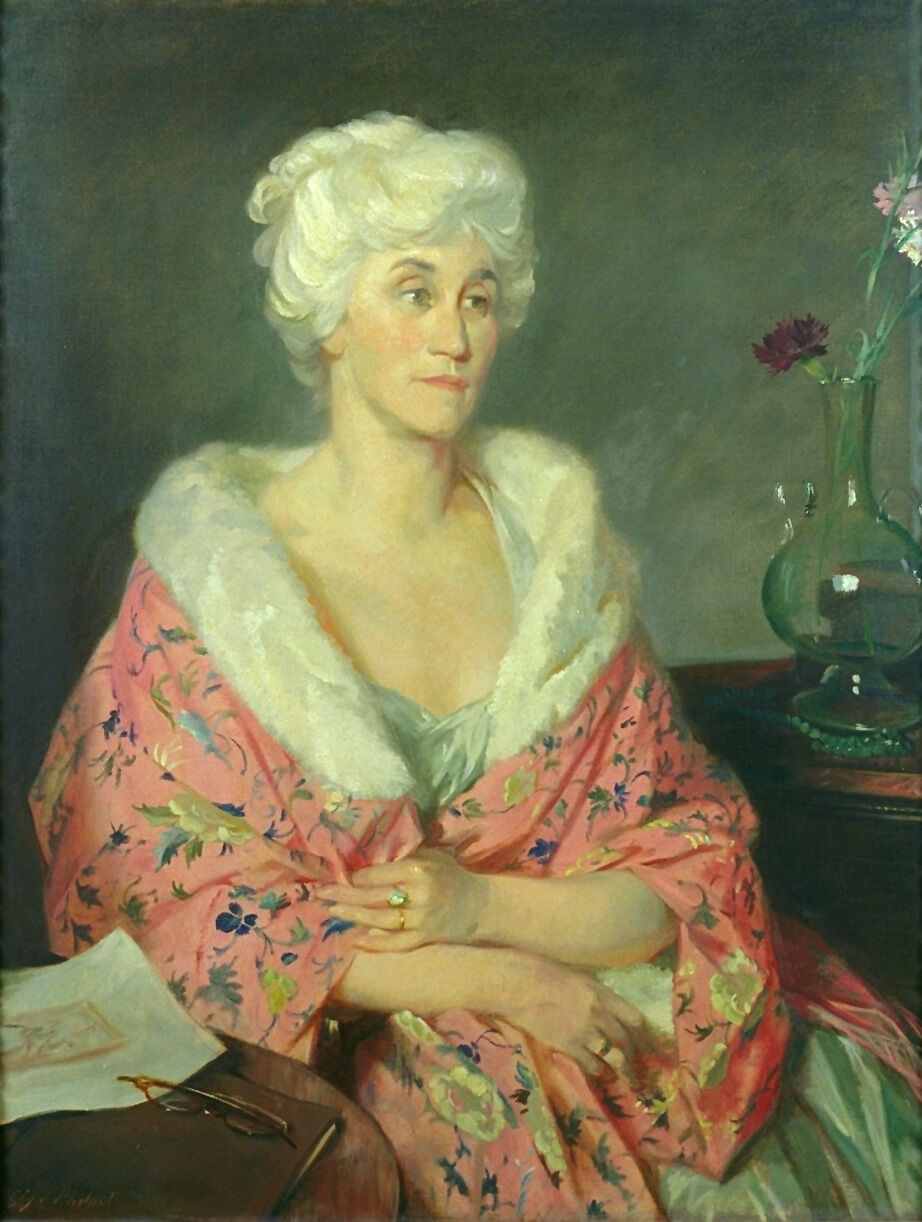
- Artist: Glyn Warren Philpot
- Date: 1925
- Museum: The Courtauld Gallery
- Collection record: The Courtauld Gallery website
Listen to the free audio guide
About this artwork
This is the “Portrait of Lady Witt” by Glyn Warren Philpot. Painted in 1925, the work captures the sitter with a quiet dignity that is characteristic of Philpot’s early portraiture. Notice the careful attention to light: a soft, almost diffused glow falls across her face, illuminating the subtle contours of her cheekbones and the gentle curve of her mouth. The background is restrained, allowing the figure to remain the focal point.
Philpot’s brushwork here is deliberate yet fluid. The sitter’s hair is rendered in a loose yet controlled manner, suggesting movement while maintaining an overall calmness. The sitter’s gaze is slightly turned, inviting the viewer into a private conversation. Her attire—a tailored, muted gown—adds to the sense of modest sophistication that was typical of the period. The use of shadow is particularly effective; the darker tones beneath her collar and arms create a subtle depth that pulls the portrait forward.
Although we do not have the medium or support listed, the painting’s texture feels smooth, suggesting a fine oil or tempera finish that was common for the era. Philpot’s careful composition and nuanced tonal values combine to create a portrait that feels both intimate and timeless. This piece exemplifies how a sitter’s character can be conveyed through subtle gesture, light, and color, offering a glimpse into the early 20th‑century portrait tradition.
See it in person
Portrait of Lady Witt hangs in The Courtauld Gallery at Somerset House, London. Point your phone at any artwork there and audioguide.london plays a free audio guide in six languages — no app download needed.