Portrait of Charles and John Sealy
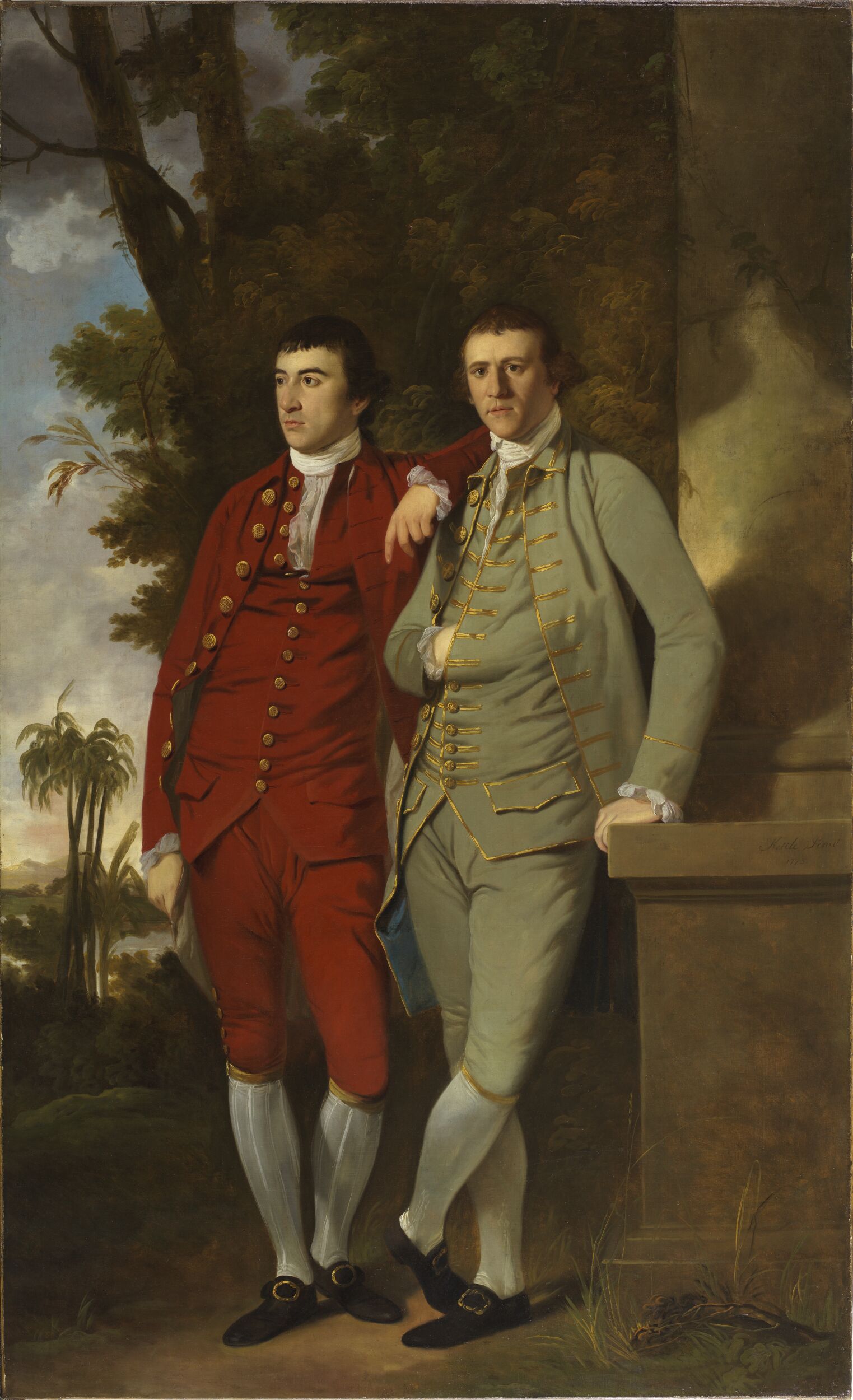
- Artist: Tilly Kettle
- Date: 1773
- Medium: oil on canvas
- Museum: The Courtauld Gallery
- Collection record: The Courtauld Gallery website
Listen to the free audio guide
About this artwork
This is the “Portrait of Charles and John Sealy” by Tilly Kettle, painted in 1773. The work is an oil on canvas that captures two brothers in the classic pose of English gentlemen, yet with a subtle nod to their Indian surroundings. On the left, Charles Sealy sits in a judge’s chair, a reminder of his role in the East India Company’s Calcutta court. Across from him, John Sealy, captain of the company’s vessel Northington, stands with a dignified stance that hints at his maritime command. The brothers’ dignified posture echoes the formal portrait tradition of estates back in Britain, while the lone palm tree in the background signals the Kolkata setting.
Kettle, the first professional British artist to settle in India, painted this during John’s visit to the port city, capturing the complex atmosphere of a colony driven by trade in spices, cotton, silk, and tea. The portrait subtly reflects the undercurrent of the company’s reliance on forced labor and the grim reality of slave transport from Africa to Asia. It is a striking snapshot of two men who were both beneficiaries of the East India Company’s power and participants in a system that shaped the subcontinent. The painting offers a window into that turbulent era, framed by the quiet confidence of its subjects.
See it in person
Portrait of Charles and John Sealy hangs in The Courtauld Gallery at Somerset House, London. Point your phone at any artwork there and audioguide.london plays a free audio guide in six languages — no app download needed.