Outskirts of Pont-Aven
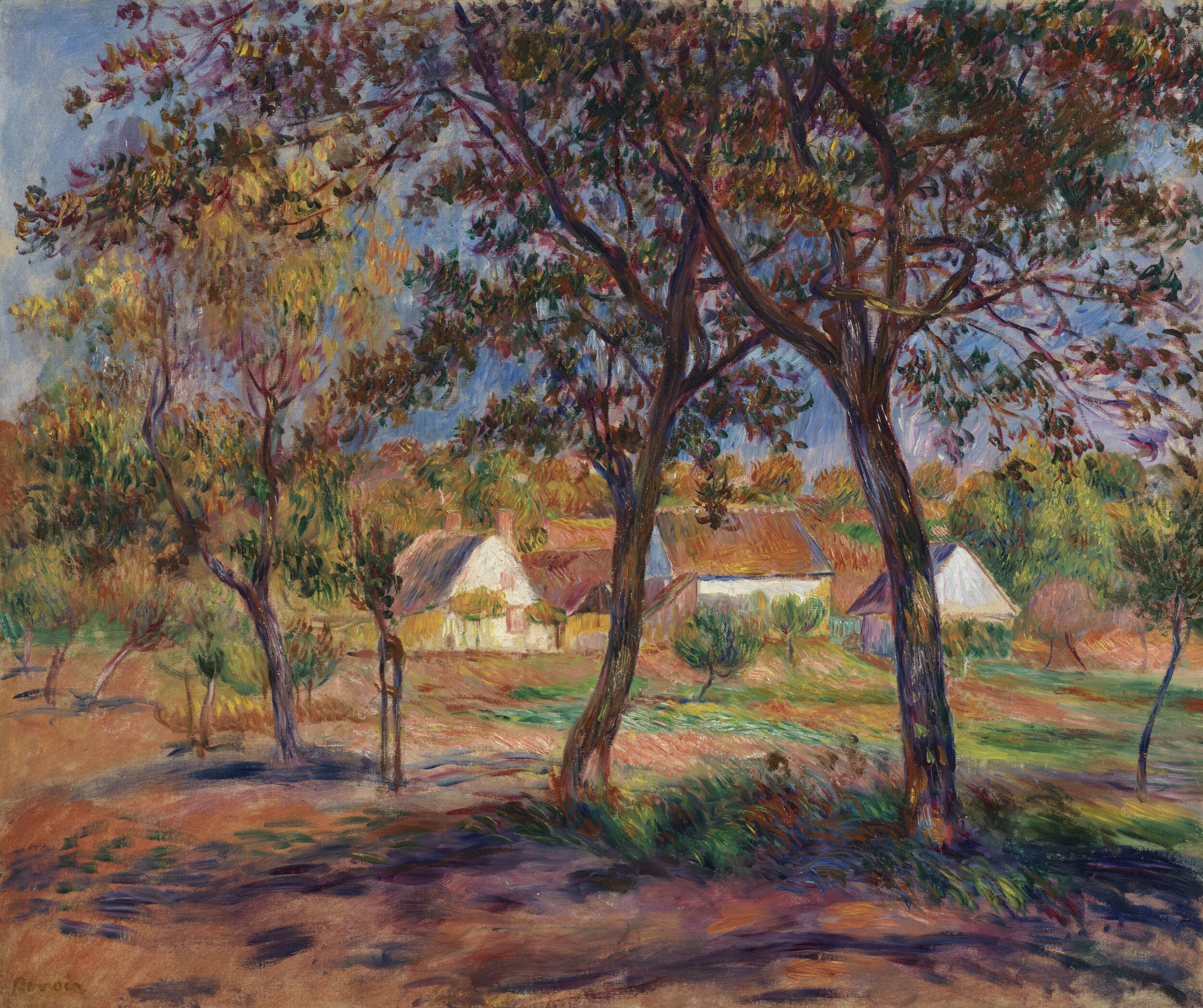
- Artist: Pierre Auguste Renoir
- Date: c. 1888-90
- Medium: oil on canvas
- Museum: The Courtauld Gallery
- Collection record: The Courtauld Gallery website
Listen to the free audio guide
About this artwork
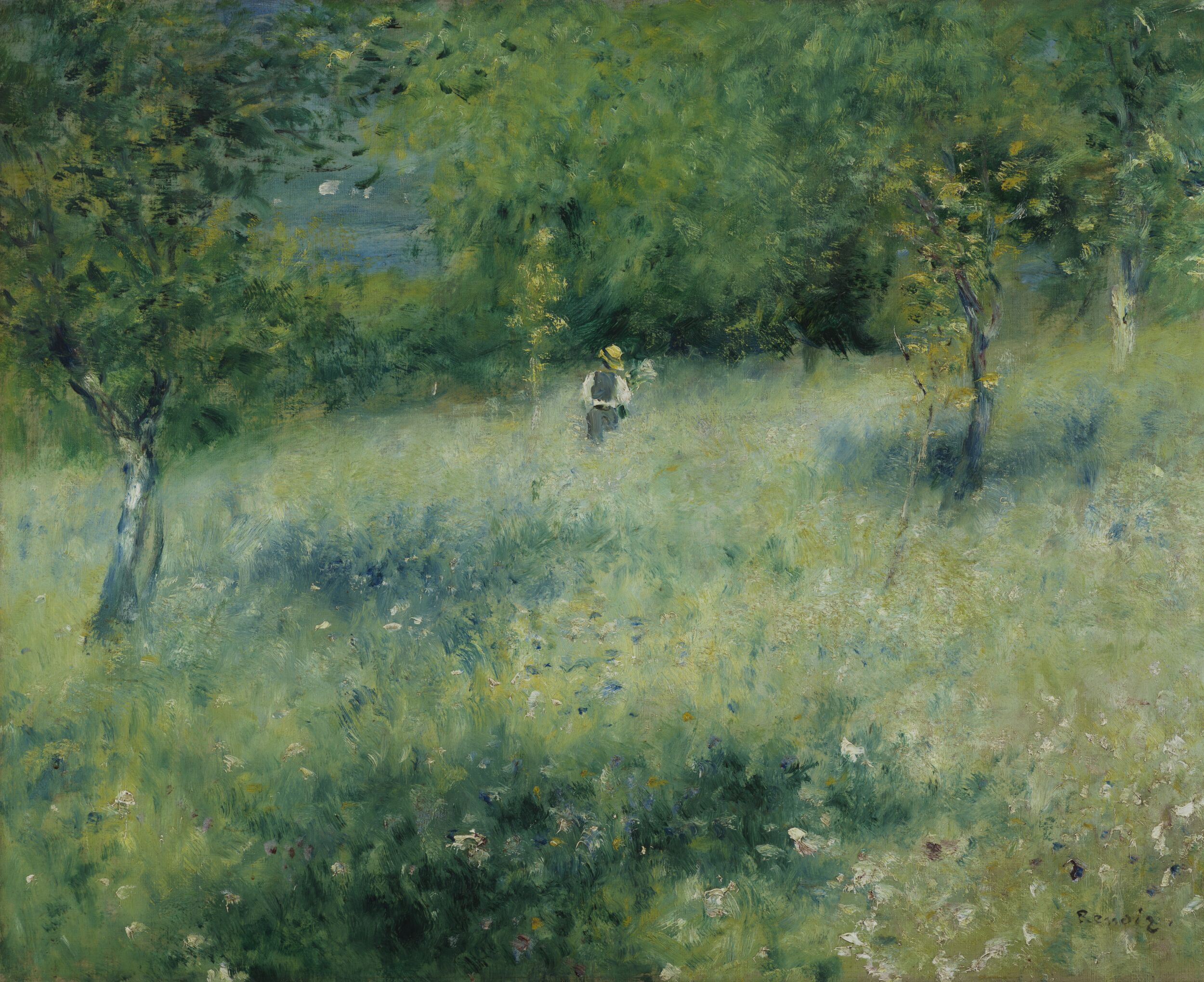
This is the Outskirts of Pont‑Aven by Pierre Auguste Renoir. Painted around 1888‑90 with oil on canvas, the work captures a quiet evening in the Breton artists’ colony that also drew Paul Gauguin. Renoir was experimenting with a shift away from the loose, sketch‑like strokes of his earlier Impressionist phase. In this canvas, he lets color become the defining force.
Notice the contrast between the loosely brushed shadows and the grass that appears to ripple in a gentle breeze. Those elements feel almost impressionistic, yet Renoir sharpens the surrounding trees with bold, crisply defined lines. The trunks are rendered with a forceful use of color, their bark catching the play of sunlight in a way that feels almost theatrical. This bold delineation signals Renoir’s gradual move toward a more structured, expressive style.
The overall composition balances movement and stillness: the undulating grass suggests motion, while the trees anchor the scene with their solidity. The subtle interplay of light and shadow across the canvas invites viewers to linger, noticing how the painter’s brushwork evolves from the fleeting impressions of earlier works to a more confident, almost sculptural handling of form. This painting is a fascinating snapshot of Renoir’s evolving vision in the late 1880s.
See it in person
Outskirts of Pont-Aven hangs in The Courtauld Gallery at Somerset House, London. Point your phone at any artwork there and audioguide.london plays a free audio guide in six languages — no app download needed.