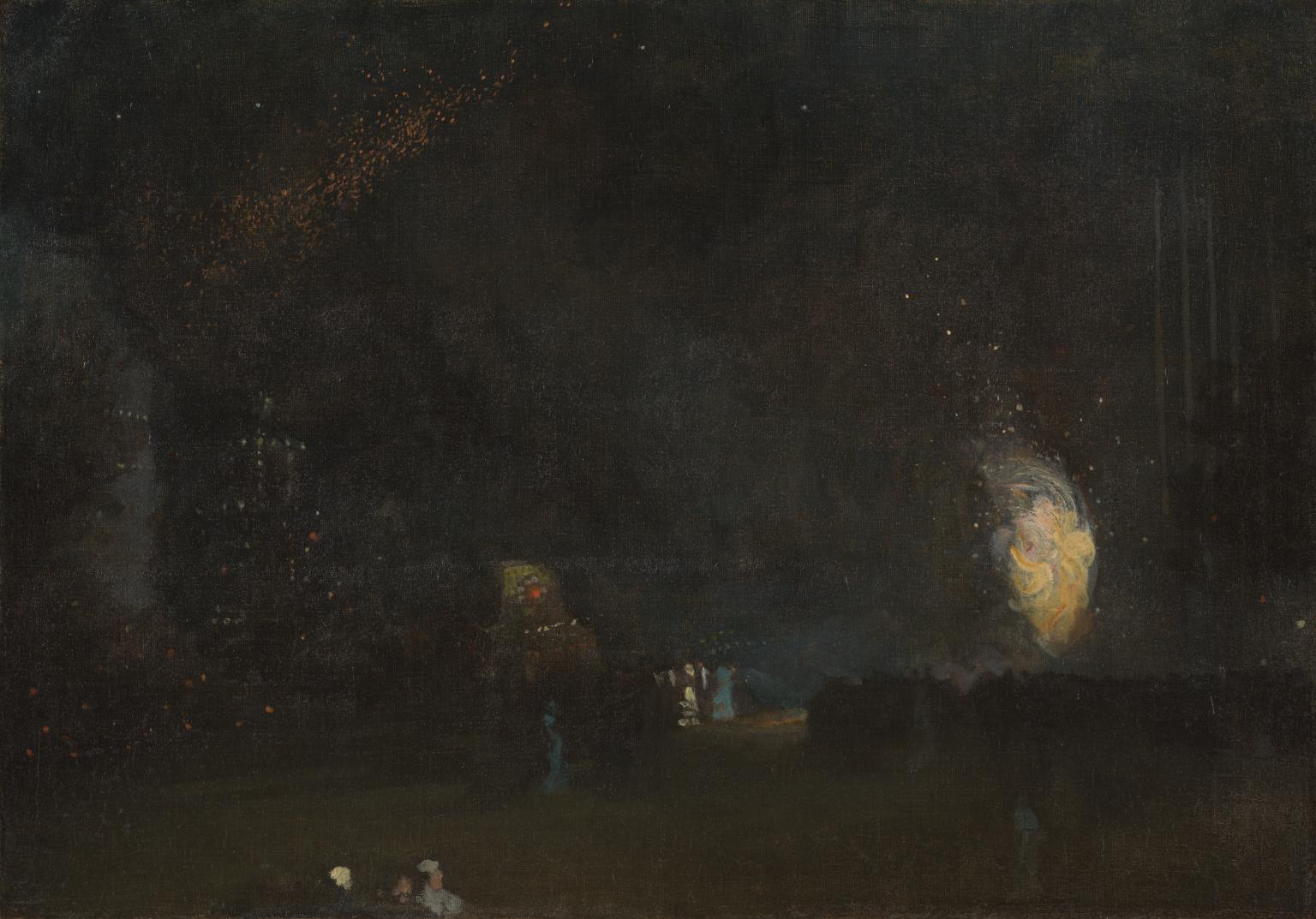
Nocturne: Blue and Silver - Cremorne Lights
- Artist: James McNeill Whistler
- Date: 1872
- Medium: Oil paint on canvas
- Dimensions: support: 502 x 743 mm
- Museum: Tate Britain
- Collection record: Tate Britain website
Listen to the free audio guide
About this artwork
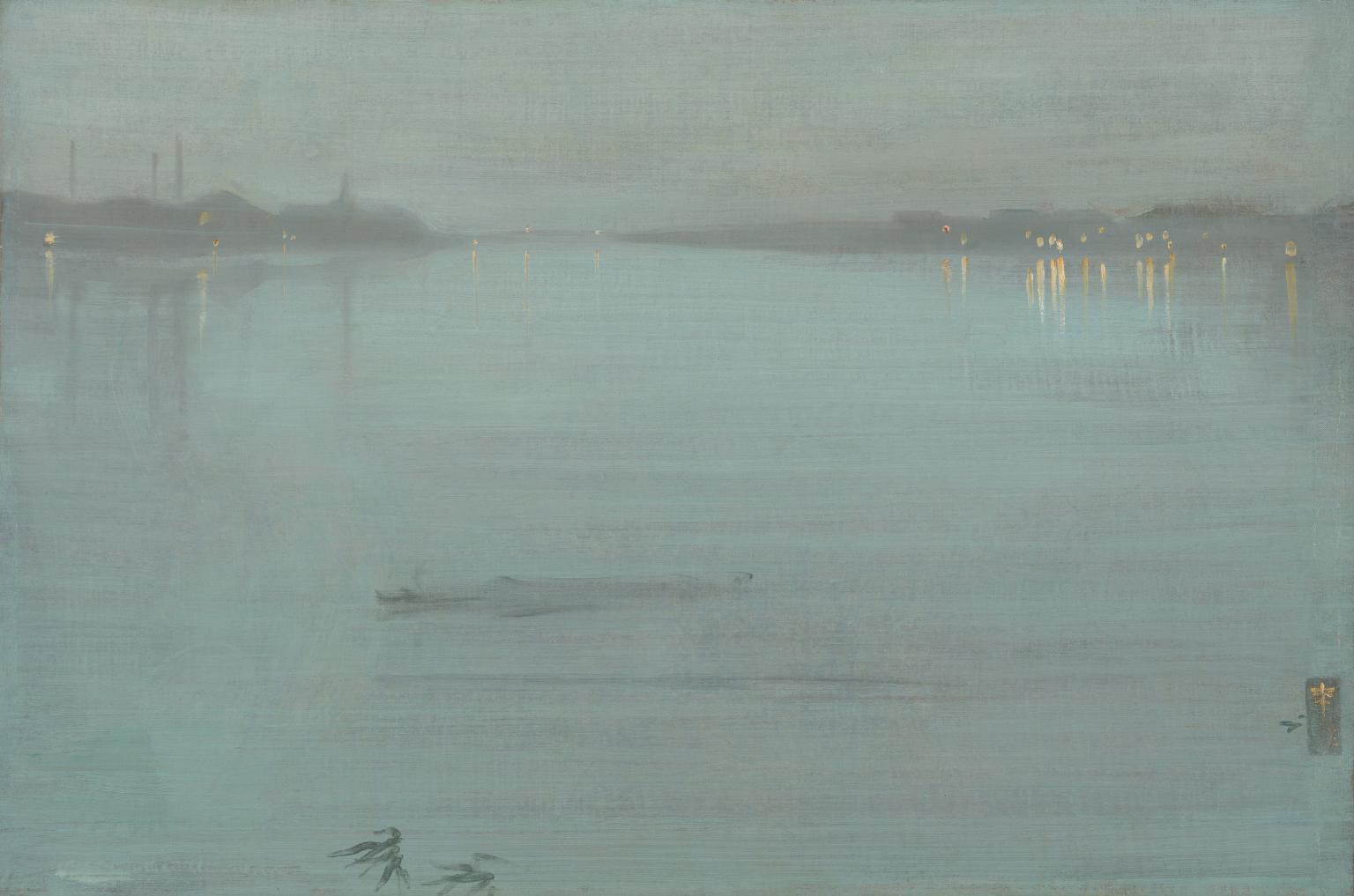
This is “Nocturne: Blue and Silver – Cremorne Lights” by James McNeill Whistler, painted in 1872. The picture shows a quiet Thames view from Battersea Bridge, looking upriver. On the left we see the industrial chimneys of Battersea; on the right, the glow of the Cremorne pleasure gardens twinkles like lanterns. Whistler arranged the composition so the water stretches into a panoramic expanse, pulling the eye toward a vanishing horizon that gives the scene a sense of depth and stillness.
The paint was applied quickly in wet‑on‑wet layers, producing a smooth sheen across canvas and sky. The blues and silvers create an almost phosphorescent surface, while the orange lights at Cremorne add a dreamlike contrast. Whistler himself painted the wooden frame, decorating it with a gold fish‑scale motif that complements the watery theme.
In his “Nocturnes” he sought to capture night’s quiet beauty. The term indicates an arrangement of line and colour as in music, which Whistler applied here by thinning paint with copal, turpentine, and linseed oil, then wiping away until satisfied. The frame, the composition, and the luminous light all work together to convey the Thames at night—industrial industry balanced by gentle pleasure‑garden lights—a tranquil panorama that invites the viewer into a still, quiet evening on the water.
See it in person
Nocturne: Blue and Silver - Cremorne Lights is in the collection of Tate Britain on Millbank, London — free to enter. Point your phone at any artwork there and audioguide.london plays a free audio guide in six languages — no app download needed.