Nativity (left panel) (recto)Two Magi and bishop (left panel) (verso)Two Evangelists; The Angel of the Annunciation (above)
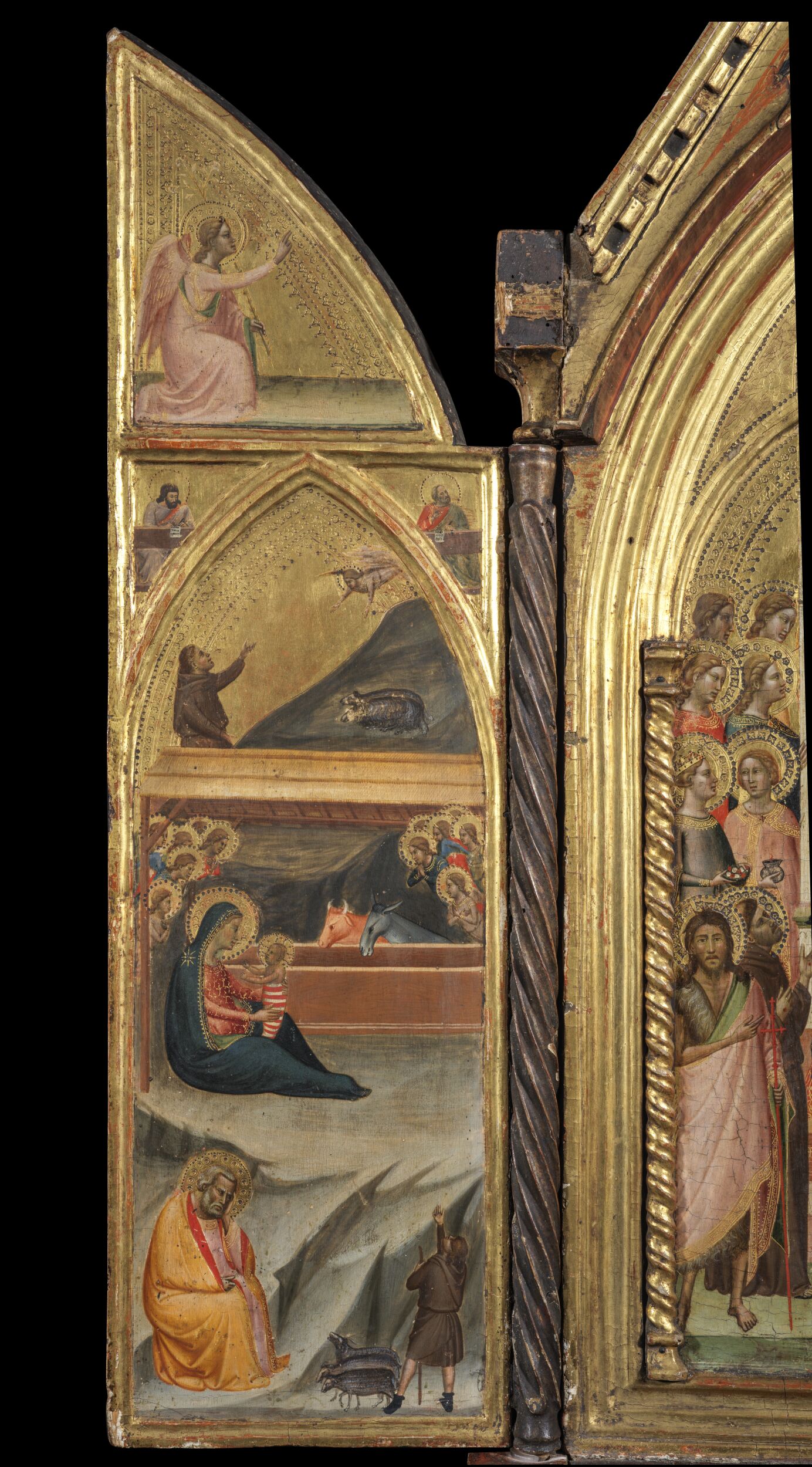
- Artist: Bernardo Daddi
- Date: 1338
- Medium: tempera on panel
- Museum: The Courtauld Gallery
- Collection record: The Courtauld Gallery website
Listen to the free audio guide
In the museum now? Point your phone at the next artwork and hear its guide.
About this artwork
This is the Nativity (left panel) (recto)Two Magi and bishop (left panel) (verso)Two Evangelists; The Angel of the Annunciation (above) by Bernardo Daddi, painted in 1338. Daddi, a Florentine who apprenticed under Giotto, was celebrated for his small‑scale works, and this tempera on panel triptych is a textbook example. The piece was intended as a portable tabernacle for a private patron, allowing devotion to the key moments of Christ’s life – conception, birth, and death – in a compact, devotional format.
The composition is striking in its use of shimmering gold leaf and rich pigments that still gleam today. Daddi’s meticulous attention to detail is evident in the fine rendering of the angels, the regal robes of the Magi, and the gentle expressions of the figures. The central panel’s tender depiction of the infant Jesus, flanked by the wise men, contrasts with the upper panel where the Angel of the Annunciation hovers above, guiding the viewer’s eye upward. The lower panels feature the two Evangelists, grounding the narrative with scriptural authority.
Overall, this triptych showcases the elegance and devotional intensity that defined early 14th‑century Italian religious art, while also highlighting Daddi’s skill in creating an exquisite, richly illuminated devotional object.
See it in person
Nativity (left panel) (recto)Two Magi and bishop (left panel) (verso)Two Evangelists; The Angel of the Annunciation (above) hangs in The Courtauld Gallery at Somerset House, London. Point your phone at any artwork there and audioguide.london plays a free audio guide in six languages — no app download needed.
More from The Courtauld Gallery

Crucifixion (right panel) (recto)Magus adoring the Infant Christ; and Bishop (right panel) (verso)Two Evangelists; The Virgin of the Annunciation (above)
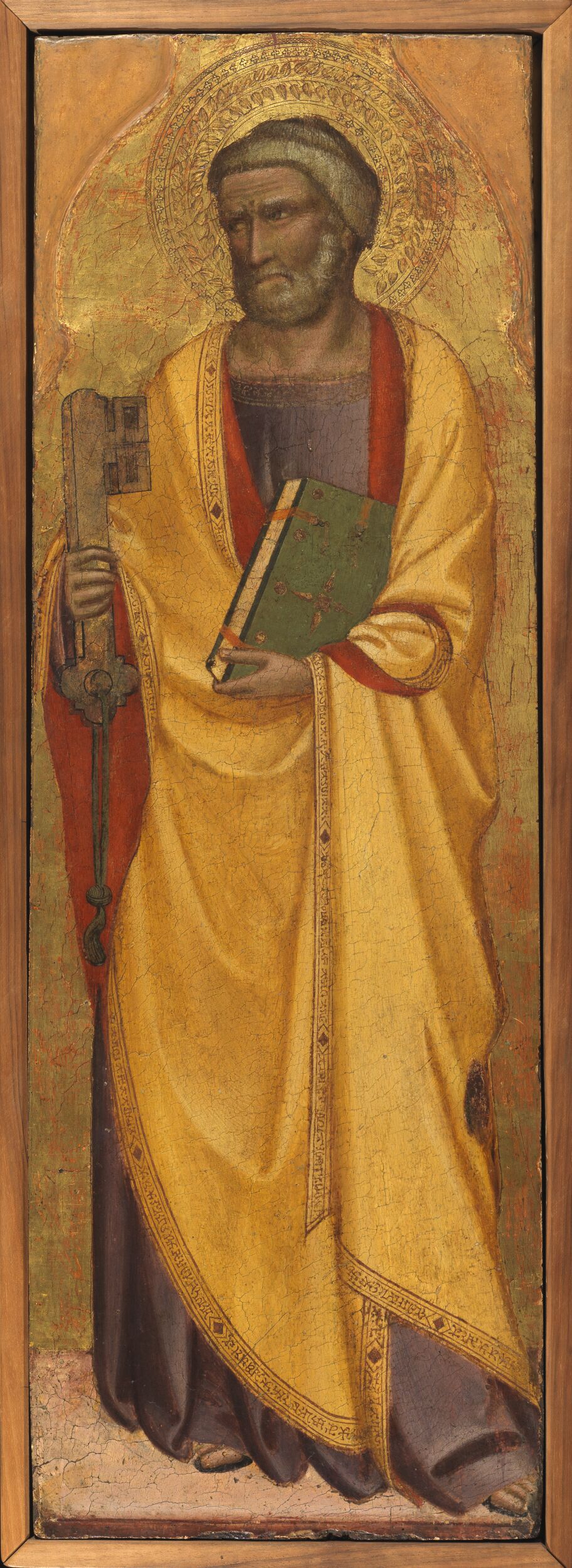
Saint Peter
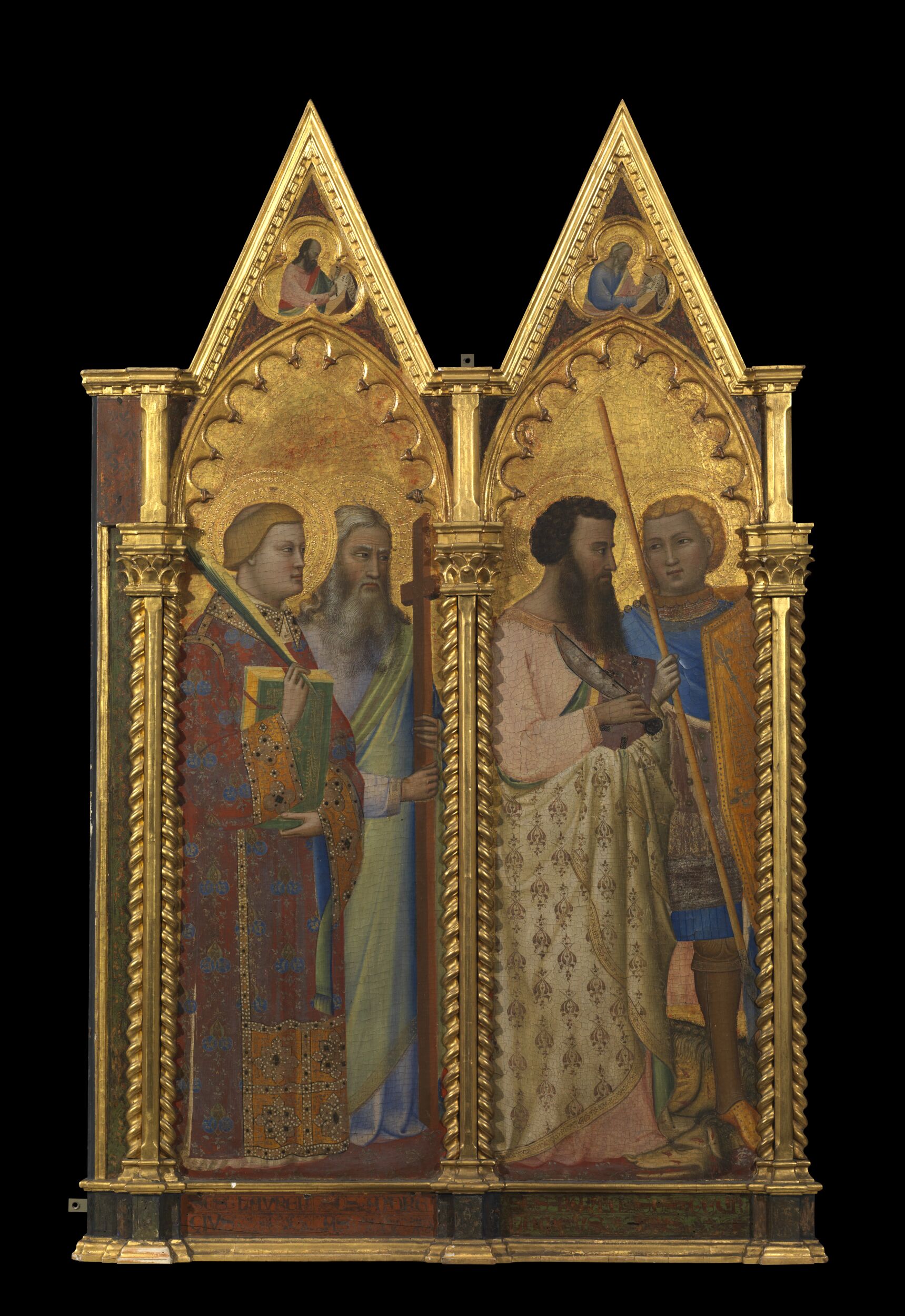
Saints Bartholomew and George (left panel) (recto)Imitation marble panel and two female angels (verso)An Evangelist (gable)
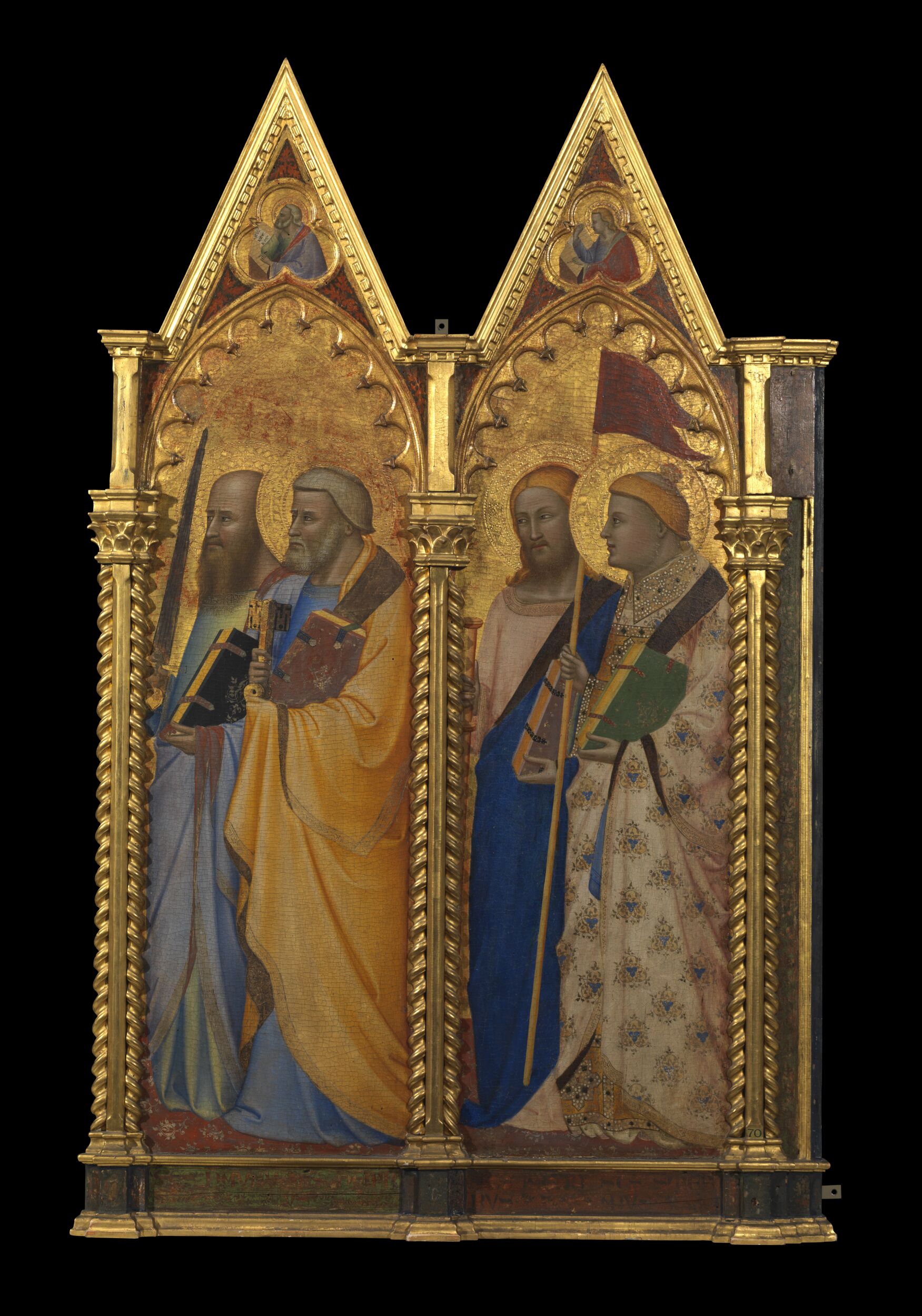
Saints James Major and Stephen (far right panel)An Evangelist (gable)