Margate: The Great Beach with Droit House, the Pier and Lighthouse, Jarvis’s Landing Place, and a Smoking Steamer

- Artist: Joseph Mallord William Turner
- Date: c.1841–5
- Medium: Watercolour on paper
- Dimensions: support: 242 x 301 mm
- Museum: Tate Britain
- Collection record: Tate Britain website
Listen to the free audio guide
About this artwork
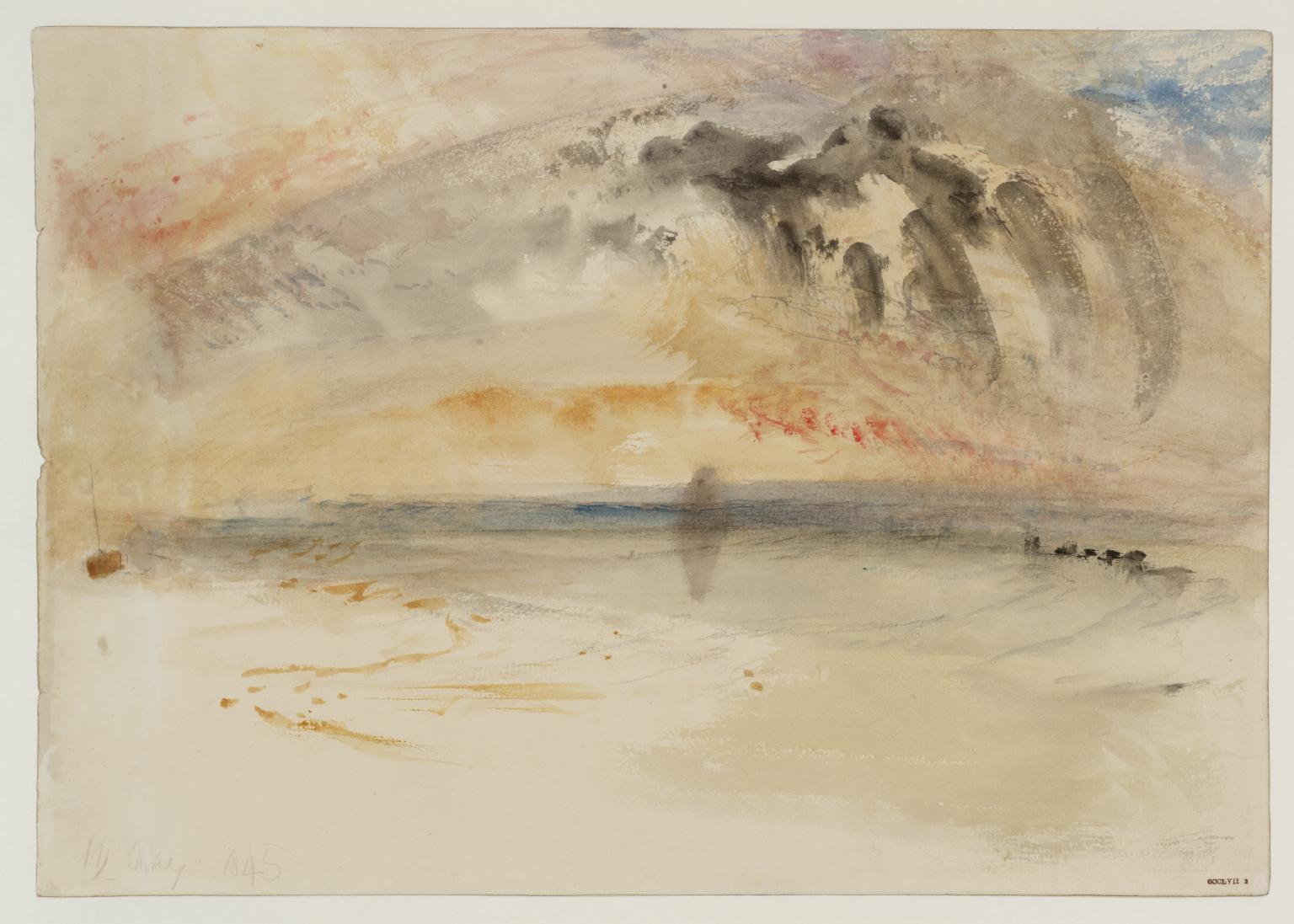
This is the "Margate: The Great Beach with Droit House, the Pier and Lighthouse, Jarvis’s Landing Place, and a Smoking Steamer" by Joseph Mallord William Turner, a watercolour on paper from about 1841–45, measuring 242 × 301 mm. It captures a moment on the Kent coast: a smoking steam‑boat drifting just off the shore, with the town’s pier and lighthouse rising in the background. The scene feels almost cinematic – the steam plume and the bustling harbour give it a sense of movement and everyday life.
Turner had a lifelong love affair with Margate. As a boy he stayed there with relatives, and later he rented rooms overlooking the harbour and pier, so his brush was always close to the sea. That intimacy shows in the painting: you can almost hear the gulls and feel the salty wind. The composition balances the human and the natural – the lone figure at the pier, the bustling boat, and the expansive beach. It’s a snapshot of 19th‑century leisure culture: Londoners escaping the city by steam‑ship to a coastal resort.
The painting’s delicate washes of blue and green reveal Turner’s mastery of atmosphere, while the subtle use of light hints at the fleeting nature of daylight over the sea. It’s a wonderful example of how he combined technical skill with an emotional connection to place.
See it in person
Margate: The Great Beach with Droit House, the Pier and Lighthouse, Jarvis’s Landing Place, and a Smoking Steamer is in the collection of Tate Britain on Millbank, London — free to enter. Point your phone at any artwork there and audioguide.london plays a free audio guide in six languages — no app download needed.