Man of Sorrows
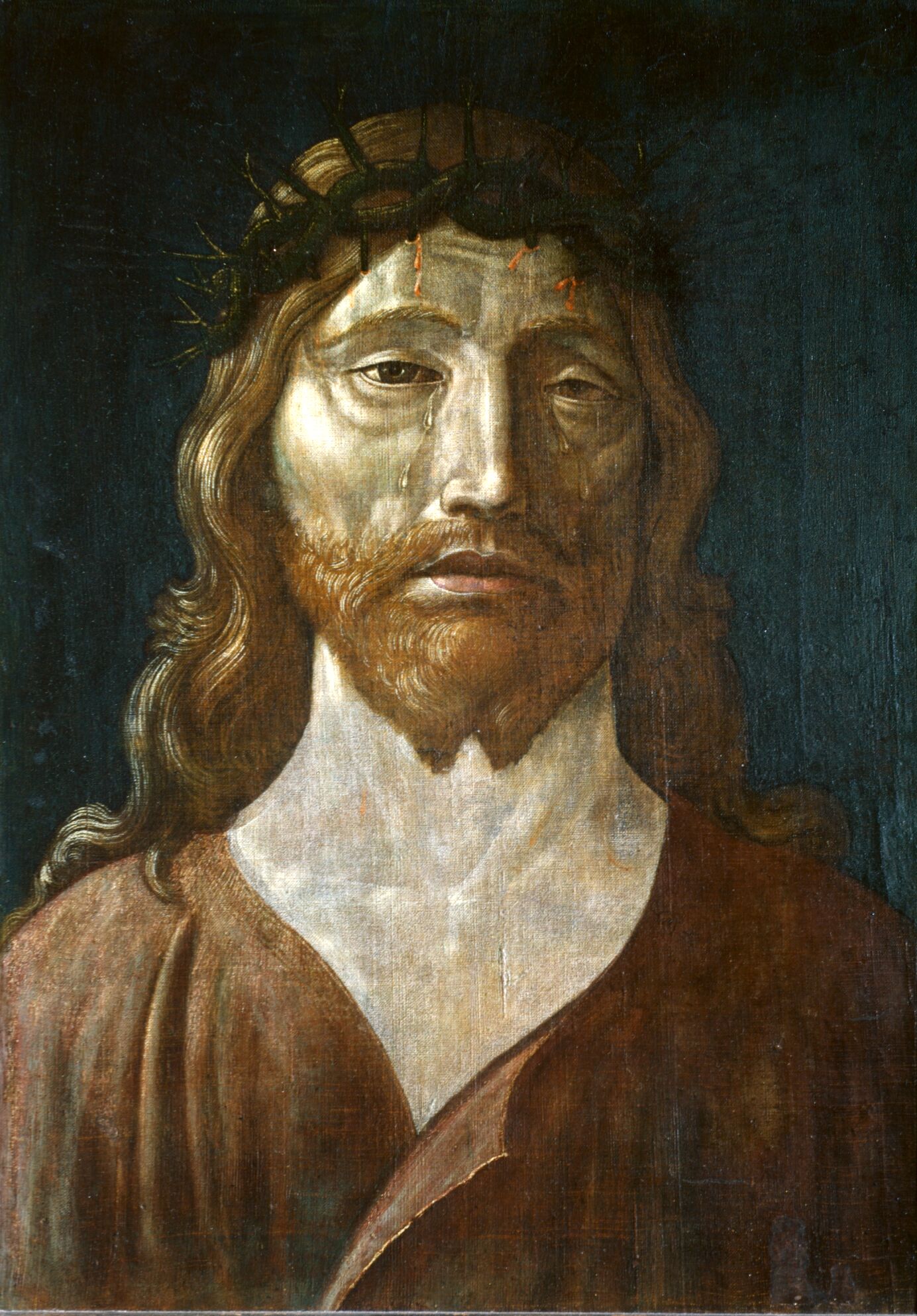
- Artist: Andrea Mantegna
- Date: (circa) 1500
- Medium: tempera on linen
- Museum: The Courtauld Gallery
- Collection record: The Courtauld Gallery website
Listen to the free audio guide
About this artwork
This is the “Man of Sorrows” by Andrea Mantegna. Created around 1500, the painting is a tempera on linen panel that shows Mantegna at a pivotal moment in his career, when his early mastery of perspective and anatomical detail was already pushing the boundaries of realism.
The composition is a dramatic half‑length portrait of a sorrowful figure, the early representation of a mourning Christ. Mantegna uses a stark, almost monochrome palette, letting the light fall directly on the face and hands, highlighting the raw emotions. Notice the precise rendering of the eyes—deep, hollow, and lined with subtle shadows that convey both agony and compassion. The background is almost entirely blank, which pulls the viewer’s focus right onto the human expression.
Mantegna’s technique here shows his careful attention to geometry. The subtle tilt of the torso, the angular lines of the folds in the cloth, all suggest a strong grasp of structural balance, while the tempera medium gives a smooth, almost glassy finish that feels both fragile and enduring.
Overall, “Man of Sorrows” is a powerful example of early 16th‑century Italian art, blending technical skill with profound emotional depth. It remains a testament to Mantegna’s ability to merge realism with symbolic storytelling, inviting viewers to contemplate both the physical and spiritual weight of the moment captured.
See it in person
Man of Sorrows hangs in The Courtauld Gallery at Somerset House, London. Point your phone at any artwork there and audioguide.london plays a free audio guide in six languages — no app download needed.