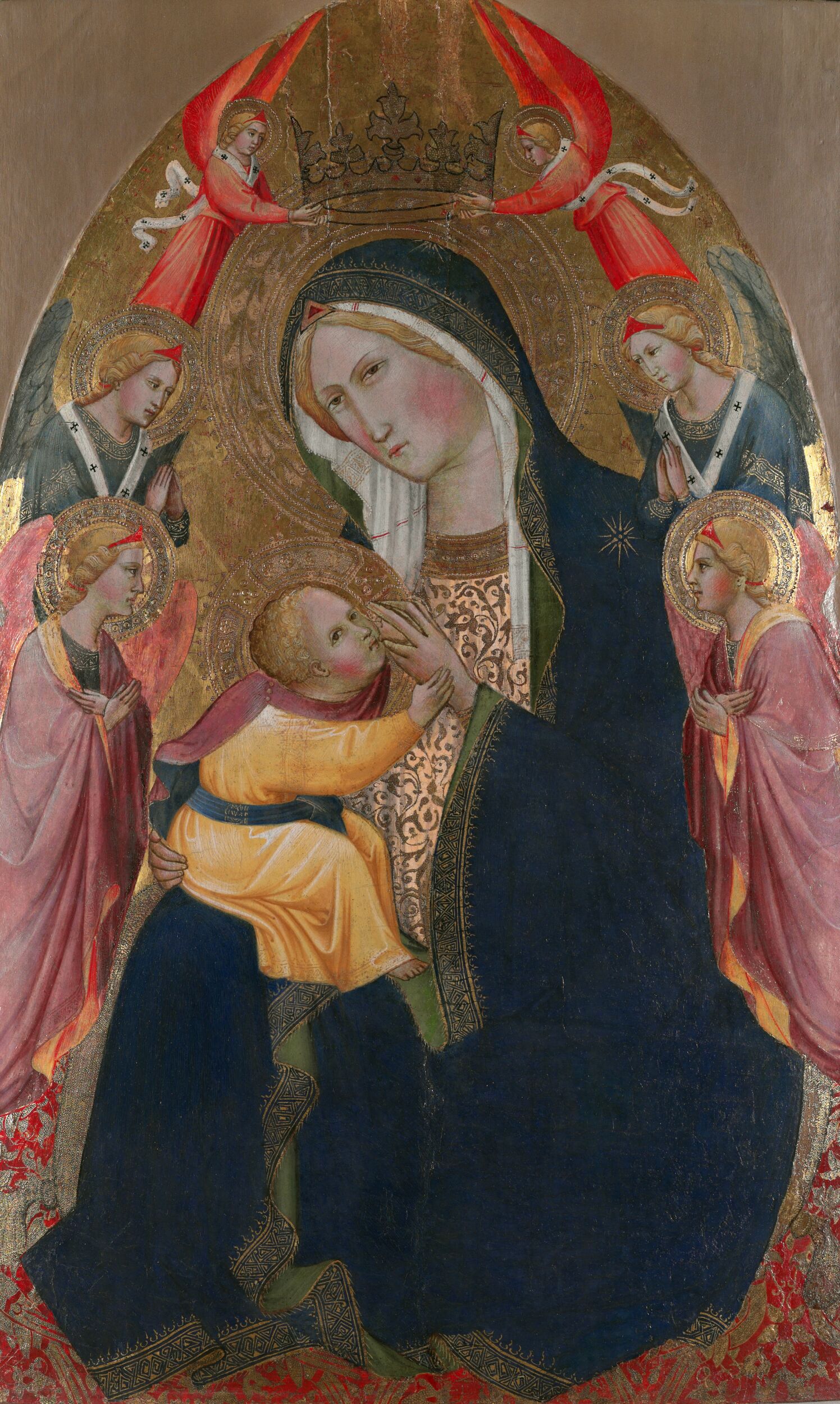
Madonna and Child
- Artist: Italy (Florence) second half of the 15th century (Artists)
- Date: (circa) 1460 - 1470
- Medium: oil on panel
- Museum: The Courtauld Gallery
- Collection record: The Courtauld Gallery website
Listen to the free audio guide
In the museum now? Point your phone at the next artwork and hear its guide.
About this artwork
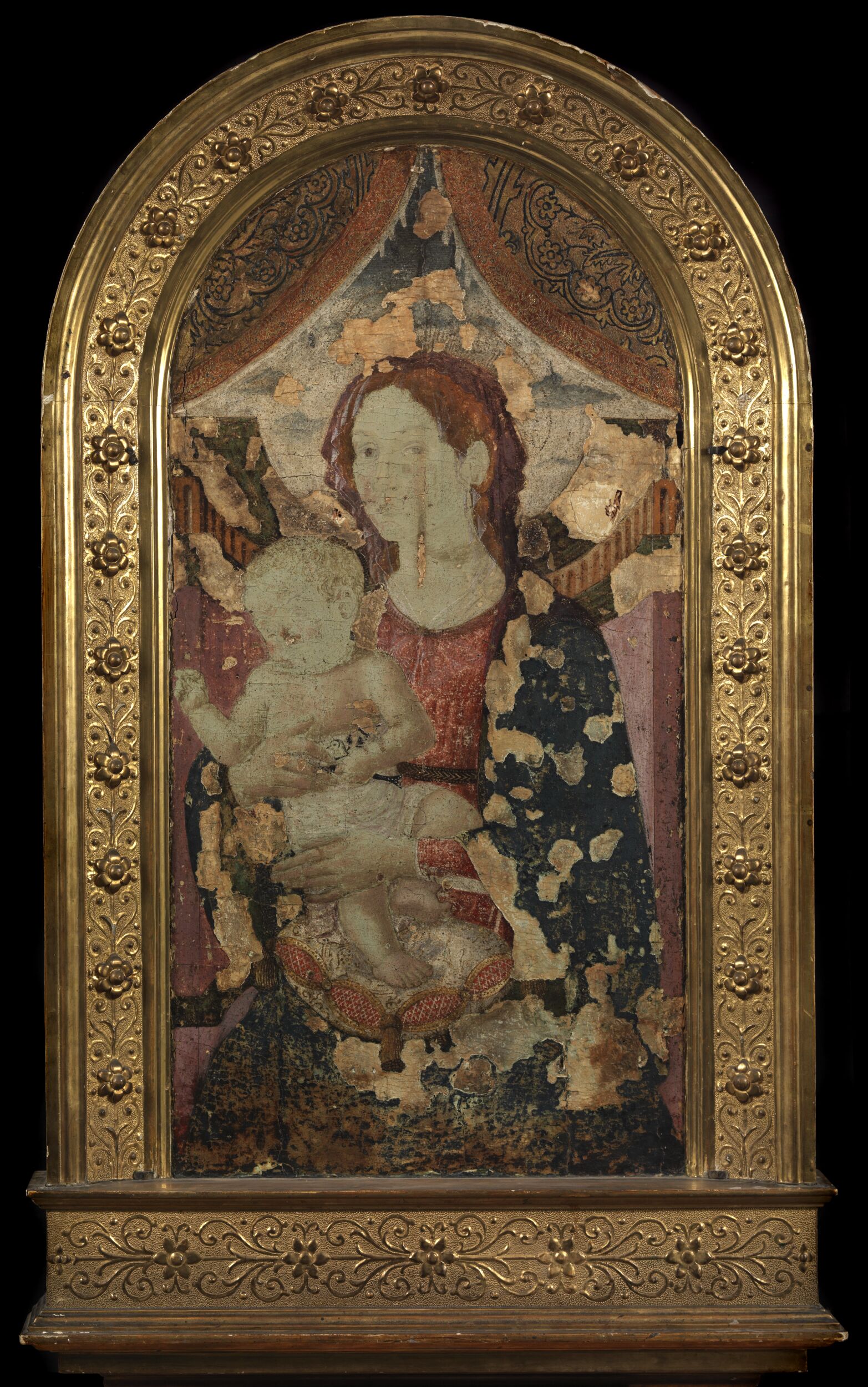
This is the Madonna and Child, an oil on panel painted in Florence in the second half of the 15th century, around 1460‑1470. The work captures the quiet intimacy that defined early Renaissance portraiture. You’ll notice how the artist has used the softness of oil to blend the Virgin’s flowing robe with subtle chiaroscuro, creating a gentle play of light that makes the infant’s skin glow against a dark, almost velvety backdrop.
The composition is deliberately simple: the mother sits in profile, her gaze calm and protective, while the child is positioned in her lap, hands resting on his small chest. This arrangement reflects the period’s focus on human emotion over dramatic theatricality. The background is largely indistinct, which pulls attention to the figures and their tender interaction, a hallmark of Florentine painting of that era.
Notice the meticulous attention to detail in the textures—her embroidered dress, the lace of the child’s clothing, and the delicate folds in the fabric. These hints of realism signal a transition from the idealized forms of the early Middle Ages to the naturalism that would later flourish under artists like Botticelli and Leonardo.
Oil on panel allowed for richer, deeper colors and a smoother finish, giving the scene a timeless quality. The use of this medium, combined with the gentle light and restrained composition, offers a window into how Florentine artists of the 1460s balanced devotional purpose with an emerging love for humanistic representation.
See it in person
Madonna and Child hangs in The Courtauld Gallery at Somerset House, London. Point your phone at any artwork there and audioguide.london plays a free audio guide in six languages — no app download needed.