Jerusalem and the Valley of Jehoshaphat from the Hill of Evil Counsel
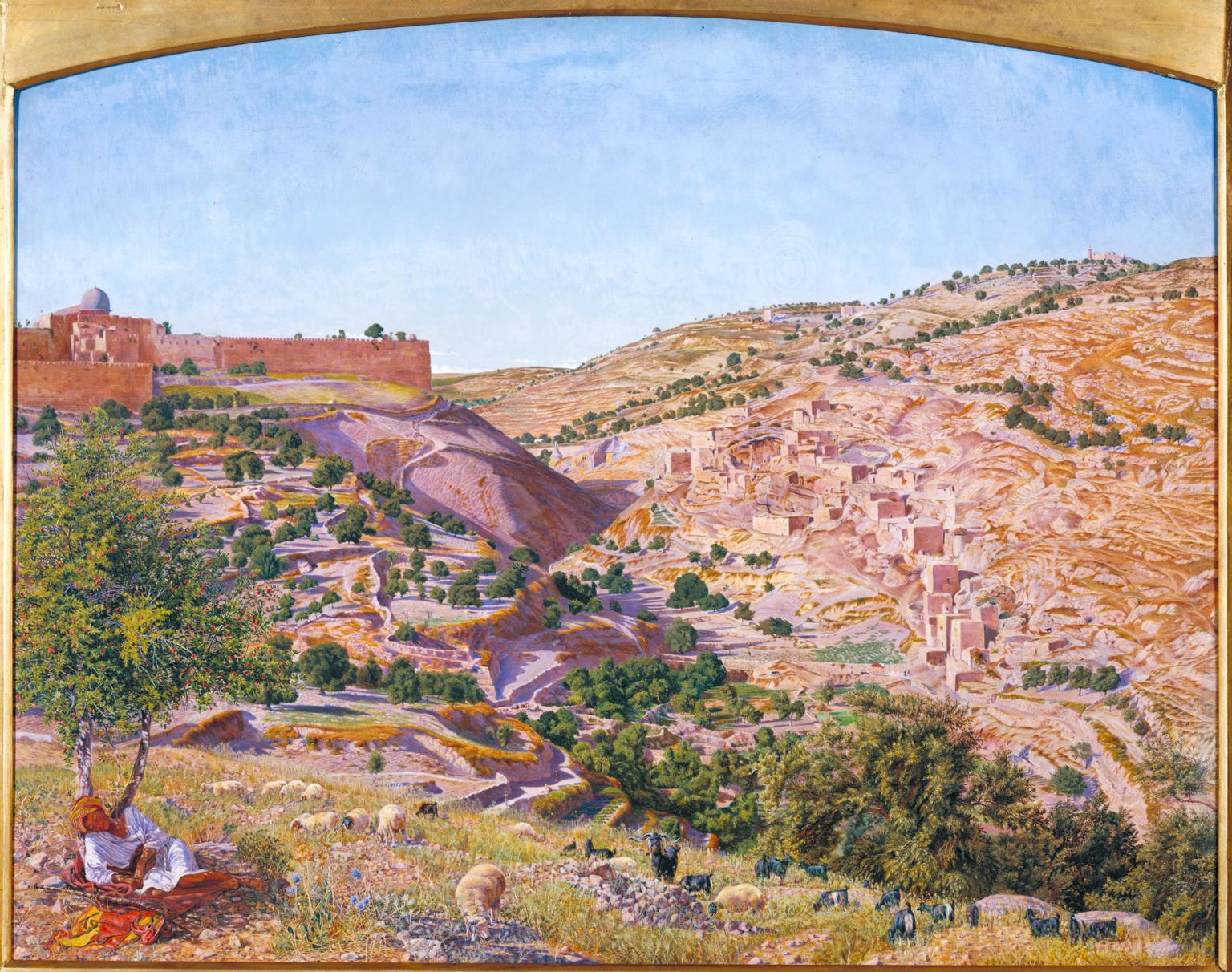
- Artist: Thomas Seddon
- Date: 1854–5
- Medium: Oil paint on canvas
- Dimensions: frame: 870 x 1030 x 100 mm
- Museum: Tate Britain
- Collection record: Tate Britain website
Listen to the free audio guide
About this artwork
This is the “Jerusalem and the Valley of Jehoshaphat from the Hill of Evil Counsel” by Thomas Seddon, painted in 1854‑55. Seddon, along with fellow Pre‑Raphaelite Holman Hunt, trekked to the Holy Land that year to bring back true‑to‑nature detail for their biblical scenes. He spent 120 days camped on the hill overlooking the valley south of Jerusalem, watching the light change across the Mount of Olives and the Gethsemane garden. The painting captures that very light – a bright, sun‑lit sky with intricate blue shadows falling across the rocks and the valley floor.
Unlike the dramatic, apocalyptic visions of John Martin that sit nearby, Seddon offers a calm, almost documentary view. He was struck by the beauty of the landscape, noting how every stone seemed to echo a subtle divine presence. John Ruskin praised this “following the steps of nature” approach, saying artists were tracing the finger of God. Seddon’s work embodies that sentiment, with careful attention to the topography, the faint outlines of ancient walls, and even the distant townscape that hints at the region’s complex history.
The canvas, finished in oil, was presented by subscribers in 1857 and has since been featured in exhibitions such as “British Artists and the Near East” and “Pre‑Raphaelites: Victorian Avant‑Garde.” It remains a vivid testament to the Victorian desire for authenticity and the belief that art could capture the very spirit of a place.
See it in person
Jerusalem and the Valley of Jehoshaphat from the Hill of Evil Counsel is in the collection of Tate Britain on Millbank, London — free to enter. Point your phone at any artwork there and audioguide.london plays a free audio guide in six languages — no app download needed.