Inscription by Turner: Notes from Nicholson’s ‘Dictionary of Practical and Theoretical Chemistry’

- Artist: Joseph Mallord William Turner
- Date: c.1813
- Medium: Graphite on paper
- Dimensions: support: 88 x 113 mm
- Museum: Tate Britain
- Collection record: Tate Britain website
Listen to the free audio guide
About this artwork
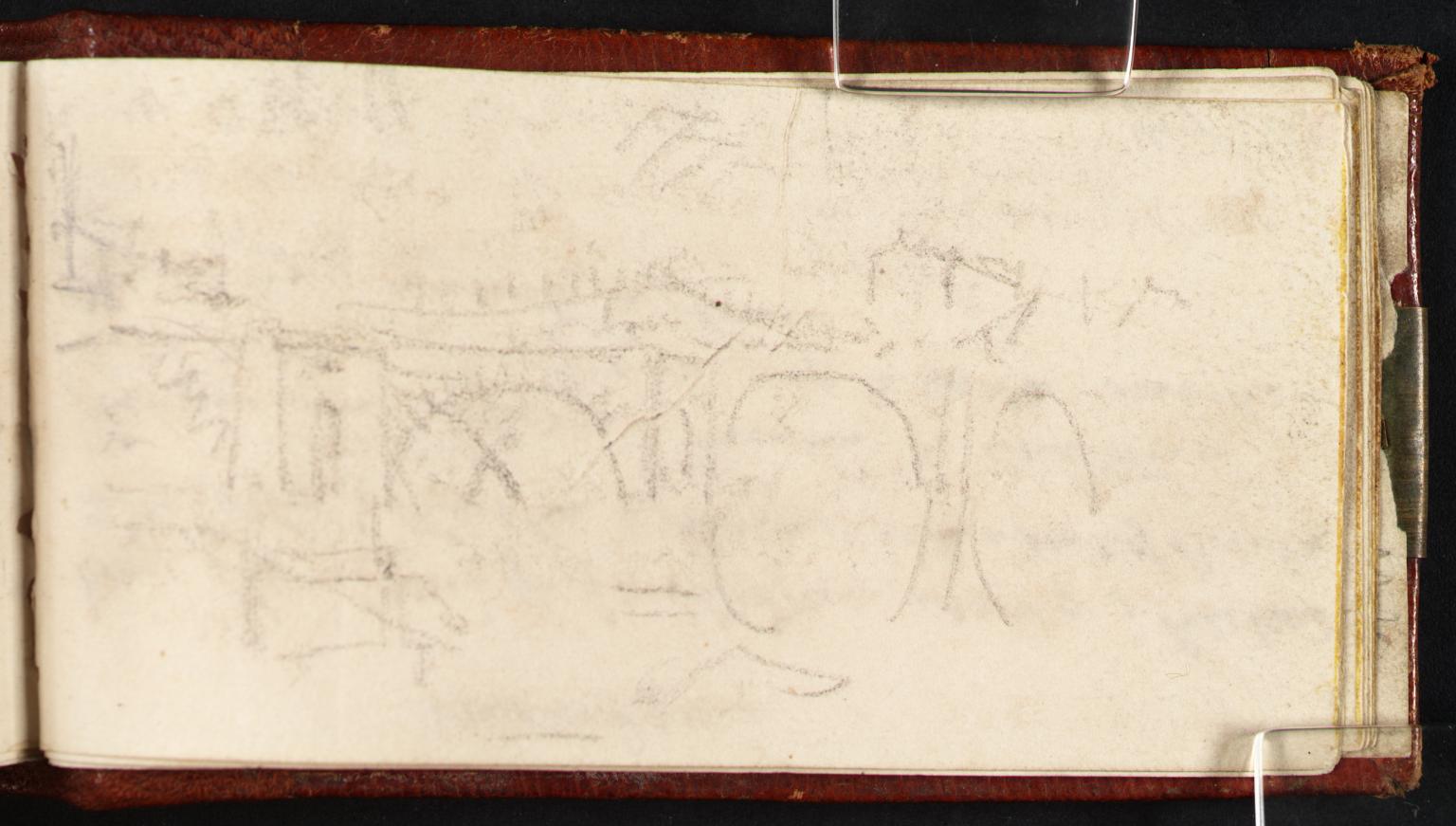
This is the "Inscription by Turner: Notes from Nicholson’s ‘Dictionary of Practical and Theoretical Chemistry’" by Joseph Mallord William Turner, created around 1813. The work is a small graphite on paper piece, just 88 by 113 mm, so you have to get close to catch all the detail. Turner, best known for his sweeping seascapes, also kept a meticulous sketchbook full of scientific observations – this one sits in the Chemistry and Apuleia Sketchbook collection.
The title tells you exactly what’s happening: Turner is jotting notes from John Nicholson’s *Dictionary of Practical and Theoretical Chemistry*. It’s a literal, hand‑written marginalia that gives us a rare window into how the young painter was engaging with contemporary science. The graphite lines are tight and deliberate, almost like a scientific diagram, yet the mood feels informal, almost playful. You can almost hear the clack of the pencil on the paper.
It was accepted by the nation as part of the Turner Bequest in 1856, so it has been in the public domain for well over a century. Today it is on display in the Turner & Constable Rivals & Originals exhibition, where you can compare it side by side with his later, more famous landscape work. Take a moment to let the small scale and precise line work speak to you – it’s a reminder that even great artists were also curious scientists.
See it in person
Inscription by Turner: Notes from Nicholson’s ‘Dictionary of Practical and Theoretical Chemistry’ is in the collection of Tate Britain on Millbank, London — free to enter. Point your phone at any artwork there and audioguide.london plays a free audio guide in six languages — no app download needed.