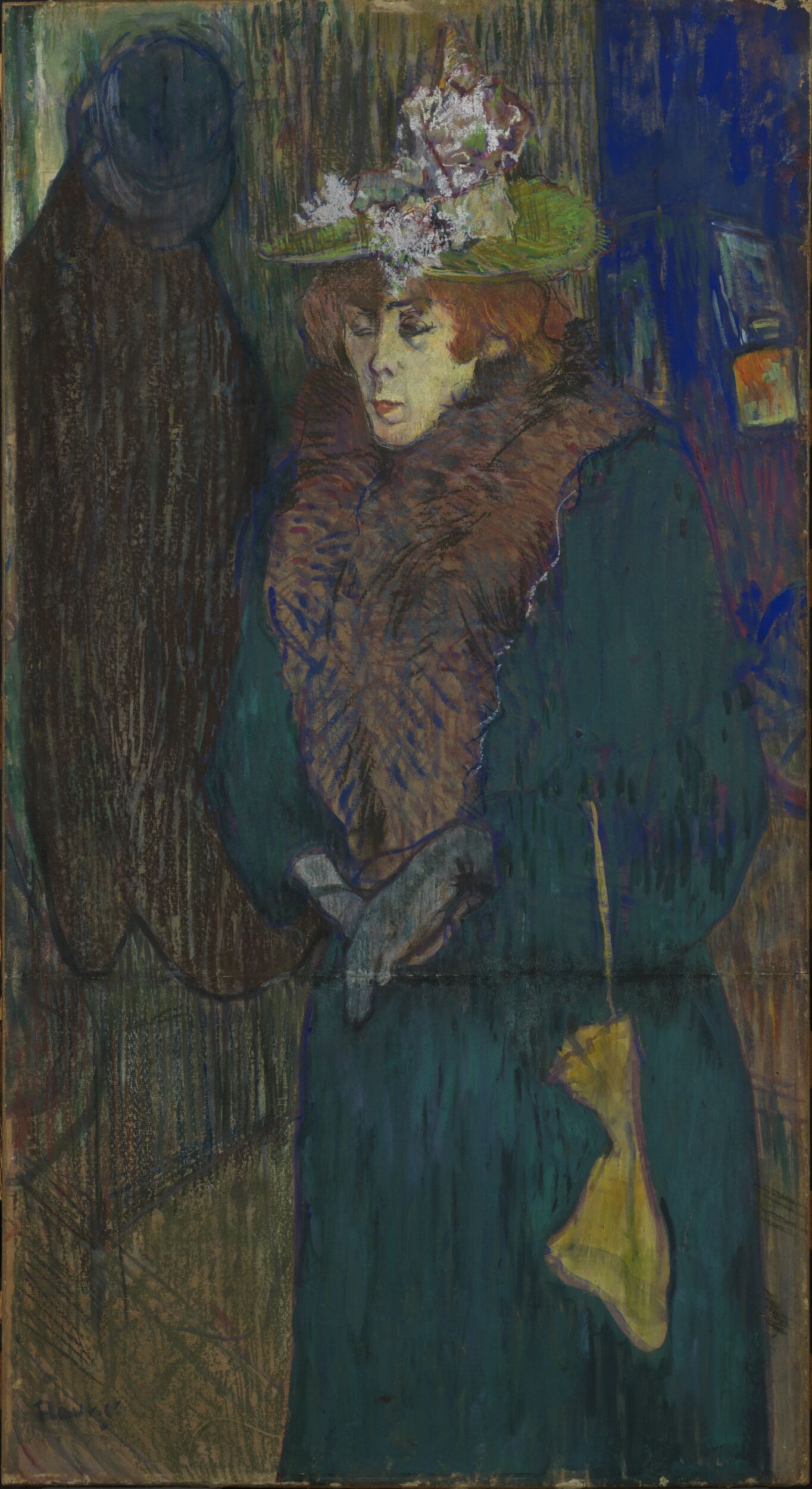
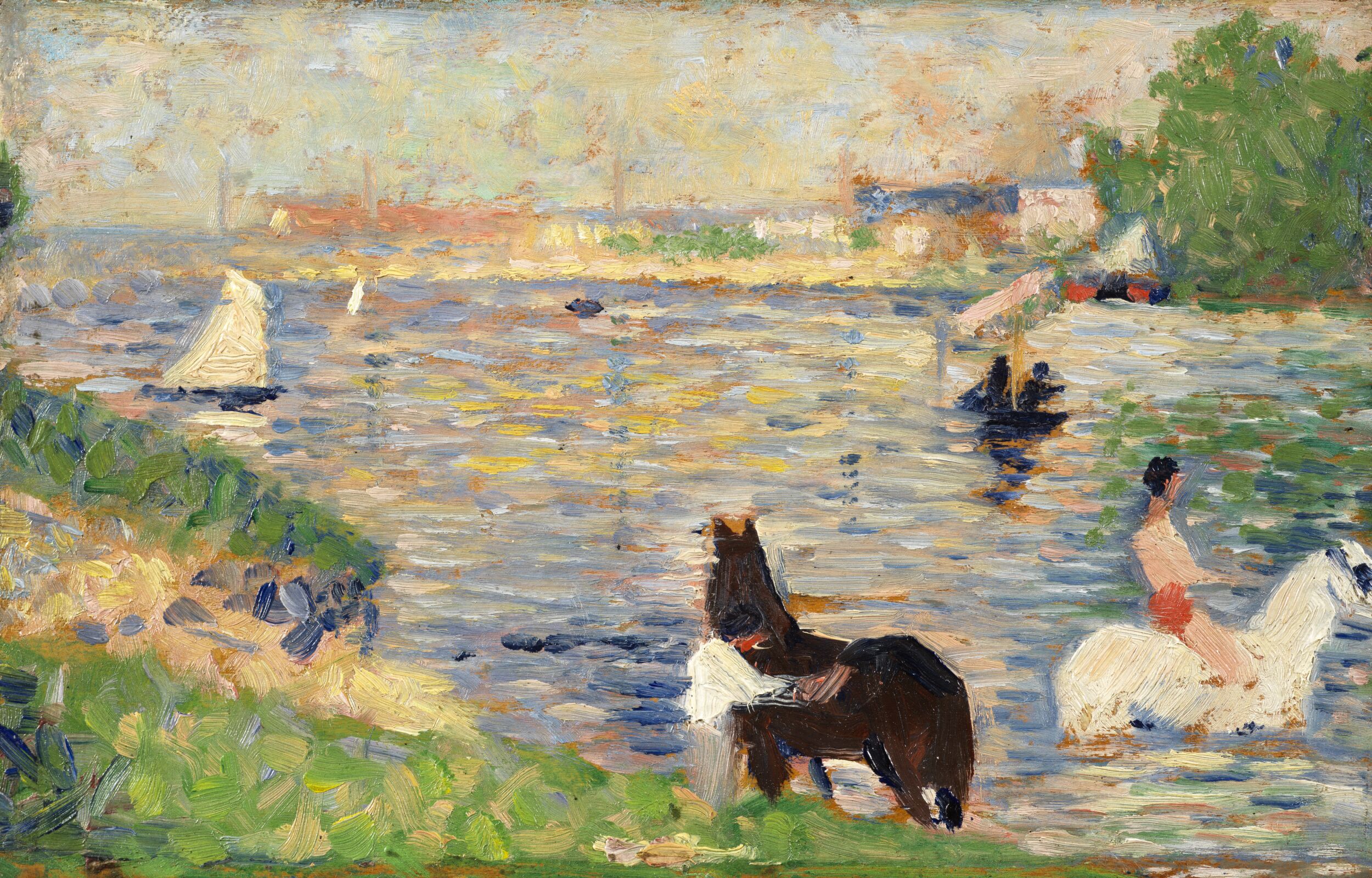
In a Private Dining Room (At the Rat Mort)Tête-à-tête Supper

- Artist: Henri de Toulouse-Lautrec
- Date: (circa) 1899
- Medium: oil on canvas
- Museum: The Courtauld Gallery
- Collection record: The Courtauld Gallery website
Listen to the free audio guide
About this artwork
This is “In a Private Dining Room (At the Rat Mort) Tête‑à‑tête Supper” by Henri de Toulouse‑Lautrec, painted circa 1899 in oil on canvas. You’re looking at a snapshot of late‑nineteenth‑century Parisian nightlife, a scene that feels both intimate and unsettling. In the center sits a high‑class prostitute—most likely Lucy Jourdain—draped in elaborate costume, seated in a small cabinet particulier. It’s a private room used for discreet encounters, tucked away inside the café‑restaurant Le Rat Mort, literally “the Dead Rat.” The setting feels claustrophobic, almost like a stage set.
Notice the lamp on the left. Its light spills a sickly green glow across the canvas, painting the figures in a pale, almost uncanny hue. The brushwork is loose, the edges of the woman’s dress and the table’s edge slightly blurred, giving the whole piece a dreamlike, almost hallucinatory quality. This blurring is Toulouse‑Lautrec’s way of capturing the hazy atmosphere of the nightclubs and brothels he frequented, a world where the boundaries between reality and fantasy blurred as easily as the patrons’ perceptions.
The composition invites you to peer into a hidden corner of Paris that few would dare to observe. The painting’s mood is both seductive and unsettling, a vivid reminder that behind the glamour of the Belle Époque lurked a darker, more intimate world.
See it in person
In a Private Dining Room (At the Rat Mort)Tête-à-tête Supper hangs in The Courtauld Gallery at Somerset House, London. Point your phone at any artwork there and audioguide.london plays a free audio guide in six languages — no app download needed.