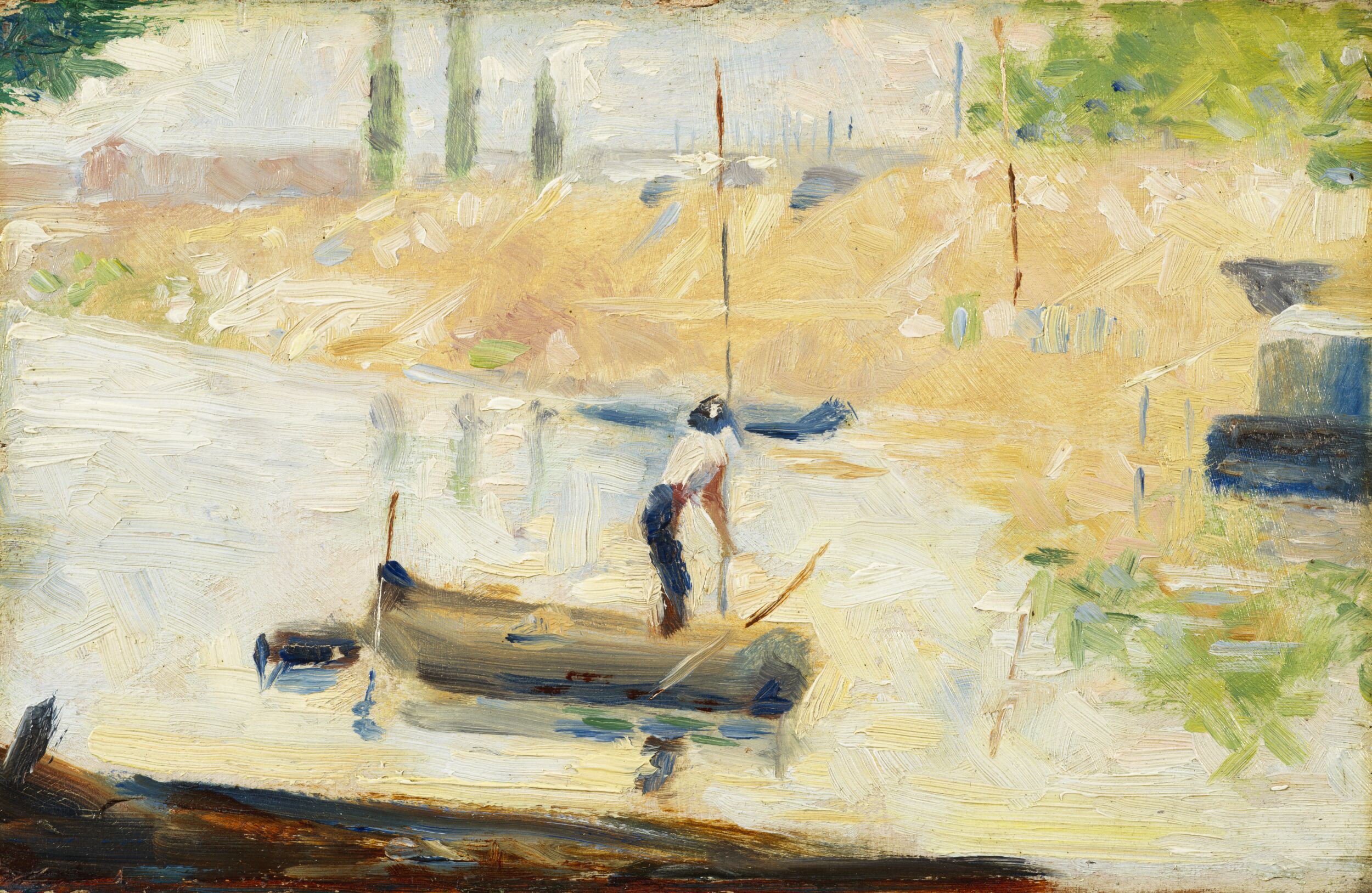
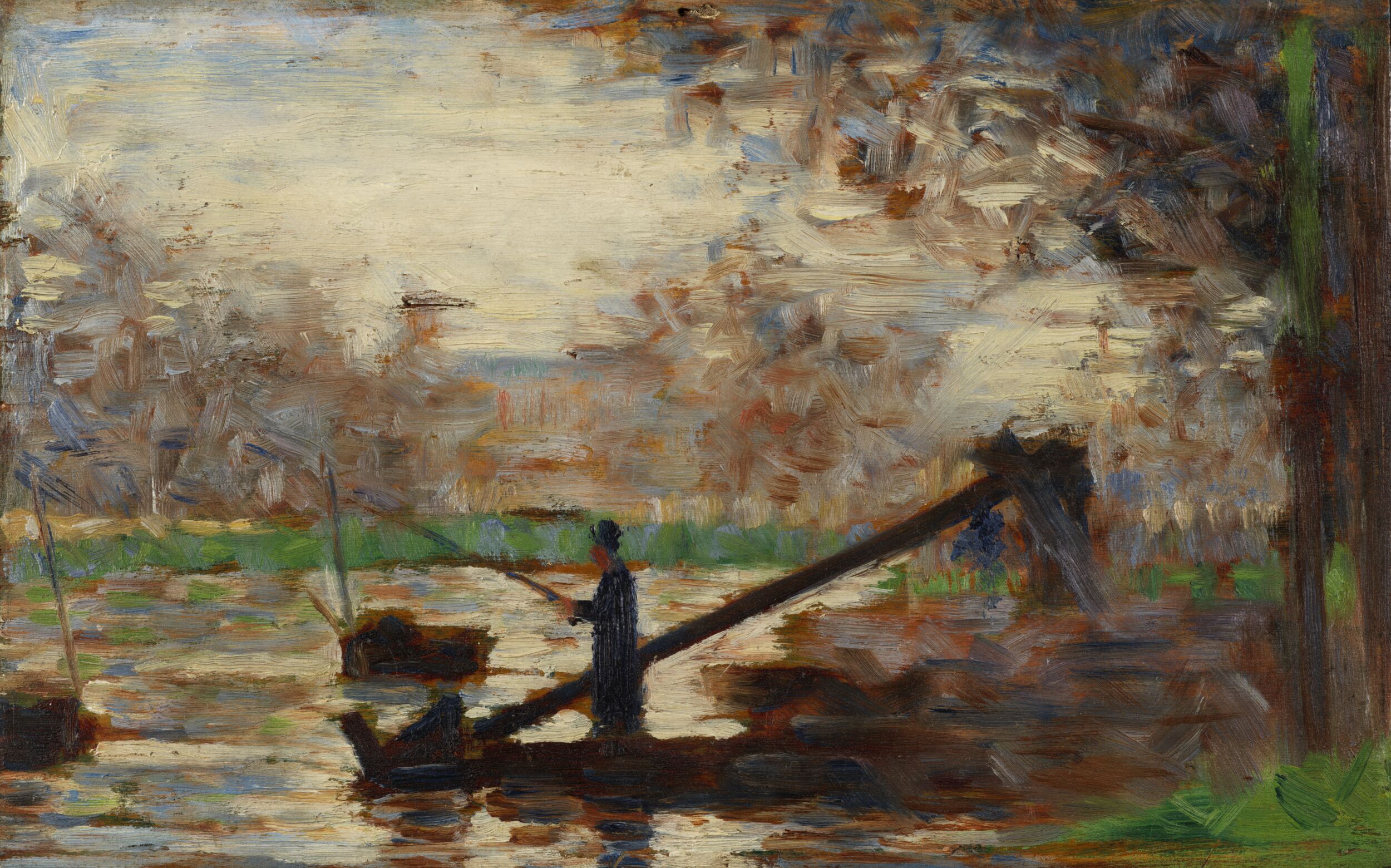
Fisherman in a moored boat
- Artist: Georges Seurat
- Date: c. 1882
- Medium: oil on panel
- Museum: The Courtauld Gallery
- Collection record: The Courtauld Gallery website
Listen to the free audio guide
About this artwork
This is “Fisherman in a Moored Boat” by Georges Seurat. Painted around 1882 in oil on a standard‑sized wooden panel, the work shows Seurat at a pivotal moment. He chose the board without a primer, letting the grain’s warm, almost ochre hue seep through the thin glaze. That decision gives the piece a natural, almost raw backdrop, and the dark tones hint at a setting sun over the water.
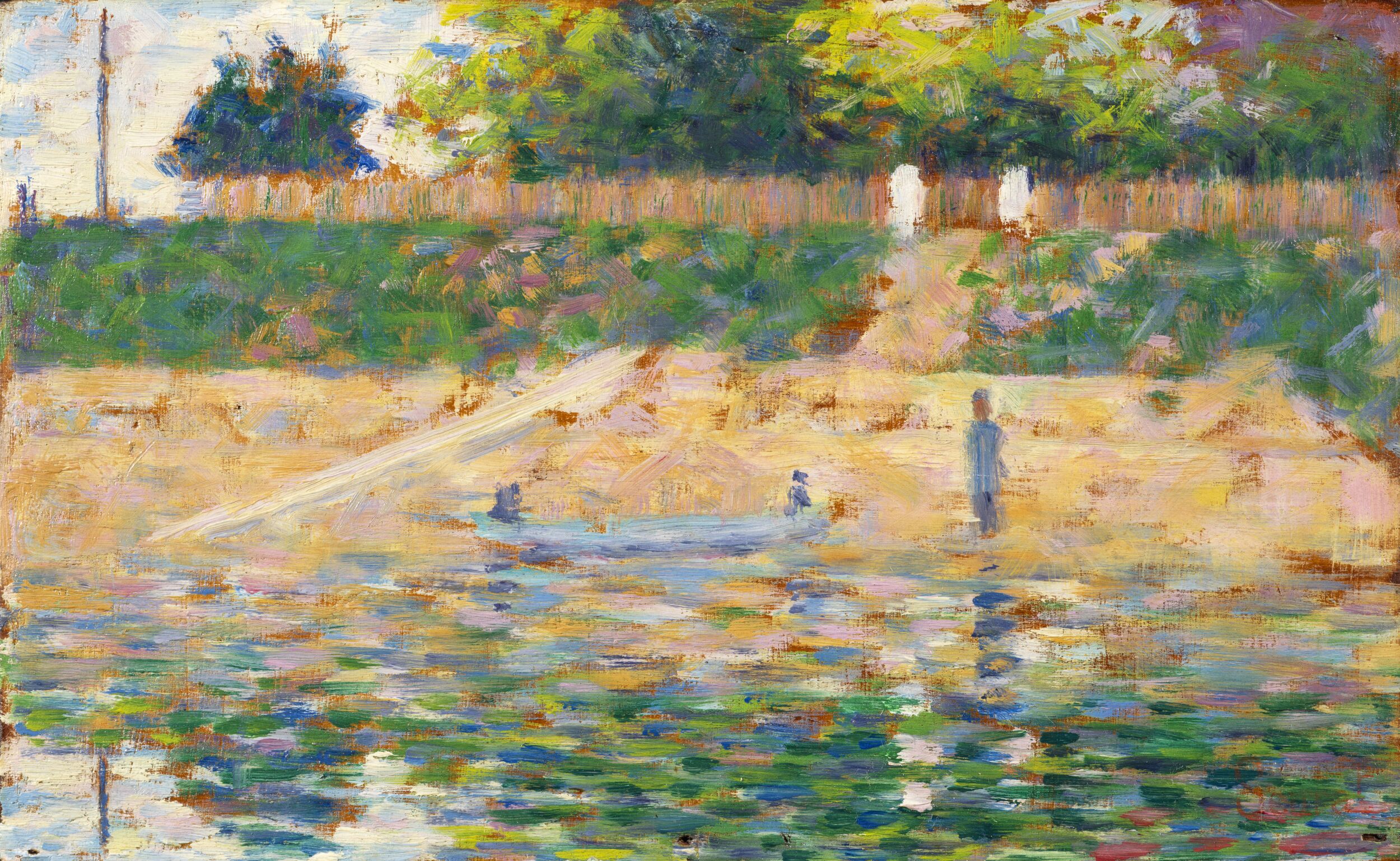
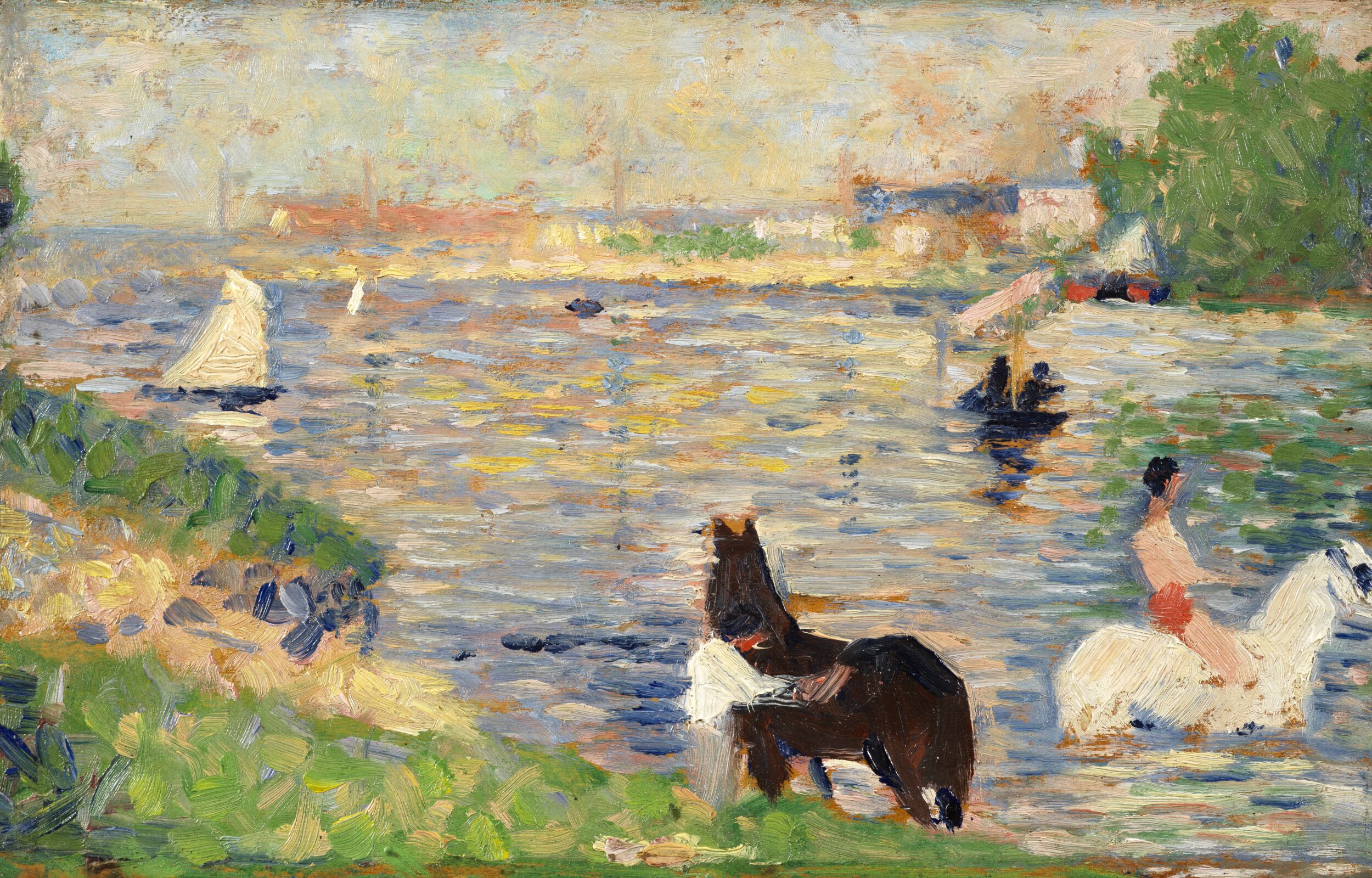
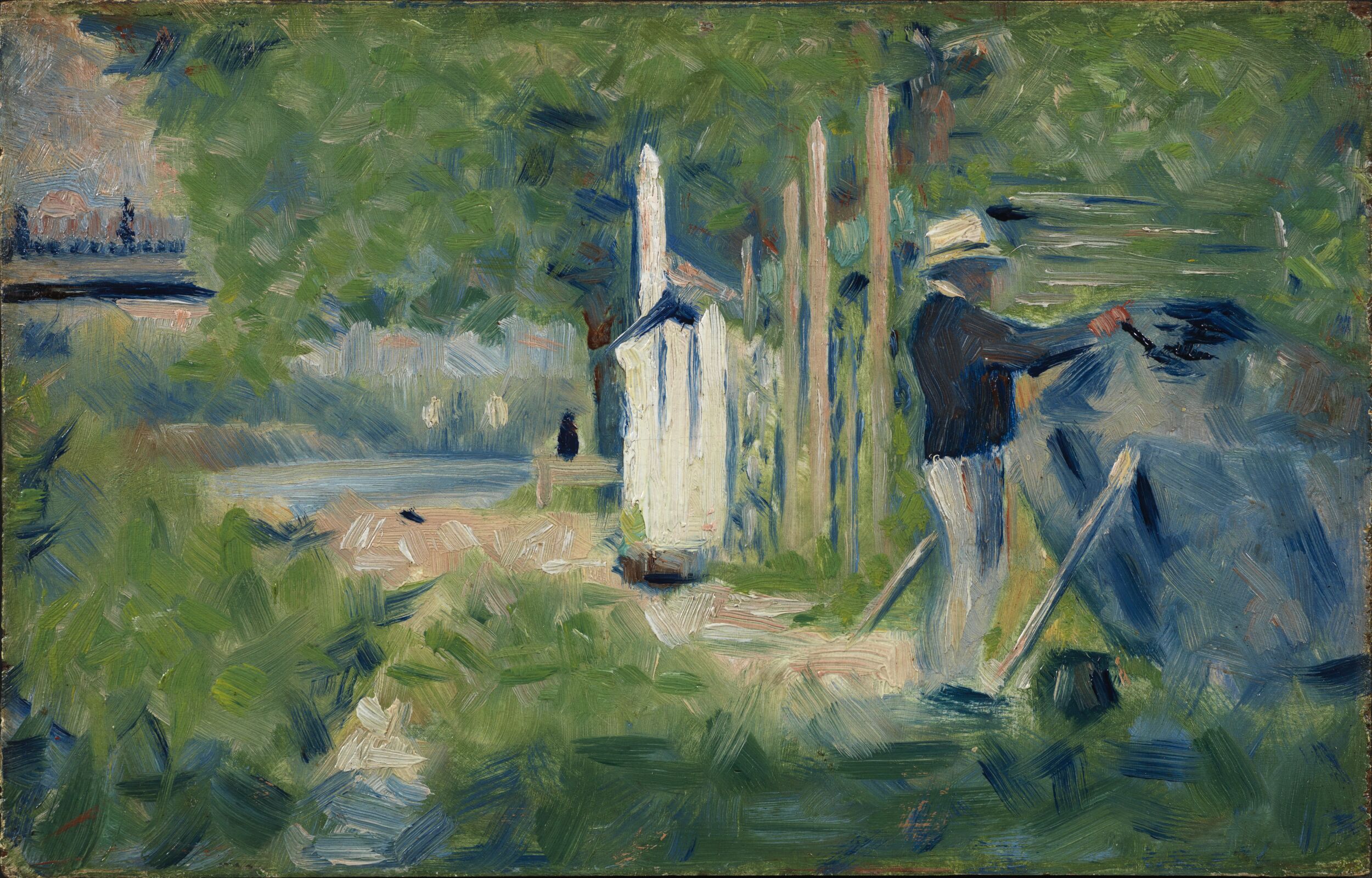
Seurat’s sketches along this wall span eight years, documenting his gradual shift from loose Impressionist strokes to his signature pointillist technique. In “Fisherman in a Moored Boat” we see the early influence: short, almost Impressionistic brushstrokes that still carry the sense of light and movement. Yet you can already detect his experiments with pure color dots, hinting at the formal approach he would later perfect.
The choice of a portable panel was practical, but it also reflects his desire to paint outdoors and capture fleeting reflections. In this study, the reflected light on the water is rendered with subtle tonal variations, a testament to Seurat’s fascination with how light behaves on surfaces.
Overall, the painting is both a finished work and a laboratory. It encapsulates Seurat’s exploration of technique, his engagement with Impressionism, and his ambition to innovate in the depiction of light and color.
See it in person
Fisherman in a moored boat hangs in The Courtauld Gallery at Somerset House, London. Point your phone at any artwork there and audioguide.london plays a free audio guide in six languages — no app download needed.