Faa Iheihe
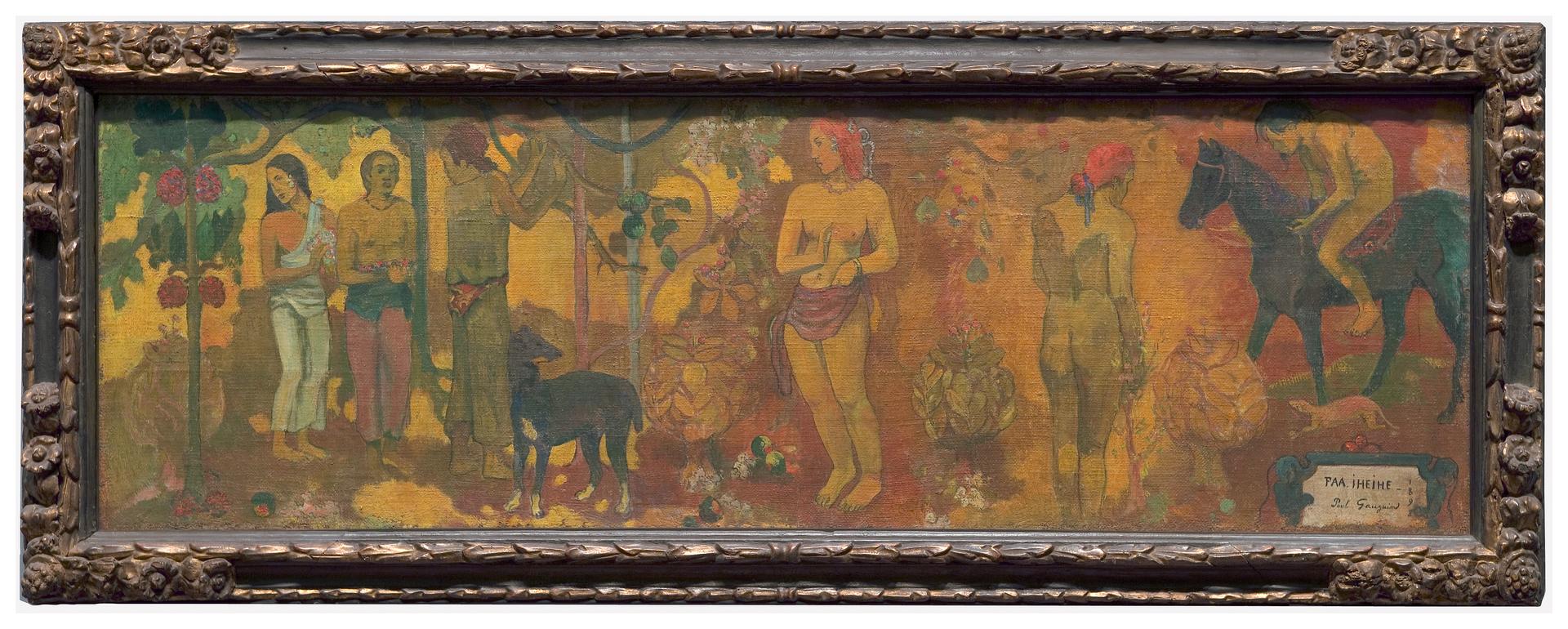
- Artist: Paul Gauguin
- Date: 1898
- Medium: Oil on canvas
- Museum: The National Gallery
- Collection record: The National Gallery website
Listen to the free audio guide
About this artwork
This is the Faa Iheihe by Paul Gauguin. Painted in 1898, it's a reflection of the artist's time spent in Tahiti, where he travelled and settled for nearly the rest of his life.
The title "Faa Iheihe" - or at least that's what we believe it to be - is actually a misinterpretation of a Tahitian word. 'Fa`ai`ei`e' means to beautify oneself for a special occasion, and Gauguin might have been trying to capture that idea in his work.
One of the things that's immediately noticeable about this painting is its horizontal format. This was inspired by Javanese sculptured friezes, which were popular during that time period. You can see how some of the figures, like the central woman, bear a resemblance to these sculptures as well.
The women on the left and the horseman in this painting actually reappear in another Gauguin work from 1899 called Rupe Rupe. It's clear that Gauguin was experimenting with new ideas and styles during his time in Tahiti, and "Faa Iheihe" is a great example of this.
The medium used for this painting is oil on canvas, and it's a testament to Gauguin's skill as an artist that he could achieve such rich colors and textures using this medium.
See it in person
Faa Iheihe hangs in The National Gallery on Trafalgar Square, London — free to enter. Point your phone at any artwork there and audioguide.london plays a free audio guide in six languages — no app download needed.